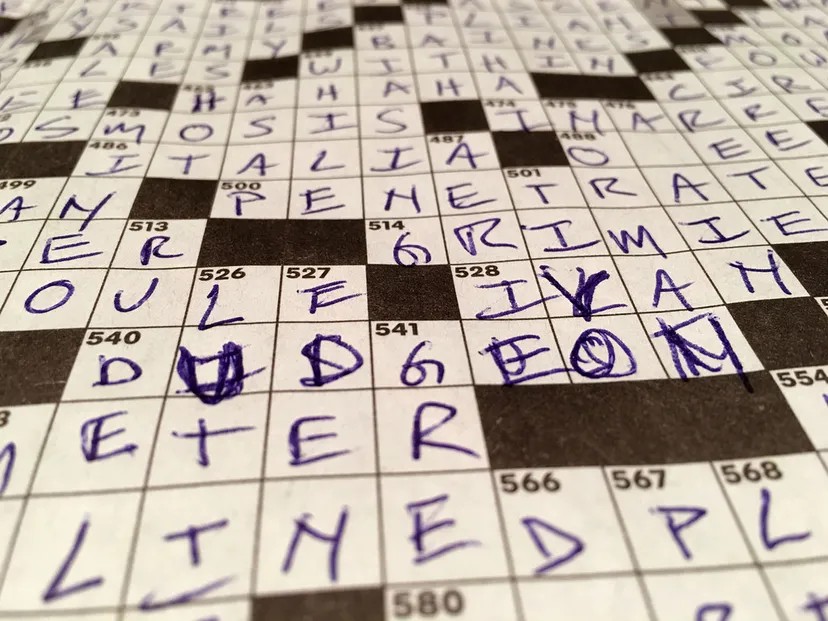
If you think crossword puzzles are just a way to pass time, look at your parents or grandparents. They see it as mental gym. It’s solitary or social. Science says it keeps the brain sharp. At nearly eighty years old, the New York Times daily crossword stands as a pillar of American culture.
It’s ironic, really. The NYT crossword history began with resistance.
When the puzzle craze hit the US in 1924, The Times publicly hated the idea. They ran an editorial mocking the trend. The paper called crosswords a symptom of the “mental peculiarities of mobs and crowds.” A pretty sick burn for 1924.
Simon and Schuster published the first book that year. Most dailies followed suit between 1924 and 1926. The Times held out. Their editors considered comics and entertainment frivolous. They had never done them before.
Then World War II started. Arthur Sulzberger, the editor, changed his mind. It was time for the paper to publish its own puzzle.
The Woman Who Raised the Bar
Current editor Will Shortz tells a story about Sulzberger. He was tired of buying the New York Herald Tribune just to solve its crossword. The war was grim. People needed a distraction. So, Sulzberger asked Margaret Farrar to take the job.
Farrar was already famous. She had co-edited all the Simon and Schuster crossword books since the very first one in 1924.
“Margaret immediately raised the quality of the crossword above anyone else’s — the intellectual calibre of the puzzle, the cultural references and just the quality of the puzzle-making”
She brought fresher definitions. Better vocabulary. Higher standards.
Farrar edited the puzzle for 27 years, from 1942 to 1969. Early on, Sulzberger wanted the clues to reflect news. You can still see war references in those early grids. Farrar disagreed. She thought puzzles should offer an escape from harsh life. She started adding literature. Entertainment. Non-news subjects.
Humor and Wordplay Take Over
Farrar left in 1969. Will Weng took over.
Weng wasn’t a puzzle creator by trade. He headed the Metropolitan desk at The Times. But he loved crosswords. He had been submitting puzzles for years.
His biggest contribution was humor. Weng was genuinely funny. That tone bled into the grids.
He retired in 1977. Eugene T. Maleska followed.
Maleska was different. He had been a school superintendent in the Bronx. He loved opera. Classical music. His puzzles were serious. The wordplay became more varied and sophisticated. It turned the grid into a harder word game.
Where did the lightness go? It’s still there, in different forms. But the NYT crossword evolution shows a clear shift from escape to intellectual challenge.
The New Face of the Grid
Will Shortz didn’t just inherit the New York Times crossword puzzle in 1993; he fundamentally reimagined it. After taking the helm following the death of previous editor Maleska, his mandate was clear: modernize. He wanted current cultural references, fresh language, and themes that actually felt playful. The result? The audience stopped looking like a retirement home and started looking like the rest of the world.
“It used to be you’d think of crosswords as being mainly for older people… I think that was true before I became editor.”
The numbers back up Shortz’s gut feeling. In the entire history of the puzzle prior to his arrival, only six teenagers had ever gotten their work published. Under Shortz’s watch, that number jumped to 37. He’s also seen a flood of submitters in their twenties and thirties. The average age of contributors has plummeted by roughly 15 years, shifting from the early 50s to the late 30s. He’s published constructors as young as 13 and as old as 101.
“It’s an extremely diverse group of people who make The Times crossword,” Shortz notes. “It reflects The Times readership itself.”
How the Puzzle Actually Gets Made
Shortz doesn’t construct the daily grids himself. He focuses on variety puzzles and editing. He and his two assistants sift through 75 to 100 submissions every week. They cull the field, select the best, and edit them for publication.
When you’re building a themed puzzle, the process is structural first. You start by placing theme answers in the grid. Black squares are plotted around those long answers to divide the grid into sections. Then you fill in the smaller words. Only after the grid is polished do you write the clues.
Difficulty by the Day
The puzzle ramps up as the week goes on. Monday is the easiest entry point. The heat turns up daily until Saturday, which can feel nigh-on impossible. Sunday is bigger in size, but in terms of difficulty, it’s roughly equivalent to a hard Wednesday or an easy Thursday.
Why the Sunday ease? Circulation. Sunday has the biggest readership of the week. Shortz ensures the crossword remains accessible to the widest possible audience on the paper’s biggest day.
From Graph Paper to Digital Empire
The tools have changed drastically since 1993. Back then, everyone used graph paper and pencils. Today, most constructors use software. Solvers have moved online and electronically as well.
But here’s the catch: the online experience isn’t free. You have to subscribe to solve the online version of The Times crossword. Even if you pay for the digital or printed paper, you still need to pay extra for the puzzle app. The model is working. Shortz reports that 430,000 people subscribe to just the crossword service. It’s become a massive income stream for the company.
The Payoff
If you manage to break into this elite circle, the money is real. A successful crossword contributor can earn between $500 and $2,250 per puzzle. The rate depends on the day of the week and how many previous puzzles you’ve had accepted.