The U.S. Federal Communications Commission holds the keys to the cosmos. And right now, it is turning them.
A single agency can green-light massive spaceflight projects. These aren’t small experiments. They are industrial-scale operations. And they have the power to completely alter the view of the night sky globally.
The outcry from astronomers is loud. Environmentalists are alarmed. But space law experts are blunt about the reality: there is very little the rest of the world can do. If the FCC grants a license, international bodies are largely powerless to stop it.
The Mirror in the Sky
Consider the case of Reflect Orbital. On July 10, the agency approved a test flight.
The plan? Launch a 59-by-59 foot space mirror. That’s roughly 18 meters by 18 meters. It would reflect sunlight onto Earth’s solar farms after dusk. Sounds efficient, right?
Maybe.
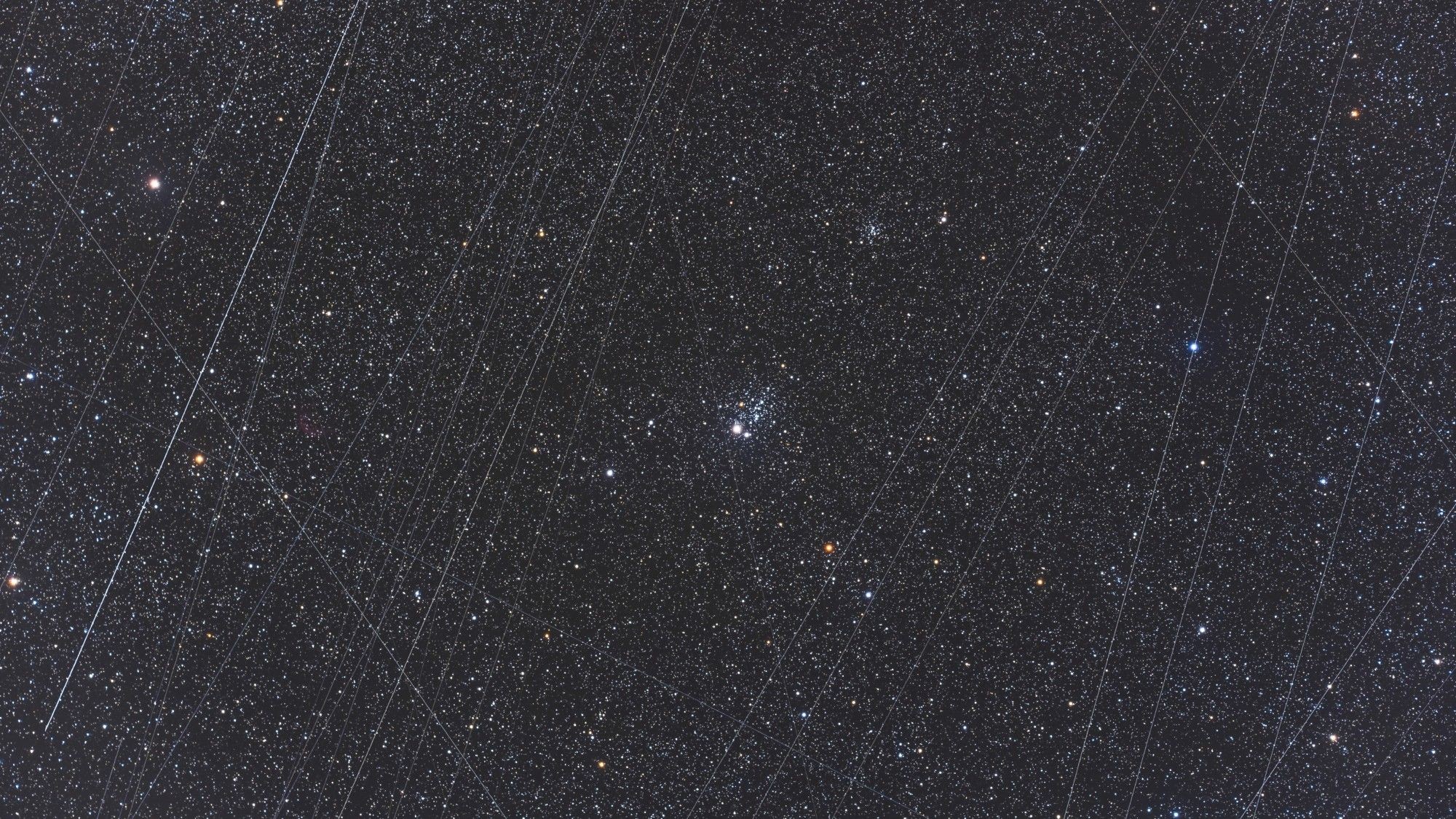
To astronomers, it looks like pollution. The concern isn’t just the test. It’s what comes next. Opponents fear this approval signals the FCC’s willingness to license an entire constellation. Fifty thousand sun-reflecting mirrors in orbit.
Think about that number. Fifty thousand.
And Reflect Orbital isn’t alone. Companies like SpaceX, Blue Origin, and Starcloud are waiting in the wings. Their applications involve massive fleets of orbiting data centers and satellites beaming internet.
If every one of these projects goes through, the night sky we know will vanish. It will change beyond recognition. For the entire planet.
A Legal Vacuum
This brings us to the core problem. The technology is moving faster than the rules.
The United Nations’ Outer Space Treaty was signed in the late 1960. It lays out the framework for space use. One key rule: approvals belong to the nation where the satellite is registered.
A source familiar with the United Nations Office for Outer Space Affairs (UNOOSA) noted that the number of satellites shot into space is a prerogative of that home country. Period.
Launch states are liable for physical damage. A collision in space? That’s on them. A spacecraft crashing and wrecking a house? Also on them.
But what about light?
Ruskin Hartley, CEO of DarkSky International, is clear. Optical interference likely doesn’t count as “damage” under the treaty. If a mirror reflects sunlight and blinds a telescope, the treaty doesn’t offer a remedy.
“It hasn’t been tested at all but most people don’t think this damage extends to optical interference,” Hartley said.
The treaty claims space exploration should benefit all countries. But what happens when there is no consensus on what constitutes a “benefit”? Nobody knows. The language is vague. The loopholes are wide.
UN committees like COPUOS are slow. They require unanimous consensus. Unanimous consensus in the UN? Rare. By the time they finish debating, SpaceX will have launched thousands more satellites.
Unilateral Moves
This isn’t new behavior.
Robin J. Frank, a former NASA legal counsel and expert in space law, points out the pattern. The U.S. often pushes its agenda regardless of global concern.
Take direct-to-cell communication. The FCC approved systems that use unauthorized radio frequencies to connect satellites to phones. Their justification? Giving U.S. industry a leg up.
The U.S. controls about 25 percent of global GDP. Historically, it avoids binding international mechanisms that restrict its actions. China and Russia? Similar attitude.
The U.S. isn’t even part of the Paris Agreement. Yet, it regulates global airspace from a single desk.
The Environmental Blind Spot
Here is the kicker. The satellite industry is exempt from the U.S.’ National Environmental Policy Act (NEPA).
NEPA usually requires agencies to assess environmental impacts. Not here. The exemption dates back to the 1980s, when launches were rare. Today, launches are frequent. The rule is outdated.
DarkSky International sued the FCC. They argued SpaceX needed an environmental review before launching tens of thousands of satellites. The court rejected the argument.
But Hartley isn’t done. If the FCC approves the full 50,000-mirror constellation, DarkSky will likely sue again.
Banning the mirrors? Possible, but ineffective. Individual nations could ban them from beaming light into their territory. Fines, threats, whatever. But the satellites will still reflect light as they orbit. The pollution remains.
What Gets Lost
The stakes are high. Astronomers at the European Southern Observatory recently modeled the future sky.
If all planned constellations deploy, sky brightness could rise by 300 percent. Three times brighter.
That ends astronomy as we know it. We lose the stars. We lose the history written in the dark.
Beyond science, there are deeper losses.
Indigenous communities rely on star knowledge for cultural heritage. That connection breaks when the sky turns to glare. Animals rely on darkness. Artificial light confuses ecosystems. The impact is biological, not just astronomical.
Then there is the atmosphere itself.
Rockets launch. Satellites re-enter. This creates air pollution. Research suggests this could damage the ozone layer. It could alter Earth’s thermal balance. Greenhouse gases from manufacturing and launches might negate any efficiency gains from orbiting data centers.
“This is more than just a niche issue for astronomer. This is an issue that’s going to affect the quality of of life for everybody on Earth,” Hartley said.
The fix? Likely legislative. Or an administration willing to enforce change.
The current administration isn’t doing it. The regulatory framework has gaping holes. Entrepreneurs are exploiting them.
We are left watching the sky darken, not with stars, but with corporate infrastructure. And the law? The law is still asleep in the 1960s.