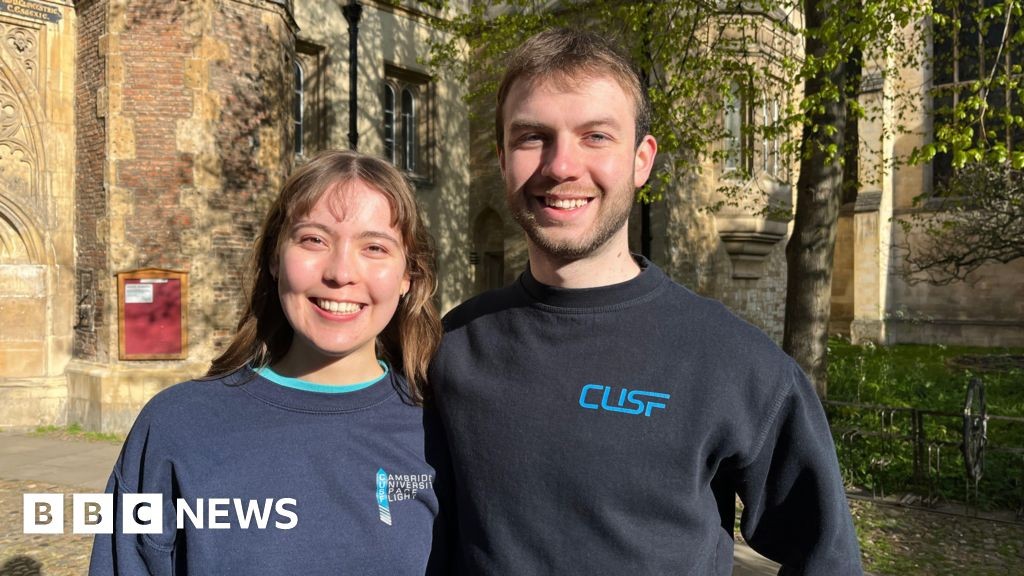
The recent success of NASA’s Artemis II mission has done more than just break distance records; it has ignited a new wave of ambition among the next generation of aerospace engineers. At the Cambridge University Space Flight Society (CUSFS), the mission serves as a powerful catalyst for a group of students aiming to achieve a historic milestone: becoming the first European student team to launch a rocket into space.
A New Era of Exploration
The Artemis II mission, which recently splashed down in the Pacific Ocean, marked a turning point in human spaceflight. By traveling 252,756 miles (406,771 km), the mission set a new record for the furthest humans have ever ventured into space.
For the members of the CUSFS, the significance of this achievement cannot be overstated. As co-president Elisabeth Rakozy noted, the mission “heralded a new era.” This sentiment stems from the fact that the last crewed lunar mission took place in 1972; for many of these students, Artemis II is the first time in their lives they have witnessed humans venturing so far beyond Earth’s orbit.
The Race to the Kármán Line
The Cambridge society, composed of approximately 100 members, has a clear and daunting objective: to cross the Kármán line —the internationally recognized boundary of space located 100km (62 miles) above Earth—within the next two years.
To reach this goal, the society has spent years developing technical expertise:
– Proven Track Record: Established in 2006, the society has a history of building rockets and engines, including the Griffin I.
– High-Altitude Capabilities: The Griffin I is designed with the potential to reach an altitude of 150km (93 miles), well beyond the space boundary.
– Global Collaboration: The group has previously conducted launches of rockets and high-altitude balloons in both the UK and the United States, supported by the Massachusetts Institute of Technology (MIT).
Overcoming Hurdles and Looking Ahead
The journey has not been without obstacles. The COVID-19 pandemic significantly slowed the society’s progress, but recent months have seen a resurgence in momentum. The team is currently navigating the complex “behind-the-scenes” requirements of aerospace engineering, including logistics, insurance, and licensing.
The next major milestone involves a planned rocket launch in Scotland. While the pressure is immense—co-president Ben Sutcliffe described the tension of a launch as “praying that all of your engineering design was done properly”—the drive to succeed remains high.
“Watching each test flight was an amazing, but nerve-wracking, feeling,” said Sutcliffe.
The transition from academic projects to professional careers is already beginning to manifest. Rakozy, for instance, will soon join the US-based aerospace manufacturer Relativity Space, signaling a direct pipeline between university-led innovation and the global space industry.
Conclusion
Inspired by NASA’s lunar breakthroughs, Cambridge students are working to bridge the gap between theoretical engineering and orbital reality. Their success would represent a significant milestone for student-led space exploration in Europe.