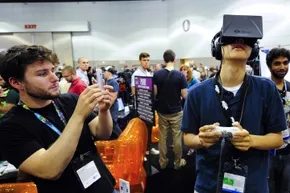
Virtual reality has been the holy grail of sci-fi for decades. It’s also been a real, albeit frustrating, thing since the 1960s. Early rigs were room-sized and cost a fortune. By the late ’80s and 90s, arcades offered heavier headsets and controllers. You could swing a pretend sword at virtual foes. The accuracy? Limited by the era’s computing power. Head tracking lagged. Field of view was narrow. Graphics looked like blocky nightmares by today’s standards. And let’s be honest: it often caused headaches and motion sickness. The experience wasn’t immersive. It fizzled out. The tech just wasn’t ready for mass adoption.
High-end gear improved over time. Better resolution. Faster response. But it remained too expensive for home users. It stayed locked in government labs, corporate training centers, and military facilities. Automotive engineers and medical professionals use it quietly. The general public never sees it.
Then smartphones changed everything. Small, powerful components made our phones and gaming consoles sharper and faster. That same miniaturization gave VR a new lease on life. It made devices like the Oculus Rift possible. This headset brought realistic VR into the realm of possibility for the average user. You’d expect such a marvel to come from a known electronics giant. You’d be wrong.
The Oculus Rift had humble beginnings. Palmer Luckey, a teenage gaming enthusiast, started collecting old headsets. He tinkered with them. His goal was to create something compatible with modern games. He quickly realized nothing viable existed. He had to build one from scratch.
Opening the Rift
Luckey was studying journalism in college when he started working on the prototype. He was 19 in 2012. His plan was modest. He wanted to launch a Kickstarter campaign. He hoped to fund VR headset kits for a few dozen devoted hobbyists. He communicated extensively online. One of those contacts was John Carmack. Carmack is famous for creating “Doom” and “Quake.” He is also the founder of Id Software. Carmack was working on his own VR project. He requested a prototype from Luckey.
Luckey sent it over. Carmack used it with his own firmware. He demonstrated his VR game “Doom 3 BFG” at E3 2012. That demo sparked the hype. The industry took notice.
Luckey founded Oculus VR. He enlisted industry insiders to help. Brendan Iribe and Michael Antonov joined as co-founders. They came from Scaleform, a gaming UI provider. The Kickstarter campaign launched. The goal was $250,000. The community hit that target within the first day. By the end, pledges reached nearly ten times that amount. Total raised: $2,437,429.
The company didn’t stop there. It secured millions more from investors. Staff numbers swelled. Oculus partnered with Valve, Epic Games, and Unity. The goal was clear: bring high-quality, low-cost VR gaming to life.
By early 2014, the Oculus Rift was available in a developer’s kit version. The aim was to encourage content creation before the consumer version launched. The consumer model was still in development. Then came the shocker. In March 2014, Facebook announced it was acquiring Oculus VR for $2 billion.
The device is lightweight. It blocks your view of the real world. It fully immerses you in a virtual space. The Rift lets you step into a game. You can look around in any direction. You see the environment all around you. Not on a flat screen surrounded by your living room decor. You see it in 3D. It’s not quite the holodeck from Star Trek. It’s not The Matrix. But it is a significant step in that direction.
The Faces Behind the Hardware
Oculus VR went from a one-man operation to a multi-million dollar entity poised to corner the consumer VR market. The leadership team grew rapidly. As of this writing, the company was helmed by key executives. Palmer Luckey remained the founder. Brendan Iribe served as Chief Executive Officer. Michael Antonov was Chief Software Architect. John Carmack took the role of Chief Technology Officer. Laird M. Malamed acted as Chief Operating Officer. Jack McCauley led Engineering as Vice President. Nate Mitchell oversaw Product as Vice President. Marshall Cline managed the Platform.
Tragedy marked the company’s early history. Co-founder Andrew Scott Reisse was tragically killed in 2013. He was struck by a speeding car involved in a police chase.
Technical Specifications: Cracking Open the Rift
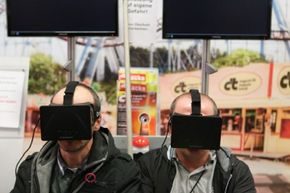
The Oculus Rift Development Kit 1.1 arrived looking less like futuristic tech and more like a pair of black ski goggles with a bulky rectangular box strapped to the front. It’s a heavy aesthetic for something that weighs only 369 grams. Less than a pound. Barely more than a bag of chips. The future consumer version promises to be even lighter, but for now, this is the hardware you get to play with.
The kit is a complete package. You get the headset, a control box permanently tethered by a 6-foot cable, a removable over-the-head strap for stability, and three pairs of lenses with different focal lengths. The cable haul includes HDMI, USB, and DVI cords, plus an adapter and a 5-Volt US-standard power supply with international adapters. It all snaps into a hard case. Practical. Portable.
The Control Box and Visuals
The control box is the brain. It handles the connection to your computer and manages basic functions. You have ports for HDMI, DVI, mini-USB, and DC power. Five buttons let you tweak contrast, brightness, and power. A blue LED on top tells you if the device is alive or dead.
Visually, the dev kit uses a flat 7-inch LCD screen. It runs at 60Hz with a resolution of 1280 by 800 pixels. That’s roughly 720p high-def. The screen splits evenly, giving each eye 640 by 800 pixels. The lenses are fixed 2.5 inches apart. You look through two lens cups. It’s convincing. Not perfect, but convincing.
The field of view hits 110 degrees diagonally and 90 degrees horizontally. Combined with ultra-low latency and 3 degrees of freedom head-tracking, it creates a strong sense of immersion. You turn your head. The view updates. It feels immediate.
But there are limits. The screen inputs rely on DVI-D Single Link, HDMI 1.3+, or USB 2.0. All fed through that single control box cord. And the resolution? It’s a stopgap. Oculus has already demoed two 1080p prototypes. The company plans to bump the consumer model to at least 1080p. Why settle for 720p when higher resolution is just around the corner?
The Sensor Fusion Engine
Tracking is where the magic happens. The device uses a custom motion and orientation sensor unit. It samples data at up to 1000 Hz. That’s fast.
The unit packs a gyroscope, an accelerometer, and a magnetometer. All three feed into an ARM Cortex-M3 microcontroller. The data undergoes sensor fusion. This process combines the inputs to track your head orientation accurately and synchronize it with what you’re viewing. You can turn in any direction. You can look around a virtual environment in real-time.
But it doesn’t track position. Not yet. You can rotate your head, but you can’t walk forward or lean in. You’re stuck in one spot. That changes with the next prototype.
Enter Crystal Cove
At CES 2014, Oculus debuted a new prototype called Crystal Cove. This isn’t just a tweak. It’s a leap.
The screen upgrades to a 1080p AMOLED display. Active matrix organic light emitting diodes mean better colors and deeper blacks. But the real story is the performance. Crystal Cove offers lower latency, a higher refresh rate, and significantly reduced image persistence.
Image persistence is that ghosting effect where an image stays on screen too long after you move, causing motion blur. Crystal Cove fixes that. The images change as quickly as you move. No lingering blurs. Just sharp, responsive visuals.
It also adds positional tracking. Six degrees of freedom. The headset uses IR LEDs that look like little square white dots all over the frame. An external camera monitors these dots. Now you can lean toward things. You can lean around corners. The dev kit required a separate controller for all that forward-backward motion. Crystal Cove lets your body do the work. This prototype is reportedly closer to Oculus VR’s actual vision for the consumer product.
System Requirements and Setup
The Oculus Rift SDK supports Linux, Mac OS, and Windows. To hook it up, your computer needs an HDMI or DVI video-out port. VGA is out. It won’t work.
There are no strict minimum system requirements listed by Oculus. Instead, they offer recommended guidelines. If you want smooth performance, aim for these specs:
- OS: Windows Vista, 7, or 8. Mac OS 10.6 or higher. Linux (Ubuntu 12.04 LTS).
- Processor: 2.0+ GHz.
- RAM: 2 GB.
- GPU: Direct3D 10 or OpenGL 3 compatible video card.
The SDK documentation notes that performance improves on machines built for heavy-duty gaming. The Oculus team tested a MacBook Pro Retina with an Nvidia 650M graphics card. They called it a portable VR workstation. It works.
Controller support is included for some gamepads. Xbox 360 wired controller for Windows. Logitech F710 Wireless Gamepad for Windows and Mac. Sony PlayStation DUALSHOCK3 for Mac.
Setup is straightforward. Connect your computer to the control box via USB and one video port. HDMI or DVI. Not both. Plug the power cord in. When all three cables are connected, the screen activates. Your computer sees the Rift as another display. You adjust settings through your OS display panels.
It currently works only with personal computers. Support for mobile devices is in the works. Gaming systems might be next. But for now, if you want to step into that virtual world, you need a PC.
The hardware is rough around the edges. The lenses are fixed. The resolution is limited. But the underlying tech—the sensor fusion, the low latency, the trackable head orientation—proves that virtual reality is no longer just a concept. It’s here. It’s heavy. It’s clunky. And it’s waiting for you to plug in.
What happens when the cables disappear? When the box shrinks to nothing? We don’t know yet. We only have the dev kit. And the promise of what comes next.
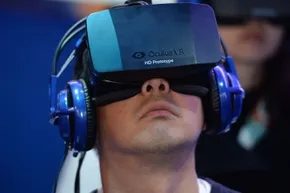
The Oculus SDK isn’t just a download; it’s an open-source gateway. You can grab it, use it, tweak it, and even redistribute it. But there are strings attached. The license agreement is clear: if you modify the code, you have to share those changes back with Oculus VR. You can’t use this software to hook up to competing commercial headsets unless Oculus explicitly approves them. And you can’t split the code up for distribution; it has to go out whole.
There’s a bigger stick, too. Oculus reserves the right to revoke your access if your app causes health or safety issues. That’s a serious threat for developers.
What’s in the Box
The package is heavy. You get C++ source code, libraries, headers, firmware, samples, tutorials, and documentation. It also bundles the Unreal Development Kit, Unreal Engine 4, and Unity. That’s a massive stack for game development.
Some samples stand out:
– OculusRoomTiny : A small room demo showing off sensor integration and rendering.
– OculusWorldDemo : A walk-through of a complex Tuscan landscape.
– SensorBoxTest : A 3D box that visualizes sensor fusion by tracking the Rift’s rotation.
For support, developers head to the Oculus VR Developer Center. That’s where you get the latest SDK components and online help. The goal? Make it easier to port games and other content to the Rift.
The Latency Tester
Oculus also dropped an Oculus Latency Tester. Both the hardware and software are open source. The firmware runs on the Apache 2.0 License. The schematics, board layout, and enclosure are under Creative Commons Attribution 4.0.
You can buy the tester from the Oculus site. Or, if you’re a tinkerer, you can build your own using the free files. You’re allowed to alter or distribute any part of it.
Just don’t modify the Rift itself. The company warns that modifying the physical unit might void support. But the code? That’s fair game.
Why It’s Not Google Glass
People keep comparing the Rift to Google Glass. It’s a weird comparison. Sure, both are wearable tech for your face. That’s where the similarities end.
Google Glass is basically a tiny smartphone shaped like glasses. It has a clear, rectangular screen over one eye. You see the real world. Then, via voice commands, you pull up info that gets superimposed on your view. That’s augmented reality.
The Rift is different. It’s true virtual reality. It blocks out the real world entirely. You see a new, digital world instead.
The Specs That Matter
The Rift uses stereoscopic 3-D rendering. It pushes a slightly different image to each eye. This mimics how we see depth in the real world. Each eye has a slightly different vantage point. The brain uses those differences to perceive depth.
It also boasts a high-resolution display. The field of view is 110 degrees wide. That extends into your peripheral vision. Combined with the lenses, it’s meant to immerse you in the game.
Low latency is key. What you see tracks your head movements in real-time. There’s no delay. The image doesn’t have to catch up to your eyes.
Calibration
After you get the developer’s Rift, download the SDK, and install firmware updates, you need to calibrate.
Measure your height. Set your IPD (interpupillary distance, the distance between your pupils). Run the magnetometer calibration. That involves rotating the headset as instructed.
Once calibrated, you can test or play whatever games you’ve found or created.
What Sorts of Games Work With The Rift?

The consumer version of the Oculus Rift hadn’t hit shelves yet. That didn’t stop major studios from building or porting titles for the headset. The list of early adopters is already shaping up.
id Software brought Doom 3 BFG Edition to the platform. It was the first game ready for Oculus. CCP Games developed Eve: Valkyrie as an exclusive launch title. Valve took a different approach, porting Team Fortress 2 and Half-Life 2 to support VR mode. Meteor Entertainment and Adhesive Games contributed Hawken.
Not all of these were publicly available in Rift-ready form at the time. You could play the non-VR versions of most of them. Eve: Valkyrie was the exception. Doom 3 BFG Edition was given to developers who bought kits through the Kickstarter campaign. Eve: Valkyrie was demonstrated on newer prototypes. It was slated for a 2014 release.
A Growing Library of VR Experiments
Existing games are being adapted rapidly. Oculus VR set up a space on their website for developers to share games, mods, demos, and simulations. Over 100 titles were already on that share site.
One standout was Minecrift. It’s a VR conversion of Minecraft. You needed a paid copy of the original game to make it work. Then there was VR Cinema. It simulated a movie theater where you could actually watch videos. The potential for these experiments is huge. Why just play when you can sit in a virtual lobby?
Why Not Every 3D Game Works
You can’t just plug in any 3D game. The Rift has unique properties. It features a wide field of vision. It has precise head-tracking abilities. Games need to be specifically made to work with the device.
Three things had to be integrated:
* Motion tracking
* 3D rendering
* Distortion adjustment
This last part is key. It produces stereoscopic images. Each eye sees a slightly different view. Without it, the experience falls apart.
By early 2014, around 50,000 units had been shipped. Sources like Edwards and Perton confirm these numbers. With so many units in the hands of developers, many games are clearly in the works. Gaming was the primary focus. But it’s not the only focus.
We might one day wear headsets to watch 360-degree videos. We could sit in virtual classrooms. We might view live entertainment or sporting events. Simulated environments could pair with exercise equipment for fitness. The applications are already expanding.
Beyond the Console
Higher-end players are testing the waters. The NASA Jet Propulsion Laboratory (JPL) experimented with an Oculus Rift. They paired it with an Xbox Kinect 2. The goal was to control a robotic arm. This could be a step toward controlling robots remotely in outer space.
JPL also used a Rift with a Virtuix Omni treadmill. They combined it with panoramic images from the Curiosity rover. The result? A simulation of walking on Mars. Many companies bought developer kits for their own purposes. There’s even talk of using them for lower-cost military training. A lightweight, inexpensive VR headset opens endless doors.
Fighting Simulator Sickness
A static screen can cause eyestrain. Motion sickness happens under certain circumstances. VR is particularly prone to these issues. The term “simulator sickness” describes the headaches, disorientation, and nausea. Lag time is the biggest culprit. It’s the delay between user movement and the video image catching up. It’s mostly a hardware problem.
The Oculus VR team created a Best Practices Guide. It helps developers prevent these issues. It also aims to create enjoyable games suited to VR. The document covers image rendering, user perspective, and stereoscopic depth. It addresses camera movement, in-game speed, and UI placement. Audio and visual design are included too.
“The guide suggests baselines for comfort… like a simulated walking speed of 4.5 feet per second and a minimum frame rate of 60 frames per second.”
Specific comfort baselines include:
* Simulated walking speed: 4.5 feet (1.4 meters) per second.
* Minimum frame rate: 60 frames per second (fps).
* Ideal latency: 20 milliseconds or less.
* Virtual placement of static objects: No closer than 1.6 feet (50 centimeters).
The guide references specific Oculus VR software features. Distortion shaders help. Predictive tracking helps. The Oculus head model helps. Developers can use these without reinventing the wheel.
User testing is advised. Test with outside users. Make sure the application is comfortable for a variety of people. Developers get used to the content. Others might not. The guide recommends optional user settings. Let users change speed, acceleration, field of view, and collision effects. Include a monoscopic display mode. The image is the same for both eyes. This is supposed to decrease simulator sickness.
Sound design can also help. It reduces the likelihood of sickness. The disconnect between what your mind sees and what your body does is part of the problem. Sound helps bridge that gap. The Crystal Cove prototype had reduced motion blurring. This should lower motion sickness further. There’s also evidence that you get used to VR. Your body adapts.
Eyestrain might be less with the Rift. Staring at a flat screen forces your eyes to focus close. The Rift makes your eyes focus in the distance. That’s their natural resting position. Still, the technology is young. The future is wide open.
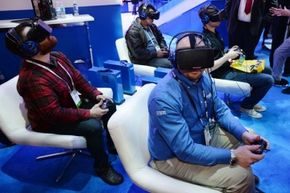
The Reality of Wearing Glasses in VR
The developer models are getting love. Seriously. Even a 90-year-old grandmother called the Rift “incredibly cool.” It’s being hailed as a game changer for gaming, full stop.
But let’s talk about the friction points. Nausea is standard fare. Dizziness? Expected. The real headache? Glasses.
You can wear them. Most frames fit. You just twist two screws on the sides to push the lenses closer to your face. Closer is better for field of view. But Oculus doesn’t recommend it. Why? You’ll scratch your lenses. You’ll also lose a chunk of that precious visual real estate.
The workaround? Swap the lenses. The kit comes with three sets:
* Set A: Longest. For 20/20 or farsighted eyes.
* Set B: Mid-length. Moderate nearsightedness.
* Set C: Shortest. Severe nearsightedness.
The team knows the current setup is clunky. They’re planning to make the consumer version more eyeglasses-friendly. Not that we’re holding our breath.
Better Pixels, Less Blur
Then there’s Crystal Cove. The newer prototype. Reactions are effusive. Higher resolution. Reduced motion blur. Positional tracking that actually works. It’s a step up.
Both the original Rift and Crystal Cove took home Best of CES awards in 2013 and 2014, respectively. The tech is validating itself.
Price and Availability
As of early 2014, you can grab a developer kit directly from Oculus VR for $300. That’s it.
The consumer release date? Unknown. The price point? Still under wraps.
But with dev kits flying off shelves and better prototypes in the lab, the wait shouldn’t be forever. Especially with Facebook’s money backing the train. VR in the living room is coming. It’s just a matter of when.
The Developer Route and The 3D Block World
I’ve been chasing the ghost of the holodeck since the days when Tron was just a glowing concept and Star Trek: The Next Generation made us believe we’d all be stepping into simulations by the late 90s. Sure, The Lawnmower Man and The Matrix promised the moon, even if they delivered more horror than wonder. I’ve tried the arcades. I’ve sat in the expensive, low-res simulators that promised the world and delivered a headache. The tracking was imprecise. The immersion was a joke.
Then came the Oculus Rift.
The tech jumped. Graphics didn’t just get better; they got believable. Suddenly, 1080p consumer models looked less like science fiction and more like a Tuesday afternoon. It’s not a holodeck. We aren’t walking through starships yet. But for the first time, the hardware feels like it’s keeping up with the imagination.
I’m a developer, technically. I haven’t touched game engines, but that won’t stop me from hunting down a developer kit sooner rather than later. There’s a specific itch to poke at the code, to see if I can break the thing I’m using to play.
Or maybe I’ll just go back to basics. I spend my nights building random castles in 2-D Minecraft. Shearing sheep. Taming the wolves. It’s satisfying. But imagine that in 3-D VR. Standing inside your own creation. Looking up at the skybox you built.
There is a darker side to that fantasy, though. Imagine turning around to check your perimeter and getting face-first into a Creeper. In 2-D, it’s a pixelated annoyance. In immersive VR? That’s not a game. That’s a nightmare waiting to happen.
How Virtual Reality Technology Works: The Roots
To understand why the Rift feels different, you have to look at the lineage. Virtual reality isn’t new. The term itself has a pedigree. It was popularized by Jaron Lanier, a figure who helped define the space long before Palmer Luckey started soldering headphones in a garage. But knowing who coined the term doesn’t explain why the old tech failed where the new tech is finally clicking.
The history is messy. It involves military simulators that were cheaper but clunkier, and early optical illusions that tried to trick your brain into thinking you were walking on foot. Sandrine Ceurstemont’s research on optical illusions in New Scientist highlights one of the core hurdles: getting the brain to accept the visual input as physical reality. It’s an optical lie. A very sophisticated one.
John Carmack’s arrival as CTO changed the trajectory. He didn’t just bring code; he brought a philosophy about frame rates and latency. The community at Gamers Nexus and the technical reports from the U.S. Army Research Institute show that this isn’t just about graphics. It’s about the vestibular system. It’s about whether your inner ear agrees with your eyes.
Taming Simulation Sickness
The biggest killer of early VR wasn’t poor graphics. It was nausea.
Steve Campbell, Oculus CEO, got sick. Badly. He documented it. He said he found a remedy. Ian Davis at The Escapist detailed how Oculus started finding fixes for “simulation sickness.” It’s not just a user error. It’s a hardware and software gap. When the screen lags behind your head movement by even a few milliseconds, your brain screams.
Palmer Luckey, the 33-year-old co-founder who tragically passed away, helped push the timeline. His death was a shock, but the momentum had already shifted. The SDK versions, like the 0.2.5 overview from Antonov, Mitchell, and Reisse, show the technical scaffolding being put in place. It’s raw. It’s experimental. But it’s working.
The Launch Lineup and The Ecosystem
What actually runs on this hardware matters. EVE: Valkyrie was named an Oculus Rift launch exclusive. Ian Dingman at PC World called it “awe-inspiring.” Space combat in VR changes the geometry of the genre. You aren’t looking at a screen. You’re sitting in the cockpit.
But there’s a hitch. Controllers. Sean Hollister at The Verge pointed out the disconnect. The headset is ready. The eyes are satisfied. The hands? They’re still holding standard gamepads that feel alien in a 3-D space. The hardware ecosystem is fragmented. Companies are offering cheaper simulation tools for the military, but the consumer gear is still playing catch-up with the input devices.
Jim Edwards at Business Insider claimed mere words couldn’t do justice to the new Rift headset. He doesn’t even like video games. That’s the signal. It’s not just for the hardcore. It’s visceral. It’s physical.
The sources are stacked. From the iFixit teardowns showing the internal guts, to the New Scientist pieces on mind-bending dreams, the narrative is consistent. The barrier to entry is dropping. The cost is coming down. The resolution is climbing.
We are standing on the edge of the Crystal Cove prototype. We are looking at the SDKs. We are waiting for the 1080p release. The nightmares of Creeper attacks are still hypothetical. The joy of building a castle in true depth is imminent.
The technology has improved by leaps. The graphics are better. The immersion is real. It’s not Star Trek. But it’s closer than it’s ever been.
And the controllers? They still need to catch up.
“The best wearable tech coming in 2014: Google Glass, Oculus Rift, more.”
The list is short. The options are fewer. But the Rift is the one that feels like it’s actually working.
The Hardware Hurdle and the Space Race
The hardware itself was a beast. It wasn’t just a plastic shell; it was a tangle of wires, a heavy strap, and a screen that demanded serious computing power. You wanted immersion? You got it. But you also got neck strain. And nausea. Oh, the nausea. PC World called it “alternately thrilling and nauseating,” which is a polite way of saying your stomach might file for divorce. The early development kits were bulky, expensive, and unforgiving. If your PC didn’t have the guts to run them, you were out of luck.
But while gamers were vomiting in their ergonomic chairs, NASA wasn’t laughing. They were watching.
The Jet Propulsion Laboratory (JPL) saw something in that buggy, laggy headset that others missed. They didn’t see a toy. They saw a teleoperation tool. In August 2013, they paired the Oculus Rift with the Virtuix Omni treadmill. The idea was simple: walk in place while a robot walked on Mars. Well, simulated Mars. But the latency was low enough that the concept held water. You could steer a robot arm through a digital twin of a Martian surface using a Kinect 2 sensor.
“Virtual reality is no longer a joke.” — The Telegraph, late 2013
This wasn’t about killing zombies. It was about controlling machinery thousands of miles away without the lag killing the mission. If you could feel the resistance of a rock with your avatar’s hand, maybe you could fix a solar panel on a distant planet. It sounded like sci-fi. It was also happening in real-time, in Pasadena.
The Human Element and the Tragic Cost
Of course, you can’t talk about Oculus without talking about Brendan Iribe. The 20-year-old creator was everywhere in 2013. Eurogamer described him as “happy-go-luckey,” a guy who just wanted to build the coolest thing on earth. He was young. He was charismatic. He was the face of the movement.
Then came June 2013.
It wasn’t the hardware that broke the story. It was a police chase. A suspect fled in a car. An innocent bystander—Chad Diehl, Iribe’s co-founder—was killed in the crossfire. He wasn’t even involved in the project. He was just there.
The news hit the community like a physical blow. Diehl’s death cast a shadow over the hype. It reminded everyone that this was a small, fragile startup, not a faceless corp. It was personal. It was tragic. It was a stark reminder that behind every line of code is a person who could die in a parking lot.
The industry paused. Then it kept going. Because the tech was too good to ignore.
The Crystal Cove Shift and the Games Boom
By early 2014, the prototype had a new name: Crystal Cove. It was lighter. The screen was sharper. The OLED display reduced the screen-door effect that had plagued the DK1. It won Best of CES in January 2014. Engadget praised it, but the real story was in the software.
Oculus had made a bet. A big, exclusive bet.
They announced EVE: Valkyrie as an Oculus Rift exclusive. Digital Trends confirmed it. No PlayStation. No Xbox. Just PC VR. This was a power move. They were trying to lock in early adopters by giving them something no one else had. The game was a dogfight simulator, set in the EVE Online universe. It was beautiful. It was intense. It required a high-end rig that most gamers couldn’t afford.
But it worked. It drew people in.
Other studios followed. Valve put Team Fortress 2 in the Rift. Half-Life 2 mods started appearing on the forums. The “Oculus-Ready Games” list on their site grew longer every week. It wasn’t just a headset anymore. It was a platform. A walled garden, perhaps, but a vibrant one.
“The virtual reality headset will change everything.” — Slate, December 2013
Cyrus Nemati wrote that in Slate. He was right, in a way. It changed the conversation. It changed the expectations. But it didn’t change the ecosystem overnight.
The Fragmented Reality
So where did that leave us in February 2014?
We had a device that was technically impressive but commercially niche. We had a company that was growing fast, hiring teams, and preparing for PAX and Gamescom. We had NASA using it to train for space. We had gamers crying because they couldn’t afford it. We had a community forum full of people trying to get the SDK 1.1 to run on Windows 8.1.
It was messy.
The software license was strict. The hardware was still in development. The “Crystal Cove” prototype was just that—a prototype. Not a consumer product. Not yet.
And yet, the momentum was undeniable. The “VR Revolution” was being kickstarted, literally and figuratively. New Scientist covered it. Edge magazine ran a feature on the return of virtual reality. The joke was over. The nausea was real. The death was real. The future was blurry, laggy, and expensive.
But it was here.
You put on the headset. The world disappeared. And for a few seconds, you were somewhere else. That was the hook. The rest was just details.
The $75 Million Bet on the Headset
The money started flowing in hard. In December 2013, Oculus VR closed a staggering $75 million round. The goal? Get those goggles out of the dev labs and into the hands of regular people. Chris Velazco at TechCrunch flagged this as a pivotal moment for the industry. This wasn’t just pocket change for a startup. It was a war chest. It signaled that virtual reality was no longer a niche toy. It was a mass-market play waiting to happen.
CCP’s Gamble with EVE Valkyrie
While the cash was being counted, another studio was trying to prove the hardware could actually carry a game. CCP Games, the folks behind EVE Online, had a project that felt like a stumbling giant. They called it EVE Valkyrie. Philippa Warr at Wired described the challenge as turning a “gaming Pinocchio into a real boy.”
It was ambitious. Valkyrie was built from the ground up for VR. Not ported. Built. The aim was to make the controls feel invisible. If you had to think about how to fly the ship, the illusion broke. The team worked tirelessly to smooth out the latency and map the inputs so that flying a dogfight felt natural. They weren’t just adding VR goggles to an existing game. They were building a new experience where the headset was the cockpit.
Carmack’s Early Vision
This push for immersion wasn’t new. It went back further. John Carmack, the legendary programmer, had been dreaming about VR for years. Oli Welsh at Eurogamer looked back at Carmack’s 2012 interviews. Even then, Carmack was talking about the potential. He saw a future where the screen disappeared. Where the world around you became the game.
His influence rippled through the industry. He wasn’t just coding; he was evangelizing. He believed the technology was finally catching up to the dream. The latency issues were getting better. The displays were sharper. The question wasn’t “if” but “when.” By 2013, that “when” felt closer than ever.
The Developer’s Handbook
But dreams and money don’t fix bad user experience. Developers needed rules. They needed a playbook. Oculus VR released the Best Practices Guide in January 2014. It was version 0.007—still very early, still changing. But it was essential reading.
A team including Richard Yao, Tom Heath, Aaron Davies, Tom Forsyth, Nate Mitchell, and Perry Hoberman compiled the technical insights. They covered motion sickness. They covered comfort. They covered how to make users feel present without getting nauseous.
The guide was a survival manual for the early adopters.
It taught devs to reduce frame rate drops to a minimum. To keep interaction simple. To respect the user’s physical space. This document became the bible for anyone trying to build for the Rift. It turned abstract ideas into concrete coding standards.
Why This Matters Now
Look at the landscape today. The $75 million injection didn’t just buy servers. It bought time. It bought talent. It bought the runway to make mistakes. EVE Valkyrie showed that games could work in VR. Carmack’s vision provided