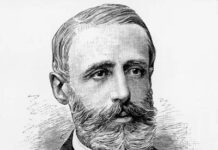
Victor Ernest Shelford didn’t just study animals. He helped make the entire field of ecology a recognized science. He was born in Chemung, New York, in 1877 and died in 1968. He left a legacy that changed the way we see nature. Before his work, ecology was often a loose collection of observations. Shelford turned it into a discipline with rules, methods and clear boundaries.
His 1913 book “Animal Communities in Temperate America” was groundbreaking. It was among the first texts to treat ecology as a rigorous science in its own right, and not just a branch of zoology or botany. This difference was important. This allowed researchers to move away from looking at species in isolation and instead look at communities.
From the University of Chicago to the Ecological Society
Shelford earned a Ph.D. In 1907 he graduated from the University of Chicago. However, his hometown and where he spent most of his career was the University of Illinois. His influence grew so rapidly that in 1916 he became the first president of the Ecological Society of America. This role was not merely ceremonial. It set the tone for how ecological research should be done and shared throughout the continent.
He was a pioneer of experimental methods. While others were observing nature, Shelford was testing it. He believed in controlled studies to understand how animal populations responded to their environment. This transition from pure observation to experimental verification was crucial in establishing ecology as a hard science.
Defining a biome
One of Shelford’s most enduring contributions was the concept of the biome. In 1939 he published Bio-ecology in collaboration with Frederic E. Clements. In it, they defined a biome as a large geographic area characterized by its dominant vegetation and associated animal inhabitants.
Why is this important today? Because it provides us with a framework for understanding global ecosystems. It’s not just about counting birds or tracking insects. It’s about seeing the big picture. The desert is not just sand and heat. It is the special interaction of climate, plants and animals that creates a unique biological unity.
Mapping of the natural zones of North America
Shelford’s 1963 book The Ecology of North America served as a comprehensive summary of these important biomes. He divided the continent into different zones:
– Tundra : Cold, treeless plains.
– Conifer forest : evergreen forests.
– Deciduous Forest : Trees that drop their leaves.
– Grassland : open plains dominated by grass.
– Desert : Dry areas where water is a limiting factor.
His earlier work, starting around 1933, had already focused on the connections between animal population changes and environmental changes. He wrote extensively about cyclical change—the natural ebb and flow of species that repeats itself over time. These reports made it clear that populations are not static. They breathe with the environment.
Shelford’s insistence on experimental rigor and his comprehensive conceptual tools, such as the biome, enabled ecologists to ask better questions. How do certain changes in one part of the biome affect the whole system? What factors determine the population cycle?