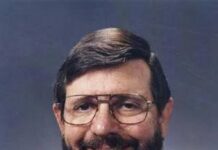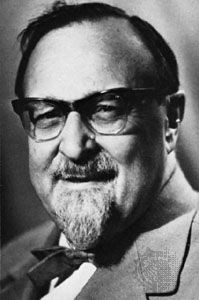
Alexander Oparin doesn’t just learn about life. He was trying to figure out how it started with non-living chemicals. Born in Uglich, Russia in 1894, the biochemist became a key figure in the understanding that life comes from chemicals. He took Charles Darwin’s theory of evolution and pushed it backward. before the animals. before plants. From the mixing of simple organic and inorganic materials to create the first complex compounds. And finally the first living creatures appear.
His story starts with a move. At the age of nine, Oparin’s family left the village and headed for Moscow. There is no middle school back home. Just a necessity. He studied plant physiology at Moscow State University. He was influenced by K.A. Timirjazev was a Russian botanist who really knew Darwin. This indirect line can be seen in Oparin’s works. An application of Darwinian logic to chemistry.
The political climate has changed. A revolution is coming. A.N. Bakh, the botanist who mentored Oparin, fled Russia but later returned. Despite the turmoil and poverty of the Soviet era, the government still valued science and in 1935 founded an institute named after Bach. Oparin helped in its establishment. He ran it until his death in 1980.
The heterotrophic hypothesis and early resistance
Spring 1922, meeting of the Russian Botanical Society. Oparin stood up and dropped a bombshell. He believes that early organisms did not make their own food. They feed on existing organic compounds. This is the heterotrophic theory of the origin of life.
It’s not popular. It was almost universally rejected. Why? This is because the general consensus is that early organisms were autotrophs. Just like plants. They synthesize everything from scratch. Oparin said no. The early Earth, he says, was a “primitive soup” full of readily available nutrients. First life was a consumer, not a producer.
He also questioned basic physical assumptions. Life was thought to be just a chaos of molecules. Oparin proposed a highly structured and functional organization. He pointed out that living things are open systems. Absorbs energy and matter. They don’t sit in a closed box. This means that the second law of thermodynamics, which strictly applies only to closed systems, can be avoided. Smart move.
Test the effectiveness of coacervate and enzymes
His ideas had been dormant in the wilderness for years. When Louis Pasteur made his claims, organic chemistry was not yet sufficiently advanced. Vitalism, the idea that life needs a special “sparkle”, still prevails. But Oparin kept at it.
What was missing? Two things. First, we explain how large, complex molecules take on specific shapes instead of random shapes. The second is how systems like cells actually replicate.
Eventually, other laboratories also found the answer. They discovered that amino acids bind in an ordered manner because of their shape and charge. They observed that small water droplets formed buds that grew and hatched repeatedly. This is consistent with Oparin’s prediction.
He tested his theory using coacervate droplets. These are microscopic units made of gelatin and gum arabic. He used them as a model for early cells. The results speak for themselves. Enzymes work better in this artificial boundary than in open water. Shows that the cells provide the necessary environment for metabolism. Healthy cells are important.
International reach and legacy
Oparin does more than just publish papers. He organized. In 1957, he hosted the first international Origin of Life conference in Moscow. Sixteen countries participated as representatives. It was held again in 1963. The third was held in France in 1970.
His authoritative book The Origin of Life on Earth (3rd ed., 1957) became a standard text. But he is not only concerned with origins. He spent decades studying enzymology and industrial biochemistry. His 70th birthday commemorative essay “Problems of Evolution and Industrial Biochemistry” shows how wide-ranging his interests were.
He was awarded the Order of Lenin. Hero of Socialist Labour. Metchnikov Gold Medal. There’s a bunch of decorations. But his real legacy is the framework he built. He showed that life can arise from chemistry. It’s not magic. It is not a divine spark. Just molecules, energy and time.
The A.N. Bakh Institute is still his home. Under his guidance, researchers continue to investigate the same questions. Is it completely resolved? No, the exact route is unknown. The jump from chemistry to biology remains the most difficult gap to cross. But Oparin gave us the map. Now we just walk on the road.