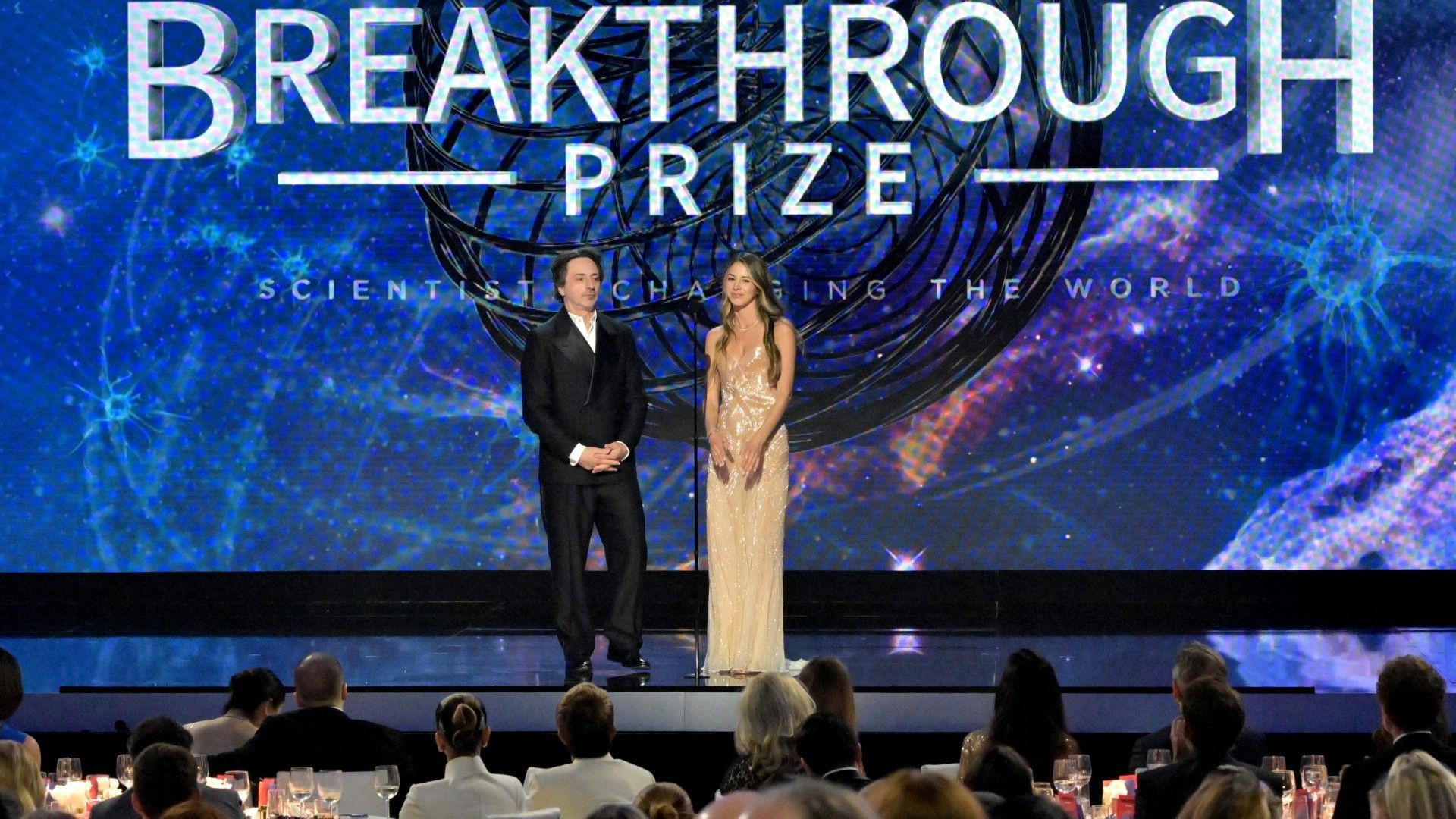
The annual Breakthrough Prize gala in Los Angeles recently celebrated a new cohort of scientific pioneers, distributing over $18 million in prizes. Often referred to as the “Oscars of Science,” the ceremony serves as a high-profile bridge between the worlds of technology, celebrity, and rigorous research, bringing global attention to discoveries that redefine our understanding of life and the universe.
The 2026 awards highlight a profound trend in modern science: the transition from theoretical discovery to direct clinical application. Whether through gene editing or the mapping of neurological diseases, the winners are demonstrating how fundamental research can be converted into life-changing medical realities.
🧬 Life Sciences: From Genetic Blueprints to Medical Miracles
The Life Sciences category saw three major winners, each representing a different pillar of medical advancement:
- Gene Therapy Breakthroughs: Jean Bennett, Katherine A. High, and Albert Maguire were honored for developing the first FDA-approved gene therapy for an inherited disease. By treating retinal degeneration to restore functional vision, their work has provided a blueprint for the entire field of genetic medicine.
- Redefining Blood Disorders: Stuart H. Orkin and Swee Lay Thein were recognized for uncovering the mechanism that switches the body from fetal to adult hemoglobin. This discovery is the foundation for new gene-editing treatments for sickle cell disease and beta-thalassemia, conditions that affect millions globally.
- Unifying Neurological Diseases: Rosa Rademakers and Bryan Traynor were awarded for identifying a specific mutation (C9orf72) that serves as a common link between ALS (Lou Gehrig’s disease) and frontotemporal dementia (FTD). By proving these were linked, they have provided a unified target for future diagnostic tools and therapies.
🌌 Physics and Mathematics: Probing the Fabric of Reality
While the life sciences focused on human health, the prizes in physics and mathematics tackled the most fundamental questions of existence—from the behavior of subatomic particles to the complex movements of fluids.
The Search for New Physics
The Breakthrough Prize in Fundamental Physics was awarded to the Muon g-2 collaborations (involving CERN, Brookhaven National Laboratory, and Fermilab). Their work involves measuring the magnetic properties of the muon with extreme precision. This is critical because any deviation from predicted values could reveal “cracks” in the Standard Model —the current rulebook of particle physics—potentially pointing toward undiscovered particles or forces.
Additionally, David J. Gross received a Special Prize for his lifetime of work, specifically his contributions to understanding the strong nuclear force and advancing string theory, which seeks to unify all fundamental forces of nature.
Mathematical Complexity
In mathematics, Frank Merle was honored for his work on nonlinear evolution equations. His research helps scientists understand how complex, turbulent systems—such as plasmas or fluid dynamics in aeronautics—maintain stability or descend into chaos.
🚀 New Frontiers and Emerging Talent
The 2026 ceremony also looked toward the future of the field with the introduction of the Vera Rubin New Frontiers Prize.
- Carolina Figueiredo received the inaugural award for her work in theoretical physics. Her research suggests that the behavior of particles might be dictated by underlying geometric structures rather than the traditional concept of spacetime, a perspective that could fundamentally shift how we model the cosmos.
- The prize is named after the legendary astronomer Vera Rubin, a nod to the legacy of dark matter research. This timing is significant, as the Vera C. Rubin Observatory is set to begin operations this year, promising to provide unprecedented data on the large-scale structure of the universe.
“This year’s laureates show what great science can do—deepen our understanding of the world and lead to discoveries that improve millions of lives.” — Mark Zuckerberg and Priscilla Chan, Founders of the Biohub
Conclusion
The 2026 Breakthrough Prizes underscore a pivotal era where the boundaries between theoretical science and practical application are blurring. From rewriting the genetic code to testing the limits of particle physics, these laureates are not just observing the universe—they are actively reshaping our ability to survive and understand it.