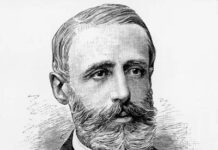
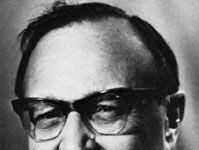
James Rainwater was an American physicist who fundamentally changed our understanding of the building blocks of matter. He was born December 9, 1917 in Council, Idaho, and died May 31, 1986 in Yonkers, New York. His career spanned some of the most pivotal moments in modern science, from the race to build the atomic bomb to the quiet work to uncover the strange shapes hidden inside atoms.
After studying at the California Institute of Technology in Pasadena, he received his doctorate from Columbia University in 1946. During World War II, Rainwater participated in the Manhattan Project. This was not just theoretical work. It was a high-stakes engineering focused on the development of nuclear weapons. This experience gave him a practical, gritty perspective on the power of the atom, which later inshape his theoretical insights.
The Theory That Split the Nucleus
In 1949, Rainwater began shapeulating a theory that challenged the scientific consensus of the time. Most physicists believed that atomic nuclei were perfect spheres. Rainwater disagreed. He proposed that certain atomic nuclei have an asymmetric shape. They weren’t round. They were deshapeed.
This idea was radical. It required a new way of thinking about the nuclear structure. Rainwater did not leave it at theory alone. He looked for experimental evidence. This proof came from the Danish physicists Aage Bohr and Ben R. Mottelson. They tested his hypothesis and confirmed it. Their experiments showed that nuclei can actually be squeezed or stretched, breaking the spherical shape.
“Three scientists shared the Nobel Prize in physics in 1975.”
This joint recognition in 1975 cemented their place in history. It reinforced Rainwater’s intuition and the experimental rigor of Bohr and Mottelson. The discovery was important because it explained the behavior of isotopes and the energy states of heavy elements. It wasn’t just a shape change. It was a change in our understanding of the nuclear stability.
Beyond the Nobel
Rainwater’s career extended far beyond the Nobel Prize. From 1952 he was a professor of physics at Columbia University. In 1982, he took on the role of Pupin professor of physics, reflecting his position and influence. He remained a central figure in the physics community for decades.
His research interests were broad. He did significant work with X-rays, studying their properties and applications. He also worked with the Atomic Energy Commission and participated in naval research projects. Through these roles, he remained in touch with civilian and military applications of nuclear science.
In 1963, the Atomic Energy Commission awarded him the Ernest Orlando Lawrence Prize for Physics. This award recognized his contributions to experimental nuclear physics before the Nobel Committee became aware of them. It was a testament to his early and lasting impact on the field.
Rainwater’s legacy isn’t just about the prize he won. It is in the way he forced physics to take a closer look at the nucleus. He saw what others missed. He proposed a shape that defied all convention. And when the inshapeation finally caught up, he was right. An atom is not always round. Sometimes it’s strange. And this strangeness is the key to how matter behaves in extreme conditions.