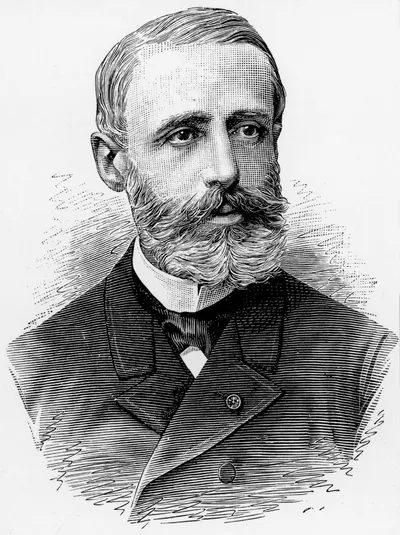
It is hard to overstate how much of a headache modern transportation would be without the lead-acid battery. That heavy, rectangular box under your hood? It works because of a French physicist named Gaston Planté. He didn’t just invent a battery; he created the first electric storage device capable of being recharged. Before his work in 1859, batteries were mostly single-use. His invention changed everything, and in improved form, it remains the standard for starting cars today.
From Lecture Hall to Laboratory
Planté wasn’t exactly a lone genius working in a shed. He had a serious academic pedigree. Born in Orthez, France, on April 22, 1834, he moved to Paris to build his career. By 1854, he was already working as a lecture assistant in physics at the Conservatory of Arts and Crafts.
He kept moving up the ladder. Six years later, he became a professor of physics at the Polytechnic Association for the Development of Popular Instruction. But his real legacy wasn’t in the classroom. It was in the experiments he ran alongside his teaching duties.
The Spiral Design That Changed Energy Storage
In 1859, Planté began experimenting with ways to store electrical energy. The result was a prototype that looked nothing like the batteries we use now.
His first model was surprisingly simple. It contained two sheets of lead. Between them, he placed rubber strips to keep them from touching. Then he rolled the whole thing into a spiral. Finally, he immersed the spiral in a solution of sulfuric acid—about 10 percent concentration.
This setup allowed for the storage of electrical charge. It was an accumulator. The name stuck.
Delivering Power on Demand
Planté didn’t stop at a single cell. A year after his initial experiments, he presented a more robust version to the Academy of Sciences. This new battery housed nine of the spiral elements he had designed. They were housed in a protective box, with the terminals connected in parallel.
Why does this matter? Because it could deliver remarkably large currents.
Most early electrical sources were weak. They could trickle-charge small devices, maybe light a dim bulb for a few seconds. Planté’s design could push a lot of power, fast. That capability is exactly what you need to crank a heavy engine.
Why It Endures
You might wonder why we still use a design from the 19th century. The answer is simplicity and reliability. Lead-acid batteries are cheap to make. They are robust. They handle high surge currents better than many newer technologies.
Planté’s original design was crude by modern standards. The rubber strips would degrade. The lead would sulfate. But the core principle—using lead plates in sulfuric acid to store and release energy—held up.
Today, if you buy a car, it almost certainly has a lead-acid battery to start the engine. It’s a direct descendant of Planté’s spiral. He solved the problem of storage in an era where electricity was still a novelty.
We’ve moved past his exact materials. We’ve moved past his exact construction methods. But the basic idea remains the same. Power when you need it. Stored until you need it.
It’s not the most