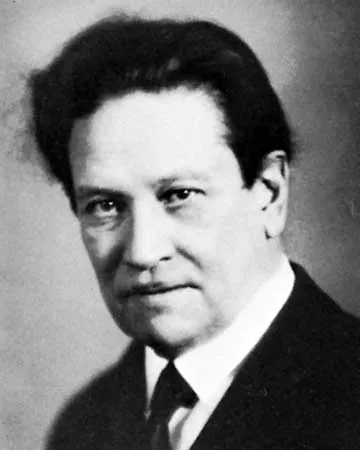
Selim Palmgren is more than just a keyboard player. He was the person who built a national sound. He was born in Pori (then part of the Russian Empire) on February 16, 1878 and died in Helsinki on December 13, 1951. He left behind a legacy that helped define what Finnish classical music really sounded like.
He didn’t start from scratch. Palmgren started his studies at the Helsinki Conservatory in 1895. But the actual training took place in Germany. From 1899 to 1901 he studied under the great Ferruccio Busoni. This instruction is important. This gave him a different musical gravity than Helsinki.
After returning to Finland, his career shifted from performance to creation. In 1909, he moved to conducting in Turku. There he composed the opera Daniel Hjort The premiere in 1910 was in Swedish. Fifteen years later, in 1929, he revised it for the Finnish performance. Why make such a change? At that time, language was a political act. Singing in Finnish wasn’t just artistic. it was nationalist.
He was everywhere else, too. Pianist on tour. Accompanist to his wife, singer Maikki Pakarinen. The grind of travel do not show up in the scores, but they may have shaped his ear.
He left Finland for a while. From 1923 to 1926, Palmgren taught at the Eastman School of Music in Rochester, New York. America. Then he came back. He became a music critic in Helsinki. From 1939 until his death in 1951, he taught again at the Sibelius Academy.
So what is he famous for?
Looking at his catalog, you notice two things. The small piano pieces. And the big piano concerti.
Nationalism is in small pieces. See “Finnish Lyric Pieces”. Their inspiration came directly from folk songs. You can hear the landscape in them. This is a nationalist movement in musical form.
But look at the larger works. Especially his five piano concertos. The influence there is not folk. It is Franz Liszt. Grandiose. technical. romantic.
His work has a dual personality. One foot is on Finnish soil and the other foot is on the pedal of Liszt. Which one is more interesting? The local flavor or continental ambition?
He managed to do both. He managed to do both.