Forget everything you knew about the timeline. Complex animals in North America didn’t wait their turn. They showed up early. Up to ten million years earlier, to be exact.
Fossils pulled from northwestern Canada tell the story.
A recent study in Science Advances details a haul of more than one hundred specimens. Six taxa were total newcomers to the North American fossil record. Some date back to 567 million years ago. That’s the Ediacaran period. Back then this landmass was part of Laurentia. Ancient. Before Pangaea.
For three billion years Earth belonged to microbes.
Then things got big. Suddenly. Strange.
Scott D. Evans of the American Museum of Natural History puts it bluntly.
“If we want to understand this transition. When life first became large. Complex and unmistakably animal. This new site has tremendous potential.”
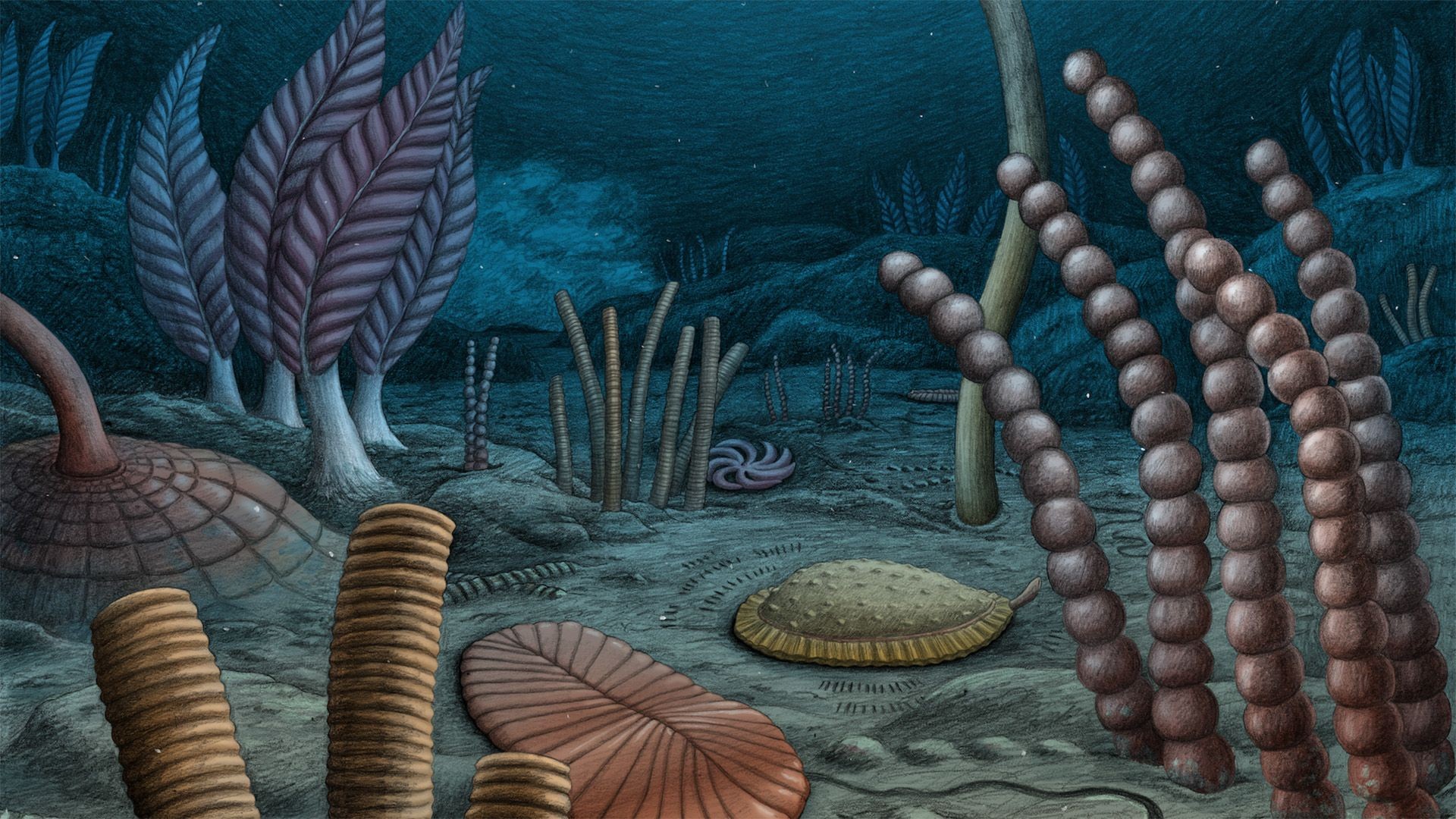
These creatures moved. They hunted. They existed in a world that looks nothing like the microbial sludge of the past. But they also don’t look exactly like modern fauna either. Many were soft bodied. No shells. No bones. Soft tissues don’t keep well in stone.
That makes every find a gift.
Paleontologists usually group these ancient remnants into three buckets based on age. The Avalon group. Stationary deep-water dwellers from 575 to 559 million years back. The Nama group. The ones with the earliest hard parts like shells and bones. And then there’s the middle child. The White Sea assemblage.
This Canadian discovery targets the White Sea group. But there is a twist.
The fossils here predate the oldest White Sea examples found in Europe or Australia by five to ten million years.
Among them was Dickinsonia. A flat oval thing. It absorbed algae right through its bottom. Simple. Then Funisia. Tube-shaped. It offers the oldest proof that animals knew how to reproduce sexually. And Kimberella. An early mollusk. It might hold the title for the oldest known bilateral symmetry in the fossil record.
Justin Strauss from Dartmouth College is excited. Not just for the variety but for the context.
“Not only is this new site highly diverse. But also it is from a part of our rock succession where we’ve lacked fossils. We have great potential here to revisit Ediacaran history.”
But maybe the biggest surprise isn’t the date. It is the depth.
The sediment around these bones tells us these creatures lived deep under water. We usually think of evolution going the other way. From the safe deep to the shallow reefs. From stable dark places to chaotic bright ones.
This suggests the reverse.
Deep water first. Then expansion shallower. Why? Stability.
“We think of the deep ocean as dark. Inhospitable. But it is stable. Few fluctuations in temperature or oxygen. That stability may have supported early life.”
So we need to rethink the cradle of complexity.
Was the abyss not a void after all. Or just a quieter room than we assumed?
We tend to imagine the bright shallows as the stage for the opening act of animal life. Maybe we have been watching the wrong end of the story all along.