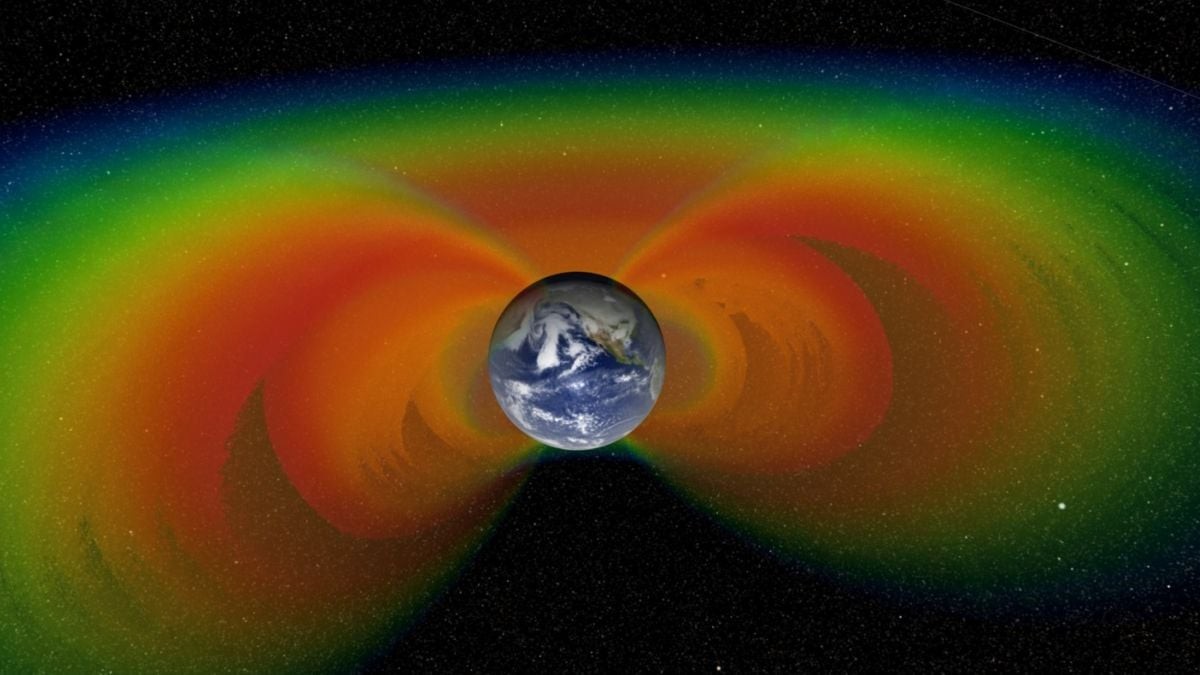
The Earth has a halo.
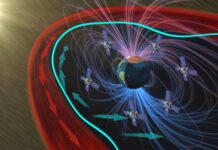
An invisible torus of radiation known as the Van Allen belts. It traps charged particles, slamming them into satellites at near-light speed. Usually, this is bad news for hardware. High energy. High damage. Plan for it.
Nuclear physicist Areg Danagoulian sees an ally instead of a hazard. He wants to use this cosmic storm to sniff out nuclear weapons in orbit.
Danagoulian works at MIT. He dug into the literature on space radiation and noticed something specific: the belts are packed with protons. Lots of them.
“I started studying the literature,” he said. “This is where it clicked: protons and spallation on uranium.”
The idea feels like it should have arrived sooner. During the mid-20th century, nations blew things up high in the atmosphere to see what happened. It was destructive, sure. But informative, too. They learned that nukes in space fry electronics and flood the void with radiation.
In 1967. The Outer Space Treaty. Everyone signed it. No nukes allowed in space.
Reassuring.
Until you remember we have zero practical way to check if anyone is cheating. Without verification, a treaty is just a suggestion written in ink. A gentleman’s agreement between superpowers.
Fast forward to 2024.
Danagoulian’s student was looking at neutron spallation—knocking neutrons off atoms using high-energy particles. Meanwhile, colleagues whispered about rumors of a Russian satellite carrying a nuke. Two threads. One knot.
The Van Allen belts bomb satellites with protons anyway. Why not let those protons hit hidden uranium?
“When the satellite carrying a thermonuclearweapon passes through the inner VanAllen Radiation belts… protons… knock out many neutrons fromuranium nuclei,” Danagoulian explains.
You build a neutron detector. It catches the splash. You know where the nuke is.
This isn’t a working machine yet. It’s a feasibility study published in Nature. The physics works. The technology exists. The rest is engineering hell.
“In this project… the secrecy is 100%.” – Areg Danagoulian
Neutron spallation is standard stuff at particle accelerators on the ground. In orbit, it’s a nightmare. You need to isolate the signal from a background roar of cosmic noise. You need to know the neutrons came from that satellite, not the Earth below. You need perfect orbital mechanics. Perfect timing.
“You have to get all of that right.”
It’s a cocktail of nuclear physics, space weather predictions, and trajectory math. And that’s just the machine. The people are worse.
Danagoulian expected cooperation from his peers. He got walls. Even colleagues doing classified arms control research wouldn’t speak openly. His MIT team published their work, yet the door shut tight. Secrecy total.
Despite the hurdles, he doesn’t stop.
He wants inspector satellites. Automated. Or maybe cooperative, if nations were ever that honest. The system would be expensive. Complex. Nearly as important as Starlink, he argues, because you can’t have security in space without proof.
The study is out now. The blueprint exists. The question isn’t if it’s possible. It’s if we’ll actually look.
What do you see when you stop looking away?