A satellite called an airbag sounds wrong. But that is exactly what a group of physicists just proposed.
They want to build StormWall. Not a wall of concrete or brick. A wall of plasma. Giant cans of gas launched into high orbit to puff up and block solar superstorms from frying our grids and killing our astronauts.
Experts say it could work.
“It’s quite feasible,” the researchers argue.
We are in the middle of the solar cycle’s peak phase right now. The sun is restless. It has already belched out dozens of coronal mass ejections (CMEs). We see pretty lights. Aurora borealis. Everyone loves the photos. But behind the pretty lights sits a very dangerous problem.
Every few hundred years the sun gets really angry.
Think back to 1859. The Carrington Event. It was a storm so massive it set telegraph fires and sent sparks jumping from machines into people’s hands. If that same storm hit Earth today? We are in trouble. Every satellite in low orbit goes dark. The internet stops. Power grids melt. Astronauts outside the ISS get a lethal dose of radiation. Total infrastructure collapse.
We currently have no shield. Just warnings. We wait for the forecast then we hide behind reinforced equipment hoping for the best. That feels weak.
A new study published in Space Weather offers a different tactic. Active defense.
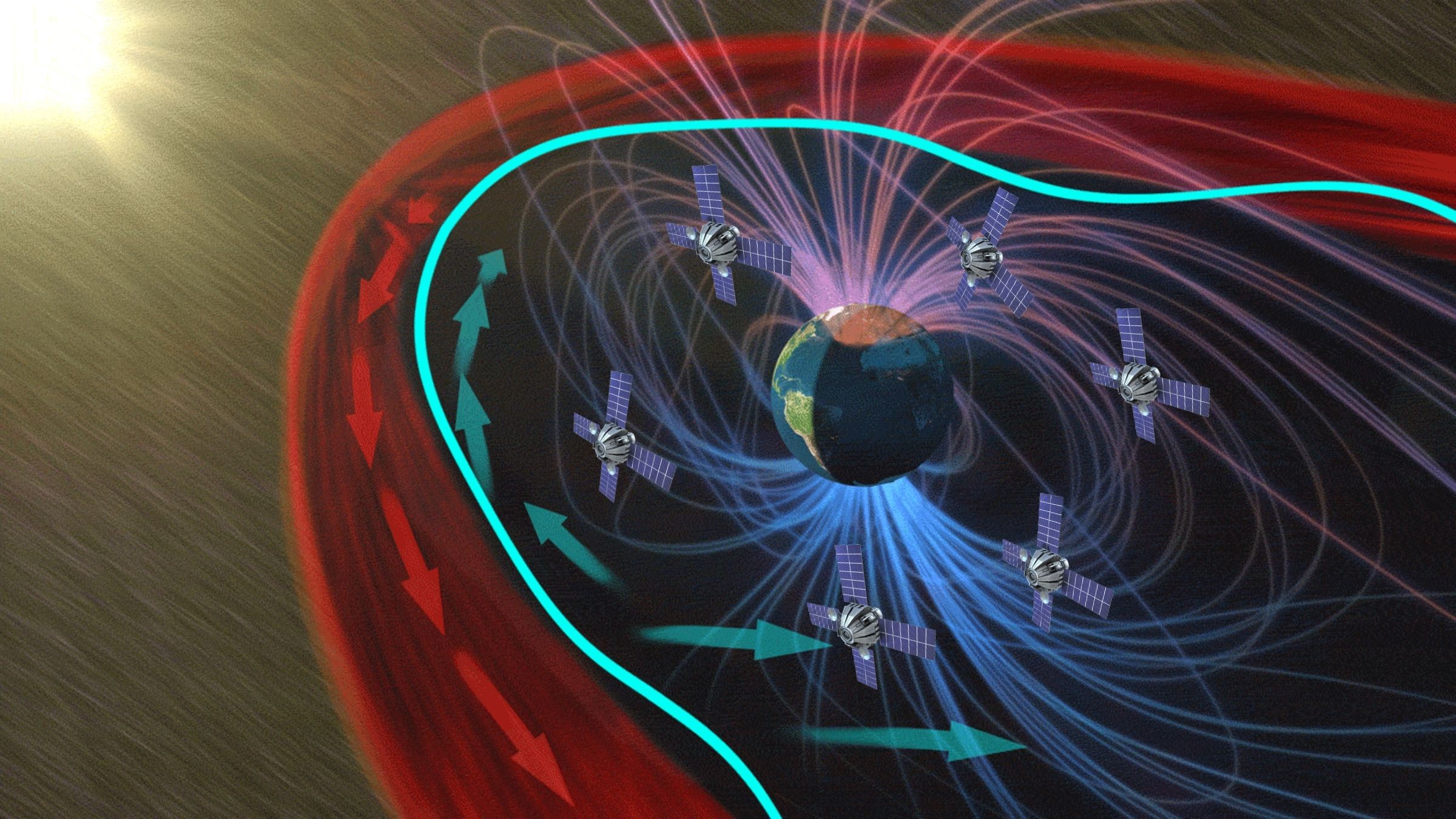
Here is the plan. Launch six satellites. Each one roughly the size of a city bus. They sit at geosynchronous orbit—22,500 miles up. That is way above the International Space Station. They hang there. Doing nothing. Until the big one comes.
When the storm hits these satellites release a payload of gas. Barium. Lithium. Sodium. Maybe calcium. Imagine twelve oil trucks full of it dumped into space at once.
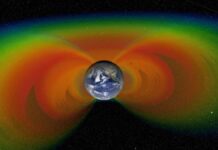
The gas gathers at the front of Earth’s magnetosphere. The sun hits it. It ionizes. Instantly you get a massive barrier of charged particles. This wall cushions the impact. It deflects some of the blast. It cuts the intensity.
Daniel Welling from the University of Michigan likes the airbag analogy. And it makes sense. You do not stop the car crash with an airbag. You just survive the impact with fewer broken bones.
StormWall is inspired by nature itself. When solar storms hit us our natural magnetosphere weakens. But oxygen ions from the atmosphere get trapped there. They pile up on the sunny side of Earth forming a protective bubble. StormWall just pretends that bubble was there before the crash happened.
It works in the simulation.
The team tested this concept against the May 2024 event. The “Mother’s Day Storm.” A nasty one that caused the most severe geomagnetic disturbance since 2011. If StormWall had been active then the impact would have been 84% lower. That is massive.
Brian Walsh from Boston University says the physics check out. “The amount of mass we need,” he said. “The launch capacities.” It is all doable with today’s rockets.
Is it cheap? No.
The satellites would be heavy. Heavier than most things we have launched. You would need big rockets to push them there. Think SpaceX’s Starship. The price tag could be in the billions of dollars. Plus these cans are not reusable. Once they are empty you need more gas or a new mission. One and done.
That is the downside. A disposable shield that costs billions to install.
But what is the cost of not installing it?
Just the Mother’s Day storm alone cost US farmers about $500 million in broken GPS equipment. Farmers need those coordinates to harvest fields. A Carrington-level superstorm could cost the global economy up to $3,400 trillion dollars. Trillions. With a capital T.
Why not just take the risk?
Because there are no other options. No magic buckles to wear.
There are worries sure. Geoengineering always brings suspicion. Could dumping that much barium into orbit hurt our atmosphere? The team says no. Solar wind will blow the gas away quickly. It dissipates.
But even so experts outside the study agree this is bold. And smart. Allison Jaynes at the University of Iowa called it “highly innovative.”
So here we sit. Sitting in our village with the river rising. We can predict the flood. Or we can build the dam.
The tech exists. The need is real. The question isn’t whether it will work. The question is if we have the will to build a shield for the entire planet just in case.
Maybe we wait.
Or maybe we launch.