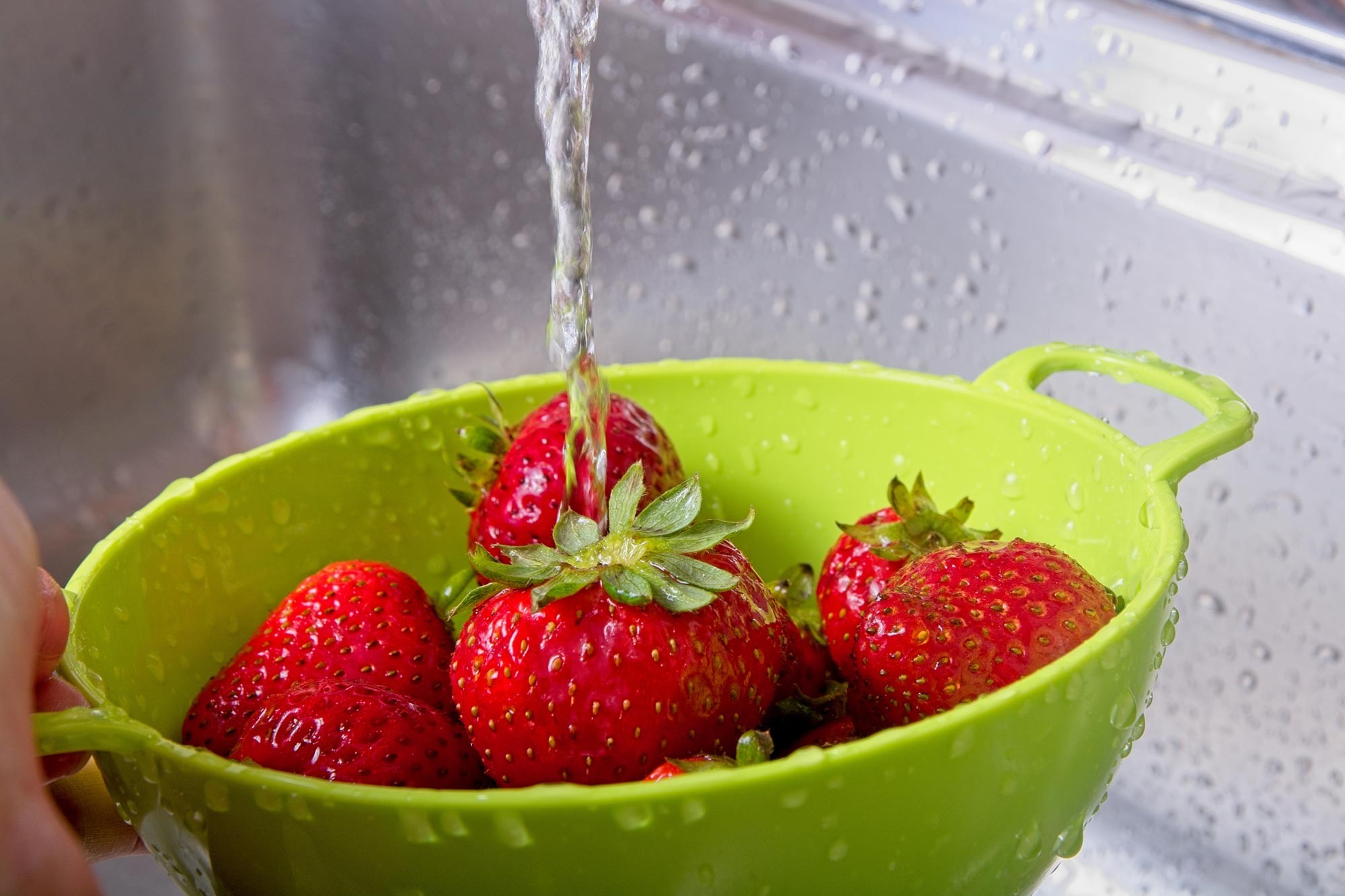
Researchers at the University of British Columbia (UBC) have developed a breakthrough, biodegradable fruit wash that serves a dual purpose: stripping away pesticide residues and creating a protective barrier to keep produce fresh for longer.
This innovation addresses two of the most pressing issues in the modern food supply chain: consumer safety regarding chemical exposure and the massive global problem of food waste.
The Science Behind the Wash
The solution is not a harsh chemical agent, but a natural formulation based on starch particles (similar to those found in corn or potatoes). The researchers combined these particles with tannic acid —a natural compound found in tea—and iron.
When these ingredients interact, they form a “sponge-like” structure. This structure is specifically designed to:
1. Bind to pesticides: The mixture clings to the surface of the fruit and pulls chemical residues away.
2. Form a “second skin”: After the cleaning phase, the remaining solution leaves behind a thin, edible, and breathable coating.
Superior Performance Compared to Traditional Methods
In laboratory tests using apples, the starch-based wash outperformed standard household cleaning methods. While rinsing with tap water, baking soda, or plain starch typically removes less than 50% of pesticide residue, this new formula removed between 86% and 96%.
Beyond cleaning, the coating acts as a preservative:
* Slower Browning: Fresh-cut apples treated with the wash stayed white longer than untreated ones.
* Moisture Retention: The coating prevents the fruit from drying out.
* Extended Shelf Life: In tests, whole grapes remained firm for up to 15 days at room temperature, whereas untreated grapes began to shrivel much sooner.
* Antimicrobial Protection: The coating helps inhibit the growth of harmful bacteria, further improving food safety.
Why This Matters: Safety and Sustainability
This research is particularly relevant due to two growing trends: the rising cost of fresh produce and increasing consumer anxiety over pesticide consumption.
For many, especially children who consume large amounts of specific fruits like berries, the cumulative effect of pesticide residue is a significant health concern. This wash offers a way to reduce that risk without sacrificing the freshness of the food. Furthermore, by extending the time fruit remains edible, this technology could significantly reduce the nearly 50% of fresh produce wasted globally each year.
Looking Ahead: From Labs to Kitchens
The research team, led by Dr. Tianxi Yang, is focused on making this technology both commercially viable and consumer-friendly.
Commercial Scalability
The ingredients are inexpensive and easy to mix with water. Early estimates suggest the cost of treating an apple would be approximately three cents, making it competitive with existing commercial coatings used in the industry.
Home Use
While the current focus is on large-scale processing facilities, the researchers envision a version for everyday consumers—perhaps in the form of a spray or a dissolvable tablet that can be added to a washing bowl at home.
“Our goal was to create a simple, safe, and affordable wash that improves both food safety and food quality,” says Dr. Tianxi Yang. “People shouldn’t have to choose between eating fresh produce and worrying about what’s on it.”
Conclusion: This starch-based innovation offers a low-cost, eco-friendly solution to reduce pesticide exposure and combat food waste by significantly extending the shelf life of fresh produce.