New research has confirmed that a rock sample analyzed by NASA’s Curiosity rover contains the most diverse array of organic molecules ever detected on Mars. Among the 21 carbon-based molecules identified, seven are entirely new to the Red Planet, marking a significant milestone in our understanding of Martian chemistry.
A Chemical Breakthrough on the Red Planet
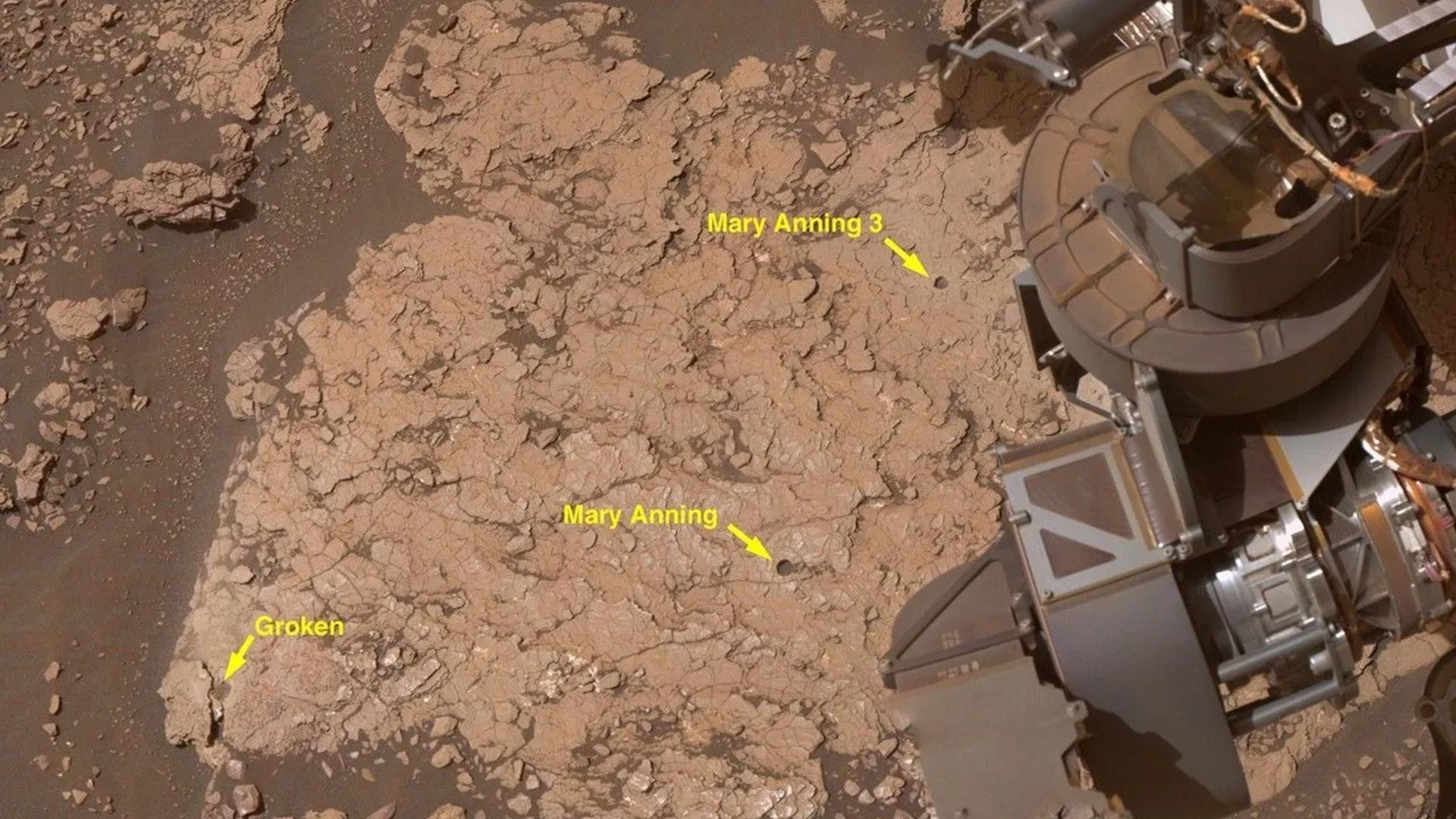
The findings, published in Nature Communications, center on a specific rock sample nicknamed “Mary Anning 3” —a tribute to the pioneering English paleontologist. The sample was collected in 2020 from an area of Mars that was once a lush environment of lakes and streams before the planet transitioned into its current arid state.
The analysis revealed a complex chemical cocktail, including:
– Nitrogen heterocycles: Molecules that serve as essential precursors to RNA and DNA.
– Benzothiophene: A compound thought to play a crucial role in delivering life-friendly chemistry to planets via meteorites.
– Long-chain hydrocarbons: Including decane, undecane, and dodecane, which were identified in previous studies.
Why This Discovery Matters
While the presence of organic molecules does not provide definitive proof of past life, it provides a critical piece of the puzzle: habitability.
The discovery is significant for two primary reasons:
1. Chemical Potential: The variety of molecules suggests that ancient Mars possessed the necessary “building blocks” to support biological processes.
2. Resilience: These compounds have survived for billions of years despite intense Martian radiation, which typically breaks down organic matter. This survival is attributed to the area’s clay minerals, which act as natural protective capsules for organic compounds.
How the Discovery Was Made
The analysis was conducted using the Sample Analysis at Mars (SAM) instrument. The process involves a sophisticated sequence of mechanical and chemical steps:
– Drilling: Curiosity’s robotic arm drills into the rock to create a fine powder.
– Heating: The powder is fed into a high-temperature oven within SAM, which vaporizes the sample so its gases can be measured.
– Wet Chemistry: For the first time, scientists used a specialized solvent called tetramethylammonium hydroxide (TMAH) to break down the sample. Because the “Mary Anning 3” sample was deemed so high-value, NASA utilized one of only two available cups of this precious reagent.
To ensure accuracy, scientists cross-referenced the results with the Murchison meteorite, a 4-billion-year-old space rock found on Earth. The way the Martian molecules reacted to the solvent mirrored the behavior of the Murchison sample, validating the rover’s findings.
Looking Ahead
Curiosity has been exploring the Martian surface since 2012. Having recently used its final cup of TMAH on a different geological formation—”weblike boxwork ridges”—the mission continues to provide data that will fuel future studies into the planet’s watery and biological past.
The discovery of these diverse organics reinforces the theory that ancient Mars was not just a barren desert, but a world with the chemical complexity required to host life.
In summary, the detection of seven new organic molecules in a single rock sample confirms that ancient Mars possessed a sophisticated chemical environment, significantly increasing the likelihood that the planet was once capable of supporting life.