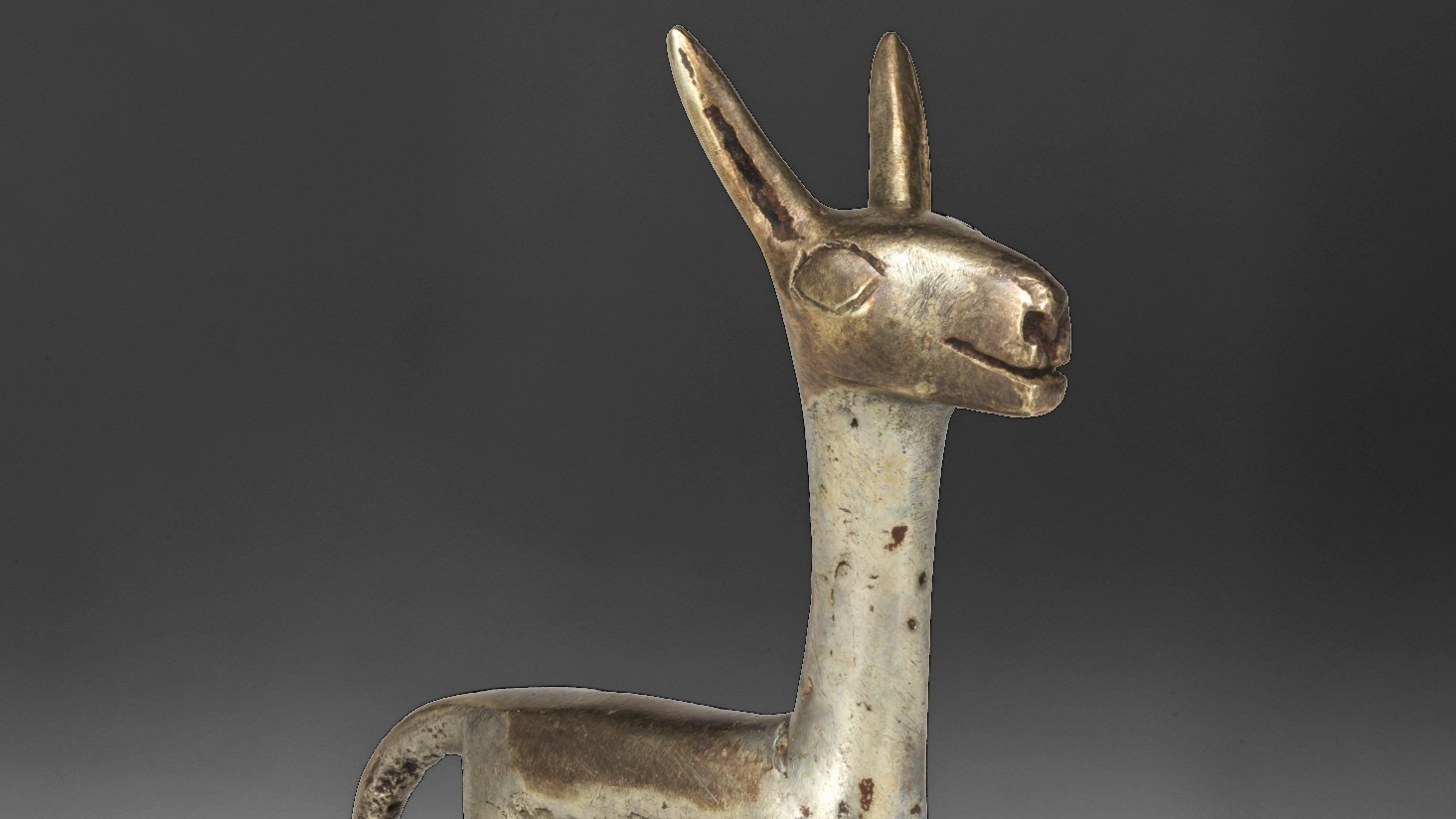
A tiny, silver-alloy figurine—standing just two inches tall—offers a profound window into the spiritual and practical life of the Inca Empire. This miniature camelid, featuring a distinctively wry smile, was not merely a decorative object but a huaca : a sacred entity or object revered as a vessel of divine power.
Craftsmanship and Composition
Crafted approximately 600 years ago, the figurine is composed of a sophisticated alloy of silver, gold, and copper. After the initial casting process, an Inca artisan meticulously hand-finished the details, carving out the eyes, nostrils, and toes to give the creature its lifelike, albeit playful, expression.
While the figure likely represents a llama (Lama glama ), it may also depict an alpaca (Lama pacos ), both of which were central to Andean civilization.
The Backbone of Andean Life
To understand why such an effigy held such weight, one must look at the indispensable role camelids played in the Inca Empire. They were the “all-in-one” resource for survival in the rugged Andean landscape:
- Logistics: Used as pack animals to transport goods across vast distances.
- Nutrition & Medicine: Provided meat for food and fat for medicinal use.
- Textiles & Shelter: Their wool was woven into clothing, and their hides were used for footwear.
- Industry: Bones were fashioned into musical instruments, while their dung served as both fuel and fertilizer.
This total reliance on the animal explains why the llama transitioned from a mere biological resource to a spiritual icon.
Rituals of Sacrifice and Devotion
The figurine is believed to be linked to the capac hucha (“royal obligation”), a major ritual cycle centered in the capital of Cuzco. These ceremonies were held to mark pivotal moments—such as the death of a ruler, the expansion of territory, or natural disasters like droughts—and involved the sacrifice of llamas, maize, and even children to appease the gods.
Archaeological evidence supports the sacred nature of these small objects:
– Ritual Dress: Many discovered figurines were found “dressed” in fine textiles and feathers, suggesting they were treated as living deities.
– Funerary Importance: In 1999, researchers discovered that one of the “Children of Llullaillaco”—sacrificial Inca mummies—was buried alongside 11 camelid figurines made of silver, gold, and shell.
These findings suggest that these miniature effigies were intended to accompany the deceased or the sacrificed into the spiritual realm, acting as eternal companions or offerings.
A Lasting Legacy
The cultural footprint of the llama is so deeply embedded in the Andean identity that it even transcends history to influence modern pop culture. The visual resemblance between this ancient artifact and the character transformations in Disney’s The Emperor’s New Groove highlights how the image of the llama has remained a recognizable symbol of the region for centuries.
Conclusion
This miniature silver llama serves as a bridge between the practicalities of survival and the complexities of Inca spirituality. It stands as a testament to a civilization that viewed its most vital animals not just as tools, but as sacred participants in the divine order.