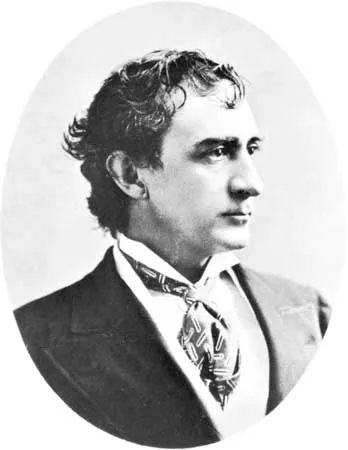
Born in 1833 near Belair, Maryland, Edwin Booth didn’t just step into the spotlight. He was born into it. His family was already a theatrical powerhouse in the United States. But while the Booth name eventually became synonymous with one of the most infamous crimes in American history, Edwin’s life was defined by artistic brilliance. And tragedy.
He started playing leading roles early. By 1857, he was commanding stages in Boston and New York City. Audiences weren’t just watching an actor. They were witnessing a phenomenon.
The Hamlet That Defined a Generation
Edwin Booth didn’t just play Shakespeare. He became it. His portrayal of Prince Hamlet is still legendary. He performed the role 100 consecutive nights between 1864 and 1865. That wasn’t a tour. That was a residency. It cemented his status as the greatest tragedian of his era.
But the shadow of his brother, John Wilkes Booth, would soon darken everything.
A Stage Exile
June 1865 changed everything. John Wilkes Booth assassinated President Abraham Lincoln. The public didn’t distinguish between the two men. They saw only the surname. The connection was too fresh. Too bloody.
Edwin Booth couldn’t perform. The stigma was suffocating. He stepped away from the stage entirely. It wasn’t a hiatus. It was a retreat. He wouldn’t return to acting until 1866. When he did, the applause was different. Heavier. He had to prove he wasn’t the monster his brother had become.
Success, Failure, and Global Acclaim
He didn’t rest on his laurels. In 1869, Booth opened his own theater. He wanted to control his own destiny. The venture failed. Mismanagement forced him to sell it by 1873. A financial disaster.
Yet his artistry traveled far beyond America’s borders. Critics in England and Germany didn’t care about his brother’s crimes. They cared about his craft. His interpretations of Iago and King Lear won him immense acclaim across the Atlantic. He proved that talent could survive infamy.
The Players’ Club
By the late 1880s, Booth was no longer just an actor. He was an institution. In 1888, he founded the Players’ Club in New York. A private club for actors and men of letters. A sanctuary for the profession he loved.
He died in New York City on June 7, 1893.
His legacy remains complicated. You can’t separate Edwin from John. The blood relation is undeniable. The crime is unforgettable. But Edwin Booth wasn’t John Wilkes Booth. He was something else. A man who played Hamlet a hundred times. A man who built a club for actors. A man who carried a name that could never be washed clean.
Or maybe, just maybe, his work was enough.