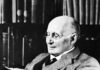
Max Pallenberg didn’t just act. He crashed into scenes, often without a script, and the stage leaned in to watch. Born in Vienna in 1877, this Austrian comedian became the heartbeat of a theatrical movement that valued raw, unpolished reality over polished lines. His name might not light up a marquee today, but his specific style of extempore farce helped shape how German theater approached comedy for decades.
How Pallenberg’s Style Changed The Stage
It started in 1909. Vienna. Revues and operettas. Standard stuff. Then he moved to Berlin and landed at the Deutsches Theater under the wing of Max Reinhardt. This was the big break.
Pallenberg’s talent was messy. He improvised constantly. It drove his scene partners nuts. They never knew what he was going to say next. But audiences adored it. Critics loved it. There was a spark in those performances, a genuine “right now” feeling that scripted lines couldn’t always capture.
The chaos of his improvisation created a unique authenticity that felt like a secret shared between the actor and the audience.
Reinhardt kept casting him in farces, leaning into that wild energy. But as his career progressed, Pallenberg proved he could hold his own in more structured roles, too. He wasn’t just a gag man. He could carry weight.
Which Roles Defined His Career?
Three performances really stuck.
- The Cashier in Georg Kaiser’s Morn to Midnight
- The Barker in Ferenc Molnar’s Liliom
- Argon in Molière’s Imaginary Invalid
These roles showed range. They showed control. But they didn’t show him at his absolute peak.
That peak arrived in 1928.
The Good Soldier Schweik: A Multimedia Masterpiece
Erwin Piscator directed. Bertolt Brecht wrote the adaptation. Jaroslav Hašek provided the source novel. The production was called The Good Soldier Schweik.
Pallenberg played Schweik. The befuddled underdog. The man crushed by bureaucracy.
This wasn’t a normal play. Piscator built a multimedia event. Think cutout cartoon characters, animated film clips, treadmills on stage, signboards, and abstract lighting. It was loud, visual, and aggressive. The goal? To condemn bureaucratic manipulation and callousness in the most visceral way possible.
Pallenberg was the human anchor in that chaos. He was the foil to Piscator’s spectacle. While the stage exploded with imagery, Schweik remained confused, human, and tragically real. It was the perfect contrast.
Why Did Pallenberg Leave Germany?
The political climate in early 1930s Germany turned toxic. Pallenberg’s wife was Fritzi Massary, a huge operetta star. Massary was Jewish. Under the rising Nazi regime, that made Pallenberg a target, even if he was a beloved German actor.
He was forced to leave.
His death was as abrupt as his career had been dynamic. In 1934, while traveling to a theatrical appearance, he was killed in an airplane crash in Karlsbad, Austria.