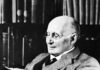
Alfred Russel Wallace defies easy categorization. He wasn’t just a naturalist. He was a thinker who straddled the line between rigorous science and deep spiritual inquiry. This dual identity often pushes him to the edges of historical memory.
Wallace possessed a keen intellect that never lost its spark for the natural world. He wrote prolifically and clearly, making complex ideas accessible. But he also championed progressive political causes and embraced spiritualism. These interests likely contributed to his somewhat peripheral status in history compared to his contemporaries.
The tension between science and spirituality
Why does Wallace’s spiritualism matter? It complicates the narrative that early evolutionary scientists were purely materialists. Wallace was a gifted naturalist, but he remained enthusiastic about nature in a way that felt almost reverential. This blend of observation and belief made him difficult to slot into simple academic boxes.
His engagement with unpopular causes added another layer of complexity. He advocated for progressive politics at a time when such views were risky. This activism, combined with his spiritual interests, meant he didn’t fit the mold of the detached, objective scientist that history often prefers.
A prolific writer with a distinct voice
Wallace was a lucid writer. He could explain difficult concepts without losing clarity. His work was extensive, covering a wide range of topics beyond just evolution. This breadth of work sometimes distracts from his specific contributions to evolutionary theory.
Yet, his writing style remains a strength. It was direct and engaging. He didn’t hide behind jargon. This made his ideas spreadable and influential, even if his personal reputation suffered from his controversial stances.
Why his legacy remains peripheral
The combination of his spiritual beliefs and political activism likely pushed Wallace into the margins. Historians often focus on the scientific breakthroughs, ignoring the human elements that shaped the scientists. Wallace’s story is incomplete without acknowledging these aspects.
His peripheral status is a reflection of how we categorize historical figures. We often want clean narratives. Wallace offered a messy, multifaceted life. He was a scientist, a spiritualist, a political activist, and a naturalist, all at once. This complexity is what makes him difficult to summarize.
Wallace’s career eludes simple description.
This is the core challenge. Trying to reduce him to just “the co-discoverer of evolution” misses the point. It ignores the person who lived, thought, and wrote with such breadth. His legacy is not just about what he discovered, but about who he was.
What this means for understanding early evolutionary science
Understanding Wallace’s full profile helps us see the human side of scientific history. It reminds us that scientists are not just vessels for data. They are individuals with beliefs, politics, and passions. Wallace’s spiritualism and activism were part of his identity, not just footnotes.
This context is important. It shows that the scientific revolution was not just a cold, logical process. It was shaped by people who had rich inner lives. Wallace’s story is a reminder of that reality.
His work still matters. His writing was clear and his observations sharp. But to fully appreciate his contribution, we need to look at the whole person. Not just the naturalist, but the man who believed in the spiritual and fought for political progress. That is the complete picture. And it is a picture