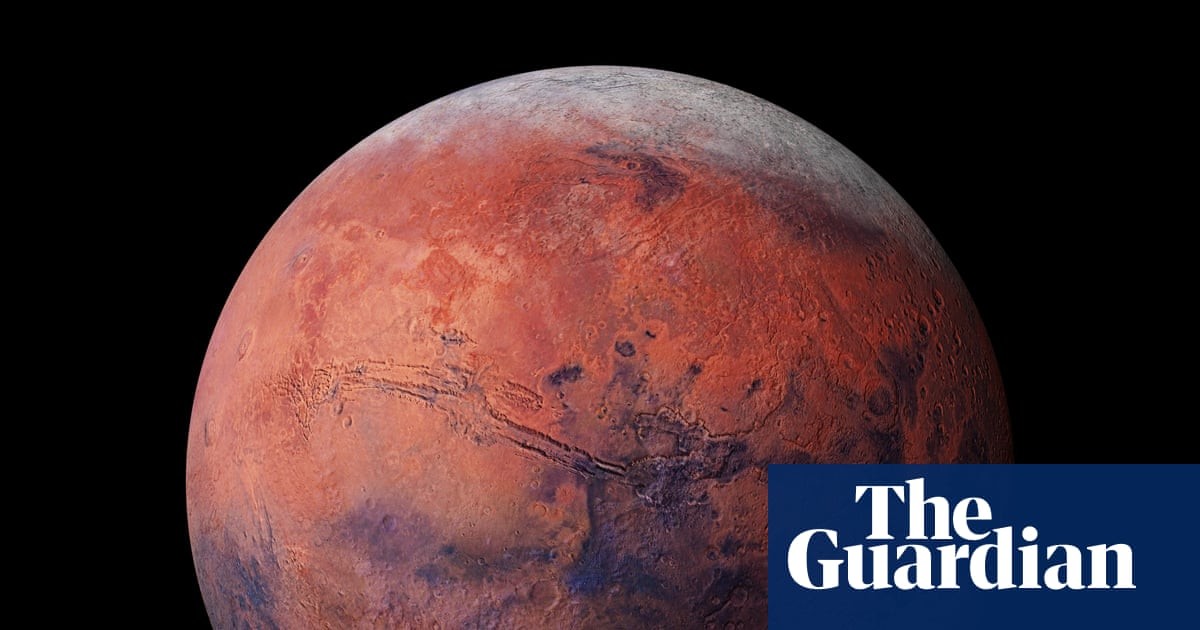
It’s been half a century since the Viking landers touched down. The official NASA narrative is clean-cut. They looked for life. They didn’t find any definitive proof. Case closed.
But Steven Benner thinks we’ve been wrong for fifty years.
The Harvard-trained chemist argues that Viking didn’t just miss life—it actively destroyed the evidence while looking for it. If he’s right, the implications rewrite astrobiology. It means life might not be a fluke. It could be the norm.
Before we get into the science of perchlorates and gas chromatography, here is where the world stands today.
Weekend Headlines
- UK Politics: Andy Burnham is preparing to scrap Keir Starmer’s digital ID plans. He’ll shift resources to tackle the cost of living crisis when he enters Downing Street.
- Ukraine: Russia launched a massive five-hour ballistic missile raid on Kyiv. At least one person died. Seven others were injured. Fires still burn across parts of the capital.
- Iran: The US struck Iran for a ninth consecutive night. This follows the death of another American service member. Brent crude prices have spiked past $90 a barrel.
- Africa: Seven American aid workers treated in the Congo Ebola outbreak are now quarantined in Kenya. US travel restrictions forced the move.
- Europe: Hungarian President Tamás Sulyok will step down. The ruling Tisza party pushed a constitutional amendment that made his position untenable.
The Perchlorate Problem
Why would NASA dismiss Martian soil as lifeless? Benner points to a chemical oversight.
In 1976, the Viking landers ran experiments. Some showed promising chemical activity. The soil seemed to react. It breathed. It metabolized.
But then came the Gas Chromatography-Mass Spectrometer (GC-MS). Its job was to hunt for organic molecules—carbon-based building blocks of life. The instrument came back negative. No organics. Therefore, no life. Or so they concluded.
Benner disagrees.
He spent hours digging through 1976 Viking logs in Houston. The data shows something else entirely. The GC-MS detected traces. Traces of organics. Scientists at the time couldn’t explain the noise. They assumed it was contamination from Earth. They tossed it out.
Here is where the science gets sticky.
In 2008, NASA’s Phoenix lander confirmed that Martian soil is rich in perchlorates.
Perchlorates are nasty things. They oxidize. They destroy organic matter when heated.
And the Viking GC-MS? It heated the soil samples to 500 degrees Celsius.
If you heat perchlorate-rich soil to that temperature, you incinerate any delicate organic molecules that might have been there. The machine wasn’t broken. The chemistry just worked too well.
“They thought they found no organic materials. Reading the logs… it was clear the GC-MS detected traces, but scientists dismissed them.”
We didn’t look hard enough. We looked wrong.
What Does This Mean for Life?
If Viking actually sampled Martian microbes before cooking them to a crisp, the consequences are massive.
It suggests two possibilities.
- Independent Genesis. Life started on Mars separately from Earth. If we have two planets in one solar system producing life, the universe is likely teeming with it. Life is cheap. Abundant.
- Panspermia. Rocks fly from Mars to Earth. Rocks fly from Earth to Mars. If life can jump between worlds and survive the impact, it’s incredibly resilient. Earth and Mars are radically different now. If Martian life survived the transition, it proves biology is robust.
Either way, you don’t get intelligent life without microbial life first. We might be looking for aliens in the wrong place. We should be looking at the microbes we ignored.
The Divided Community
Benner isn’t shouting into the void. The late Gilbert V. Levin, who designed the Viking life-detection experiment, made similar claims. He died in 2019, still insisting Viking found life.
Rafael Navarro-Gonzalez, a Mexican astrobiologist, found Atacama Desert soils—Mars analogues—matched Viking data. He argued the instruments were blind to low levels of organic complexity.
Most textbooks still say Viking was inconclusive or negative. The mainstream view holds firm.
Benner says he’s been polite for twenty-five years. Now he’s done.
“I’m not going to stop,” he says. “Now I’m taking no prisoners.”
He’s waiting for NASA to respond. NASA doesn’t comment on external research. The European Space Agency claims it doesn’t know about the book. Benner notes that many critics are geologists or biologists, not chemists. They’re scared to step into the technical weeds.
One rhetorical question remains: if you’ve been told something is impossible for fifty years, how do you prove it’s wrong without sounding crazy?
Benner bets the deck is rigged. And if you draw a straight flush twice in a row, you stop calling it luck.
The Week Ahead
- Monday: Andy Burnham meets King Charles. He delivers his first speech as Prime Minister and announces his cabinet.
- Wednesday: The trial of former Venezuelan President Nicolás Maduro continues in New York. He faces narco-terrorism charges.
- Friday: The International Criminal Court votes on whether to dismiss prosecutor Karim Khan over alleged sexual misconduct allegations.
From The Press
The front pages are focused on Burnham’s arrival. The Times runs “Burnham: My 10-year UK plan.” The Telegraph calls it a “new era of big state.” The Financial Times worries about “tight grip on spending.”
Meanwhile, the sports world is reeling from the World Cup. Spain won, beating Argentina in extra time with a goal from Ferran Torres. Donald Trump and Gianni Infantino took heat from the crowd during the ceremony. The Council of Europe accused FIFA of an “open door to fraud.”
In golf, Ryan Fox won the Open. In Formula One, Kimi Antonelli took the Belgian GP. Jonas Vingegaard crashed out of the Tour De France earlier this week.
And if you’re bored at work, the Guardian puzzles are still live.