This week’s science news is a grab-bag of mysteries and miracles. The James Webb Space Telescope did some heavy lifting, while China keeps tweaking the planet, and Italy’s dirtiest family secrets are finally coming out in the DNA lab.
Ghosts in the Machine: Pluto, Titan, and an Unknown
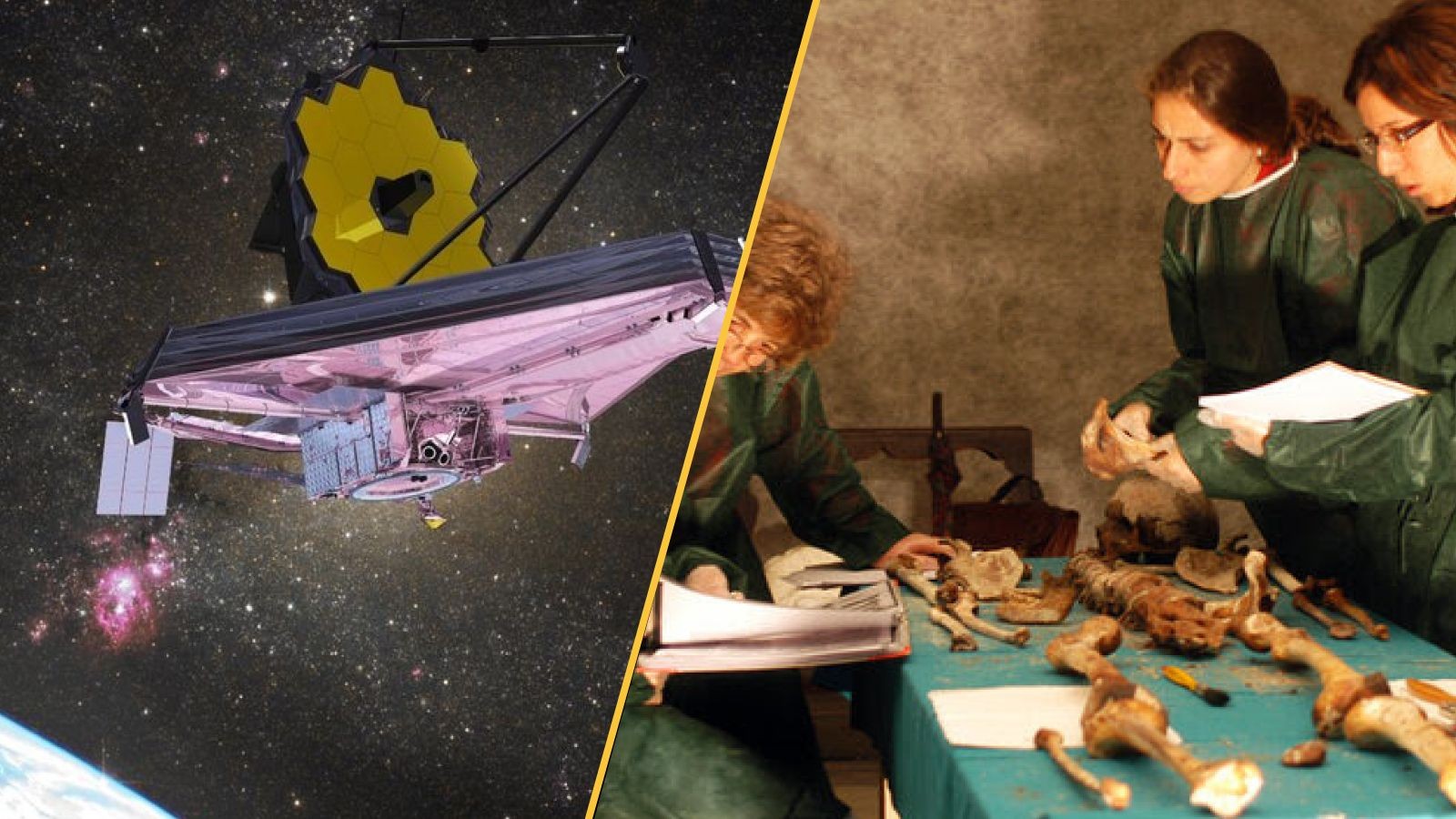
Webb spotted a signal that shouldn’t exist. On both Pluto and Titan, the telescope detected an absorption line in their atmospheres belonging to a molecule nobody has seen before.
Two wildly different worlds, one identical, invisible fingerprint. What is it? Nobody knows.
The environments couldn’t be more distinct, which makes the shared chemistry baffling. And that is just Webb. Its predecessor, Hubble, picked up light from a galaxy so bright and close it breaks our understanding of early universe physics. We shouldn’t be able to see it yet, but there it is, blinking in the dark.
Impossible light. Real data. Confusion on Earth.
Down here, the sun is throwing tantrums for Independence Day, likely painting the skies in neon auroras. Scientists are also sketching up a giant inflatable airbag for space to deflect solar storms. Why? Because keeping satellites alive matters more than we admit.
Green Walls and Faster Growth
China has planted 66 billion trees. Yes, billions. Along its northern borders, aiming to choke back the Gobi and Taklakman deserts, this “Great Green Wall” is changing the landscape.
The catch? The planted trees are growing faster than natural ones.
Brian Owens from Live Science breaks down the mystery. It probably isn’t magic, just chemistry. Rising atmospheric CO2 acts like a superfood, pushing these engineered forests to outpace the wild. Nature, apparently, responds to excess carbon by just getting bigger, quicker.
Is that a good thing? Probably. Does it mean our engineering works? Seems like it.
Life’s Little Annoyances
Remember CAPTCHAs? The grainy pictures of traffic lights meant to prove you are human. Artificial intelligence can solve those now. Autonomous agents breeze through the tests. So, are CAPTCHAs dead?
They should be. The barrier between human and bot has collapsed under the weight of better algorithms. What comes next is unclear.
Meanwhile, other big news: A student studying a hallucinogenic fungus that makes people see tiny people might be close to a breakthrough. Ocean temperatures hit record highs in June, tightening El Niño’s grip. And a study suggests Earth’s biosphere has 1.8 billion years before things go truly sideways, though evolution might find a way to persist longer.
The Medici Murders Solved
For 500 years, we assumed the two Medici brothers were poisoned. Arsenic. Machiavelli’s influence. The standard Renaissance rumor mill churning out drama.
Ancient DNA finally stepped in to clear up the medieval cold case. They weren’t murdered. At least, not by arsenic. The culprit was biological, unexpected, and finally named thanks to modern genetics. The Medici name was always tied to skulduggery, but in this specific death, science writes the verdict over history.
A Busy Week for Big Science
Lots of moving parts this week:
– A Chinese supercomputer surpassed the fastest US machines, taking the top ranking globally.
– The WHO declared the hantavirus outbreak over.
– Cancer in young adults is rising; early signs point to accelerated “biological aging.”
– Bitcoin mining is an energy black hole, wasting power equal to all of Switzerland’s hydropower.
– CERN is shutting down the Large Hadron Collider until 2930 to make it even stronger.
– Ultrafast lasers, once massive, are now tiny enough to fit on a microchip. The holy grail, realized.
Can We Copy Japan’s Antibiotic Rule?
Antibiotic resistance kills 2.8 million Americans a year. It’s a silent pandemic. We could fix agriculture or border controls, but those are hard, slow fights.
Easier? Just tell doctors to stop prescribing like there’s no tomorrow. Japan figured this out. Their bold new policy slashed overuse. Nicoletta Lanese went to Tokyo to see how they did it, bringing notes that the US should probably read. It’s not complex engineering, just strict discipline on what goes into patients.
Weekend Noise
If you need a distraction, there is an interview with Tony Tyson about the Vera C. Rubin Observatory mapping the universe’s history in real time. A crossword puzzle. A quiz on ancient empires.
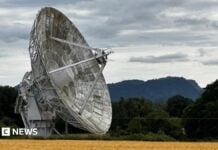
And if you like weird astronomy, look up RAD-BAARG. Radio astronomers found a galaxy that looks like a bow and arrow. Or a rusty anchor. It is being warped by gravity as it falls into a cluster, creating a shock front that defies standard models. It looks nothing else.
We are surrounded by weird things, mostly in space. Someday they might stick together properly. Until then, we just keep watching.