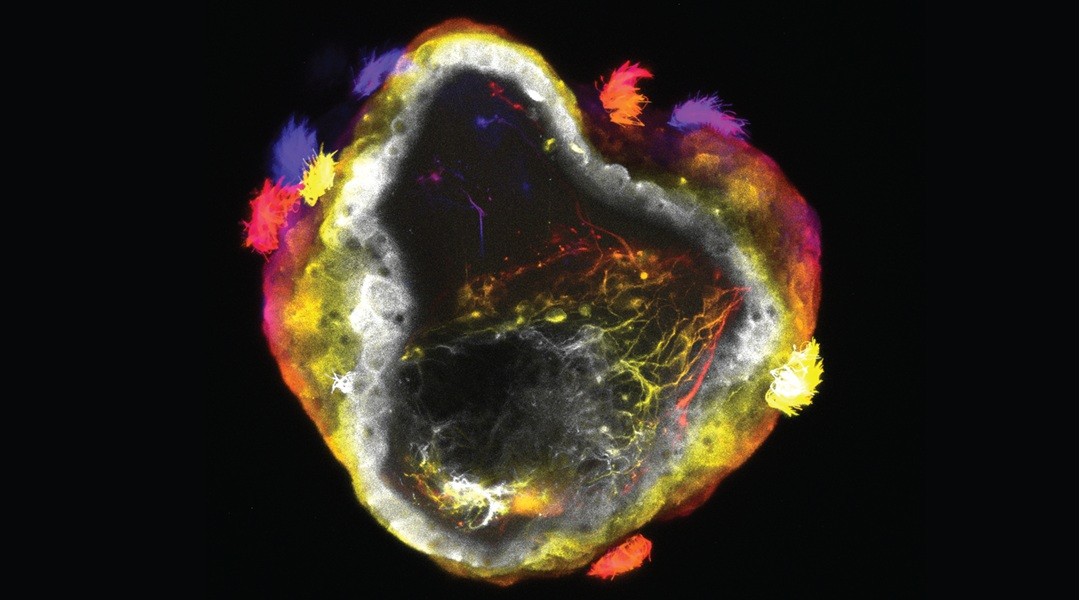
Scientists just built living blobs that grow their own brains. And then those brains decide where to move. It’s messy. It’s alive. And it’s rewriting what we think is possible for artificial bodies.
Plasticity. That’s the buzzword. It means changing. Adapting. If the environment shifts, the organism shifts too. Neuroplasticity takes it further. It says the nervous system itself can restructure based on injury, input, or pure chaos. But that usually takes millennia of evolution. Or years. What if you skip the time?
“What are the limits of neuroplastic… if the body isn’t standard?”
This is the question Tufts and Harvard researchers decided to answer. They didn’t look at frogs or mice. They looked at raw embryonic tissue. Specifically, the “animal cap” of a Xenopus frog. This tiny piece of ectoderm becomes brain or skin. Alone? It forms a sphere. A motile ball that swims using cilia. Call it a “biobot.” It has no brain. Just motion.
Boring, right? Not when you inject it with neural precursors.
Wiring the void
The process is crude by design. Researchers grab the tissue. They drop in the cells that become neurons. They let the soup settle.
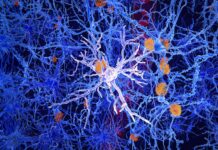
Inside the sphere, something wild happens. The neurons mature. They self-organize. No blueprint. No genetic map saying “build an eye here” or “wire a motor cortex there.” Just cells finding other cells. Forming networks. Extending axons like roots in search of water.
Haleh Fotowat, the lead author, put it plainly:
“When these neural precursors are introduced… they mature into neurons within a body of skin.”
How do they connect? We don’t know yet. The cues remain hidden. And because the implantation is manual, no two neurobots look the same. One might be dense with connections. Another sparse. They are all unique snowflakes of biological circuitry.
Behavior vs. Biology
Here’s where it gets weird.
Regular biobots? They float. They stop. They drift. Neurobots move differently. More. Often. Complex trajectories. They seem driven. Active. It’s hard not to ascribe intent when a blob keeps changing direction with purposeful jerks.
But do the brains control them?
The team tried to test this by flooding the bath with a seizure-inducing drug. Standard expectation: The bots with brains (neurobots) would seize. The dumb blobs (biobots) wouldn’t care.
Reality disagreed.
The biobots slammed to a halt. Dramatic reduction in movement. The neurobots? Mixed signals. Some sped up. Some slowed. It suggests the neurons aren’t just controlling motion—they’re buffering the body’s response to chaos. A tiny nervous system fighting a drug’s grip.
The ghost in the RNA
Go deeper. Look at the genes.
Genetic analysis showed the neurobots weren’t just physically different. Their RNA told a story of ancient history. They expressed more genes linked to nervous system development. But here is the kicker: Visual processing genes.
Lots of them.
Genes for the lens. For photoreceptors. For retinal layers. All fired up simultaneously. Fotowat admits it’s shocking. Why would a skin-sphere-brain blob want to see? Nothing is telling it to. The hypothesis now is that these robots might actually perceive light.
If true, that changes everything. It implies the system defaults to a state that includes sight. A primitive eye forming in a jar because that’s what the cellular machinery does when it’s not suppressed by evolutionary pressure.
“It is like starting from the beginning,” says the team.
Neurobots have no evolutionary history. No survival pressure to keep their weight down or their energy efficient. They are pure potential. Free from the tyranny of fitness.
No neat bows
Michael Levin, the senior professor on the project, sees this as a chance to understand cognition itself. Without the baggage of natural selection, maybe we can see how a mind emerges from scratch.
He asks: “What non-existent world is their cognitive architecture fitted to?”
We might never know. Or we might find out it’s tuned for a world that doesn’t exist.
There are practical reasons for this work. Biological robots that heal themselves? That navigate tight spaces where silicon fails? Sure. Maybe. But right now, it’s early. Very early. Automation could help standardize the bots. Right now, every neurobot is a unique accident.
So where does it lead?
Maybe nowhere. Maybe everywhere. Fotowat wants to know what sensory stimuli make them jump. Levin wants to visualize the minds of cyborgs. Both seem content to keep poking the brain until it tells a secret.
The blobs keep moving. The neurons keep growing. And we’re still trying to catch up. 🧪🐸