“Visceral and unadorned — more reincarnation than art.”
What do you get when you take a beast, triple its life expectancy, hand it a library, and whisper about the void waiting at the end? You get a confused animal. A deeply anxious one, too. That is essentially what Michael Bond suggests we are in Animate: How animals shape the human mind.
It’s a good read. It might be the only thing keeping this twisted psyche afloat.
We are animals. Plain and simple. Not metaphysically. Not spiritually. Just animals. We evolved alongside other creatures. We remain wired to their presence even if we’ve spent millennia trying to scrub that fact off our hands.
Bond traces the story back past the last ice age. An Eden of sorts. Dangerous. We shared scraps with cave lions, leopards, wolves. Bears snatched our beds. Spotting another human in the wild was luckier than hitting a lottery; hitting thirty years old was a triumph.
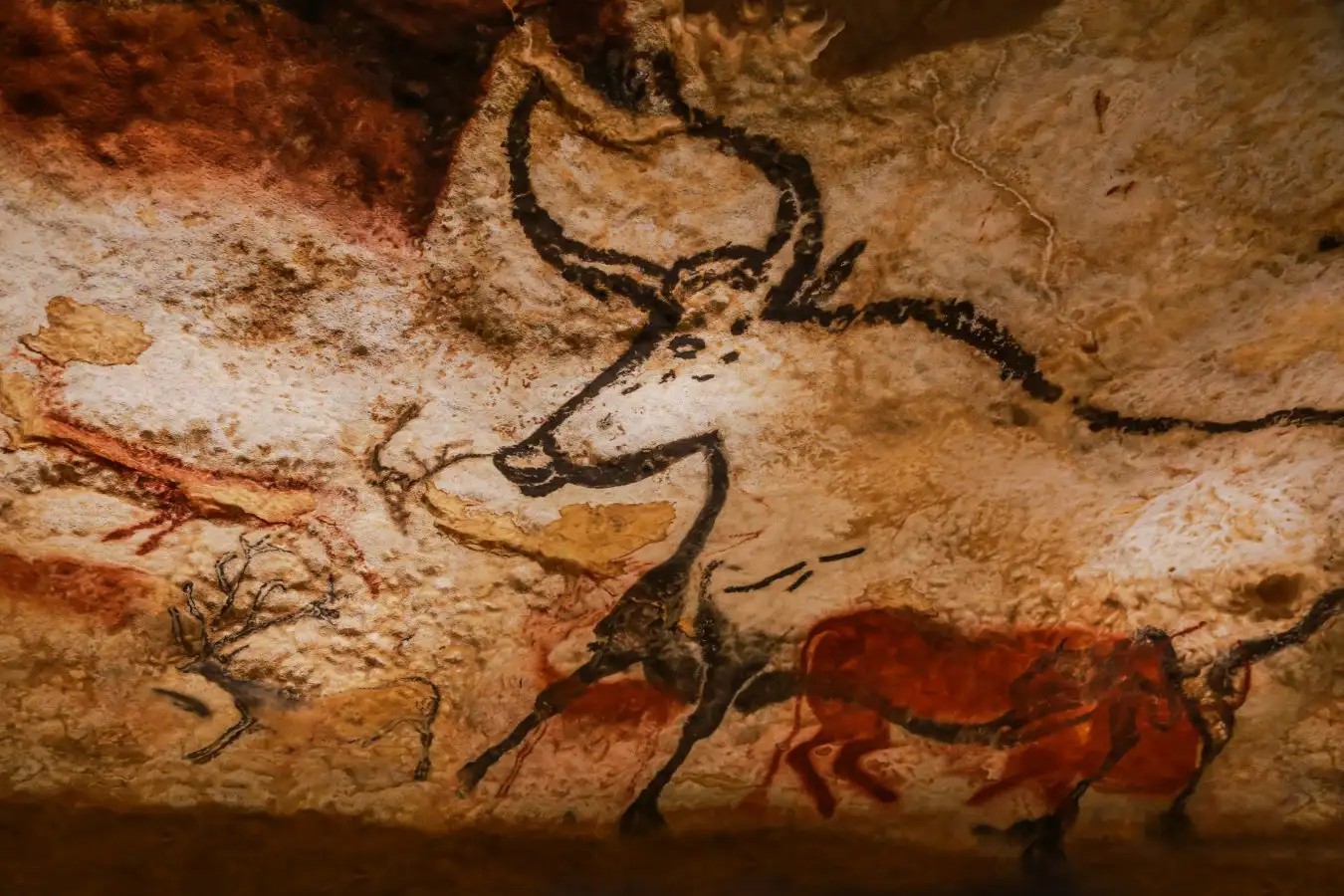
But there was beauty there. Cave walls in Lascaux. Rouffignac. Les Combarelles. The art was emotional. Raw. It didn’t just sketch the shape of a bison, it captured its spirit, its movement. Bond calls it reincarnation, not decoration.
Humans barely appear in those paintings. When they do, they’re rushed sketches. Why? Because the barrier hadn’t been built yet. Animals weren’t resources. They were mirrors.
Then the Neolithic arrived. Things got weird. The pottery from Turkmenistan or Iran shows animals reduced to patterns. Abstract shapes. Decorative clutter. We stopped seeing individuals. We started seeing property.
This is where the separation begins. A line drawn in the sand that we’ve since fortified with barbed wire and moral philosophy.
Why did we do this? Bond pulls in Ernest Becker. The Denial of Death. We know we’re dying. That knowledge drives us to madness, greatness, and lies. We tell ourselves we have immortal souls. We pretend good works erase the grave.
Maybe this exceptionalism was a mistake. Probably. It was catastrophic for every other living thing on Earth. But try explaining that to someone scared of dying. Try convincing them to give up the comfort of the lie so they can face the cold truth each morning. Hard sell.
History thought otherwise for a long time. David Hume saw the kinship. Animals learn like we do. They predict. They adapt. Then came Darwin. His theory of evolution should have killed human exceptionalism dead.
Did it?
Look at your lunch.
Bond takes aim at sausage-eaters like me. He’s right. I haven’t watched a pig die. I don’t intend to. In old cultures, rituals softened the blow. Taboos managed the guilt. Now, the defense is simple distance. A supermarket shelf. Clean. Plastic. Safe.
Bond usually writes with an optimism that borders on annoying. He believes in the best outcome. Not this time. Animate is different. It’s solid. Devastating. No sugar on the pill.
Here is the problem.
Suppose you are an animal that has convinced itself it is something else. Suppose the confusion is so deep you build a civilization on it. Does it end well?
Probably not.
Other views on the void
Ed Yong wrote An Immense World. Another excellent book, different angle. Every species sees the world through a keyhole. Shaped by needs. Limited by biology. No one sees the full picture.
We are just one viewer in the dark room.