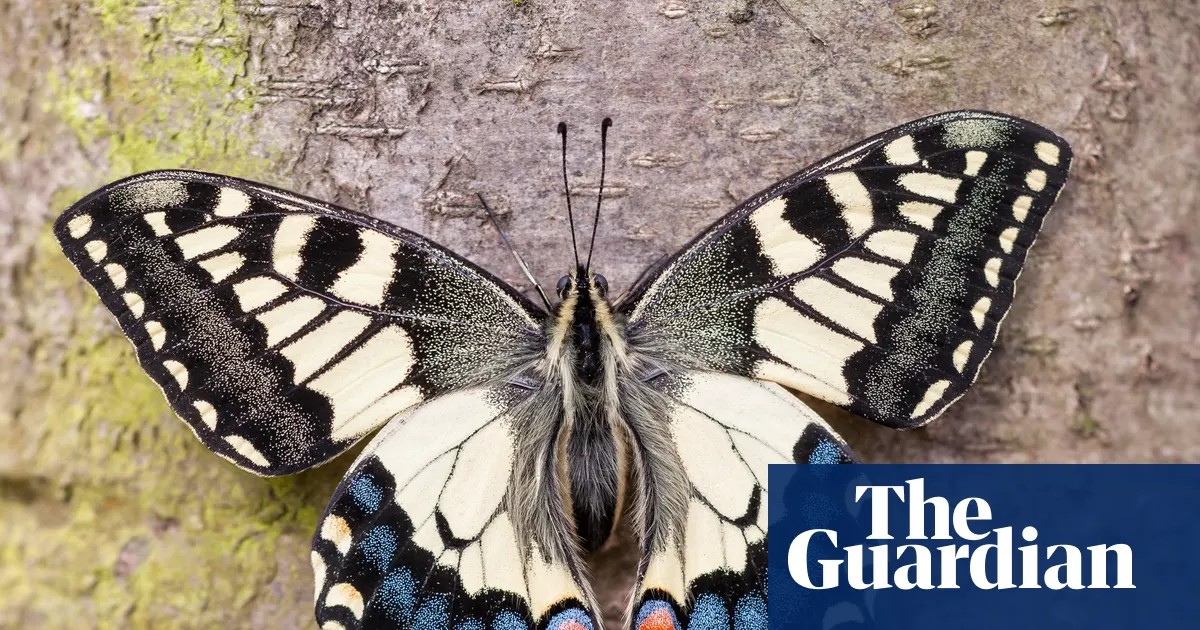
For ages, we believed the British swallowtail (Papilio machaon britannicus ) was a recent accident of geography.
A wetland orphan. Evicted from mainland Europe by rising tides after Doggerland sank roughly 8,000 years ago, it hunkered down in the Norfolk Broads. Smaller. Darker. Rare. We thought it developed these quirks simply because it had nowhere else to go.
That narrative just collapsed.
New genetic sequencing, published in Insect Conservation and Diversity, flips the timeline entirely. This isn’t a newcomer to the niche. It has been a distinct subspecies between 200,0 more precisely 200,0 years to 1.7 million years ago.
Consider that scale for a moment.
It split from its European cousins before most humans had even learned to control fire. It is a wetland specialist of ancient lineage. Once, it probably thrived across northern European marshes. Now? Only the Broads remain.
The genome scan also put rumors to rest. Some worried the isolation had bred weakness into the population, a buildup of damaging mutations. Not the case. The genetics hold up.
So why does it matter?
Because there is a war for the future of the British countryside, and this butterfly is ground zero.
“We’re looking at a relict in the Norfolk Broads not just for Britain, but for a once-much wider distribution in wetlands across all of Europe. It’s part of our own heritage, a unique thing worth protecting from being wiped out.”
— Mark Collins, President, Swallowtail and Birdwing Trust
There’s a push from some corners to introduce the continental swallowtail (Papilio machaon gorganus ). This cousin is tough. Hardy. It eats fennel. Wild carrot. Just about anything green. It is already arriving in Kent and Sussex on thermal waves pushed by global heating, occasionally breeding in our warm summers.
The logic runs something like this. Britannicus is failing. Its diet is limited. The habitat is drowning. Introduce the robust gorganus, let them mingle. Maybe the species survives through hybridization.
Collins disagrees. Hard.
Mixing the lines risks wiping britannicus out entirely. Not just biologically, but genetically. If the continental version swallows the local one, you lose 1.7 million years of independent evolution. You lose something found nowhere else on Earth.
And honestly, who could blame the butterfly?
It refuses to eat anything but milk parsley. Just that one plant. It lives and dies by its abundance.
But milk parsley hates salt.
Sea levels rise. Salt creeps into the Norfolk Broads, England’s largest freshwater wetland. Most breeding grounds sit at or below sea level. The water changes, the plants die, the larvae starve.
It’s an existential trap.
Can they coexist? Maybe. Collins sees a future where britannicus clings to protected wetland islands while the generalist gorganus flies over the dry, open countryside. Hybridization happens at the fringes. But in the mud, in the specialized reeds, the specialist endures.
The window is closing. Fast.
The Trust is already scanning the map. Lakenheath. Shapwick. Yorkshire. They aren’t looking for new wild patches anymore; the natural ones are likely gone. They are looking for sites where they can build defenses against the tide, grow the necessary milk parsley, and transplant the butterflies.
A managed rescue. Whether nature wanted it that way or not, that seems to be the only option left.