The frog is lying low. Well. Mostly.
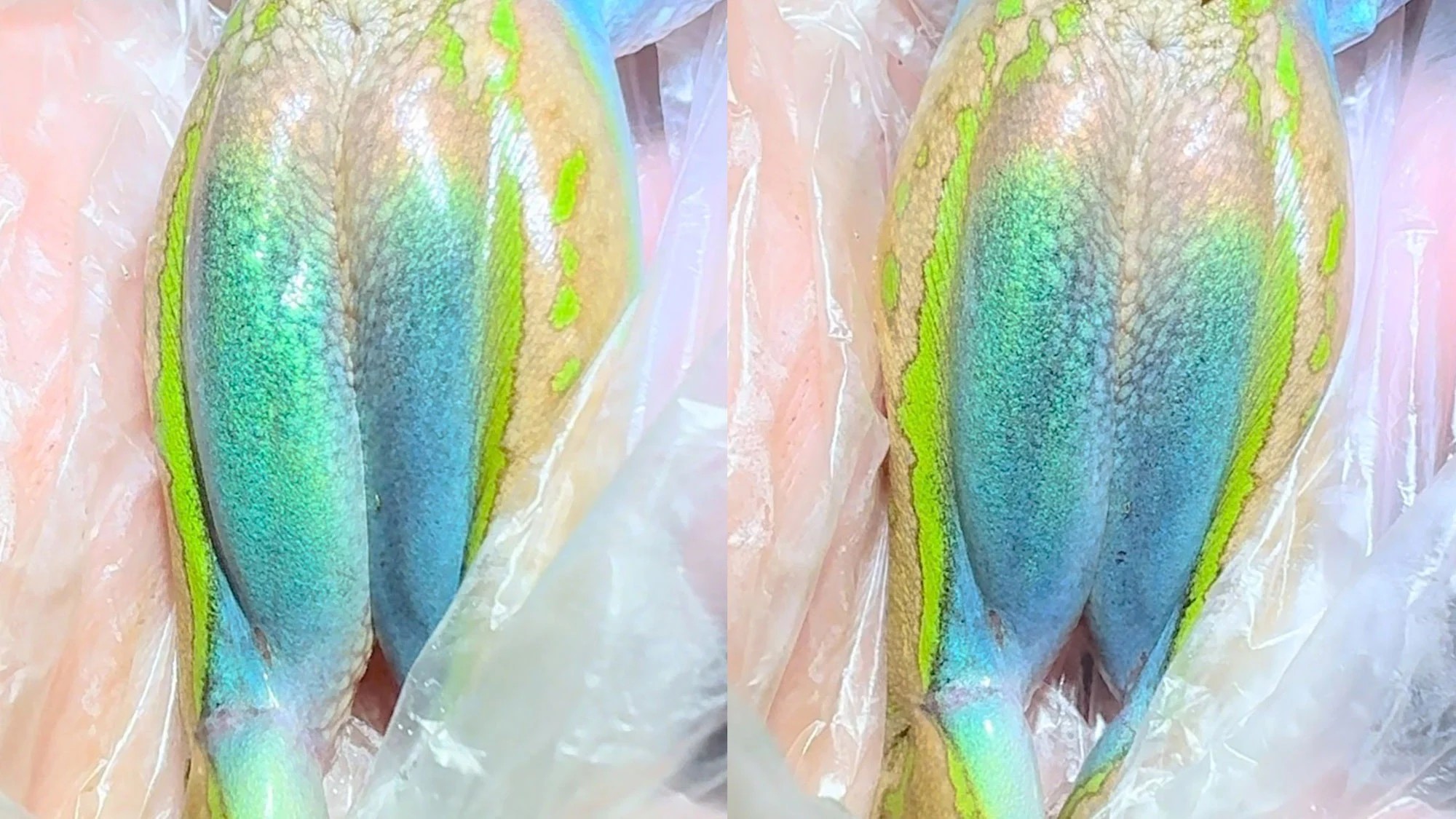
Researchers at the University of Newcastle found something hidden in plain sight. An endangered species. The green and golden bell frog (Ranoidea aurea ). Its inner thighs shimmer. Specifically. With iridescence.
As you move. Or as it does. That patch of blue shifts to green. It is one of the clearest cases of color changing in amphibians ever documented. The finding, now in Austral Ecology, changes the game. Frog skin manipulates light in complex ways. Ways scientists didn’t know were possible.
Light Bends, Frogs Bend With It
Pigment gives permanent color. Iridescence? Not so much. It changes with the angle. You see it on butterflies. Beetle shells. Bird feathers. But frogs? Rarely confirmed.
“Two people standing in different locations can look… and see different colors,” Dr. John Gould says. He is a conservation biologist at Newcastle.
It is a rare optical effect for amphibians. And for a species so famous? It shows how much we still miss. The animal kingdom is full of secrets. We are only starting to peek behind the curtain.
Why Shift Color?
The photos tell the story. Inner thigh. Blue to green. Just as the viewing angle moves. It’s not a lighting trick. The skin is genuinely shifting.
Usually hidden. Beneath the body. Safe. Until the frog jumps. Or stretches. Suddenly visible. A burst of color.
Is this defense mechanism clever? Probably. The blue acts as flash coloration. A sudden distraction. Startle the predator. Draw eyes away from the main target—the frog itself—while it escapes.
“The iridescence enhances that signal,” Dr. Gould notes. Makes it louder. More attention-grabbing. A visual shout.
Not Random, But Ordered
Here is the kicker. Blue is rare in nature. Animals don’t make blue pigment usually. They use structures. Microscopic plates. Reflective interference. This is structural coloration.
Previously. Scientists thought frog skin blue was messy. Random scattering of light from disordered structures. Simple. Chaotic.
This discovery disagrees.
“True iridescence… only occurs when these structures are ordered.”
Think butterfly wings again. Organized. Precise. The green and golden bell frog isn’t scattering light randomly. Its reflective platelets are lined up. They create a specific, shifti ng structural blue.
Still Learning
This changes the narrative on amphibian skin. It contains optical systems we barely understand. Other examples likely exist. Just hiding in plain sight. Waiting for someone to look at the right angle. Or catch the right jump.
We are surprised frogs even produce structural colors. But they do. And apparently, they are better at it than we thought.
Dr. Gould suggests there are more surprises waiting. The science isn’t done.
Reference: “Shifty Frogs: Evidence of Iridescence Among Vertebrates” by John Gould, Austral Ecology, 2024.