Researchers in South Korea have developed a breakthrough method to transform discarded coffee grounds into a high-performance, eco-friendly insulation material. This innovation offers a sustainable alternative to traditional building materials that are often derived from fossil fuels.
The Problem: A Global Waste Crisis
The scale of coffee consumption is staggering, with approximately 2.25 billion cups consumed daily worldwide. This creates a massive, consistent stream of waste in the form of spent coffee grounds. Currently, most of this waste follows a destructive path: it is either buried in landfills or incinerated, both of which contribute to environmental degradation.
By finding a way to “upcycle” this waste, scientists are looking to move away from a linear “take-make-waste” model and toward a circular economy, where waste from one industry becomes the raw material for another.
The Science: How Coffee Becomes Insulation
A research team from Jeonbuk National University (JBNU) developed a specific chemical process to turn organic waste into a thermal barrier. The transformation involves several precise steps:
- Carbonization: Spent grounds are dried and then heated at extremely high temperatures to create biochar, a carbon-rich substance.
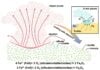
- Composition: This biochar is mixed with a natural polymer called ethyl cellulose and treated with environmentally friendly solvents (water, ethanol, and propylene glycol).
- Porosity Management: The solvents play a critical role by preventing the polymer from clogging the material’s microscopic pores.
Why pores matter: In the world of insulation, air is your best friend. These tiny pores trap air pockets, which act as a barrier to heat transfer.
Performance: Outperforming the Status Quo
To measure effectiveness, scientists look at thermal conductivity —the rate at which heat passes through a material. For a material to be considered a good insulator, it generally needs a conductivity rating below 0.07 W/m·K.
The JBNU team’s coffee-based composite achieved a remarkable 0.04 W/m·K.
In practical laboratory tests, the material was placed beneath a solar cell to simulate a rooftop environment. The results showed that the coffee-based insulator kept the area underneath significantly cooler than unprotected surfaces, performing on par with expanded polystyrene —one of the most common commercial insulators used today.
Sustainability vs. Synthetic Plastics
While the performance is comparable to traditional plastics, the environmental impact is vastly different:
- Source Material: Polystyrene is a synthetic polymer derived from fossil fuels, whereas this new material is derived from renewable organic waste.
- End-of-Life: Polystyrene is notorious for its persistence in the environment. In contrast, the coffee-based material is biodegradable. During testing, the composite lost more than 10% of its weight within just three weeks, proving it can break down naturally rather than lingering in a landfill for centuries.
Potential Applications
The researchers suggest that this material is ideally suited for building insulation. It could be used to line rooftops or walls, helping to regulate indoor temperatures and reduce the energy required for cooling, especially in regions where solar panels are installed on roofs.
“By turning waste into a functional product, we can reduce environmental burdens while creating new opportunities for sustainable materials,” says Seong Yun Kim, a materials engineer at JBNU.
Conclusion: By converting massive amounts of coffee waste into high-efficiency biochar insulation, scientists have provided a dual solution: reducing landfill waste and offering a biodegradable, high-performance alternative to fossil-fuel-based building materials.