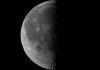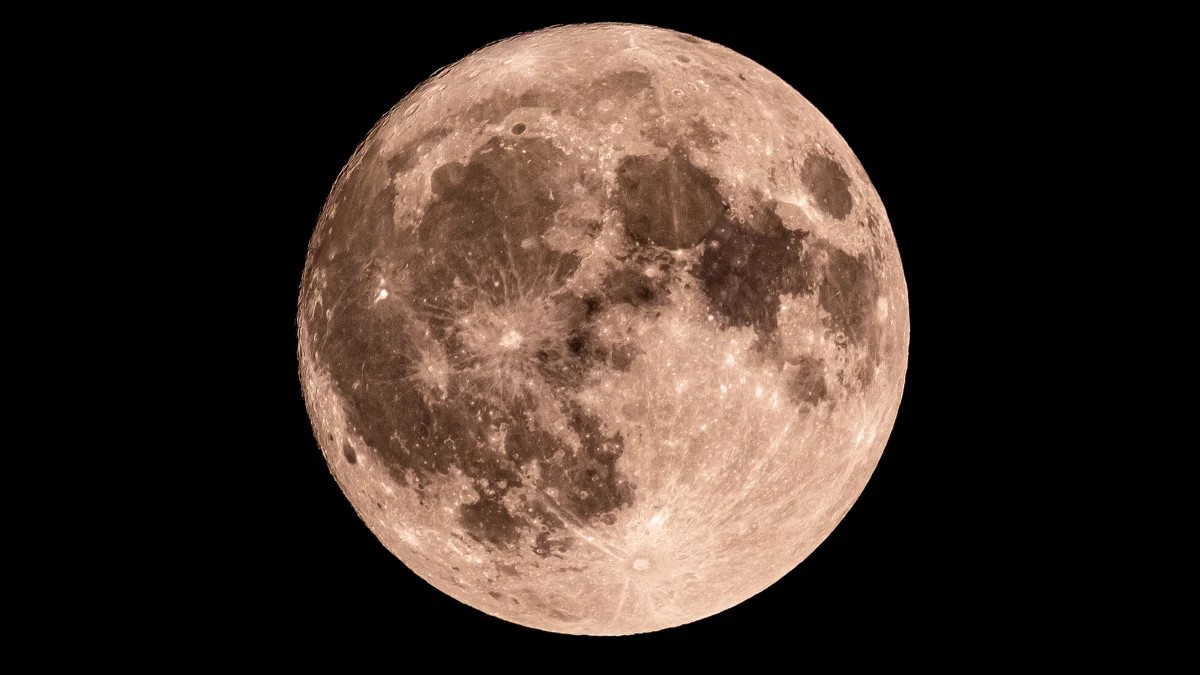
Tonight, the night sky offers a bright and growing lunar display. As of Saturday, April 25, 2026, the Moon is in its Waxing Gibbous phase, meaning it is steadily increasing in illumination as it moves toward a Full Moon.
Observing the Moon Tonight
According to NASA’s Daily Moon Guide, approximately 63% of the lunar surface will be illuminated tonight. Depending on the equipment you use, there are different levels of detail available to stargazers:
- With the Naked Eye: You can easily spot several large, dark basaltic plains known as maria, specifically Mare Crisium, Mare Tranquillitatis, and Mare Fecunditatis.
- With Binoculars: The view expands significantly. You should be able to observe Mare Nectaris, the Posidonius Crater, and the rugged Apennine Mountains located in the upper half of the lunar disk.
- With a Telescope: High-magnification tools reveal even finer details, including the Apollo 16 landing site, the cliff-like Rupes Altai, and the lunar rille Rima Hyginus.
Looking Ahead: The Next Full Moon
If you are waiting for a perfectly circular, fully illuminated Moon, you will have to wait a few more days. The next Full Moon is projected to occur on May 1, marking the beginning of a month that will feature two full moons.
Understanding the Lunar Cycle
The changing appearance of the Moon is not due to the Moon itself changing shape, but rather due to its position in relation to the Earth and the Sun. It takes approximately 29.5 days for the Moon to complete one full orbit around our planet. During this journey, we see eight distinct stages:
The Growing Phases (Waxing)
- New Moon: The Moon is positioned between the Earth and the Sun, making its illuminated side invisible to us.
- Waxing Crescent: A thin sliver of light appears on the right side (in the Northern Hemisphere).
- First Quarter: The Moon appears as a half-circle, with the right side illuminated.
- Waxing Gibbous: The Moon is more than half-lit but has not yet reached full illumination.
The Full and Shrinking Phases (Waning)
- Full Moon: The entire face of the Moon is illuminated by the Sun.
- Waning Gibbous: The light begins to recede from the right side.
- Third Quarter: The Moon appears as a half-circle again, but the left side is now the illuminated portion.
- Waning Crescent: A final thin sliver of light remains on the left before the cycle resets to a New Moon.
Context Matters: Understanding these phases helps astronomers and casual observers alike predict visibility and lighting conditions, which is essential for everything from photography to maritime navigation.
The Waxing Gibbous phase serves as the final crescendo of light before the Moon reaches its peak brightness during the Full Moon phase.