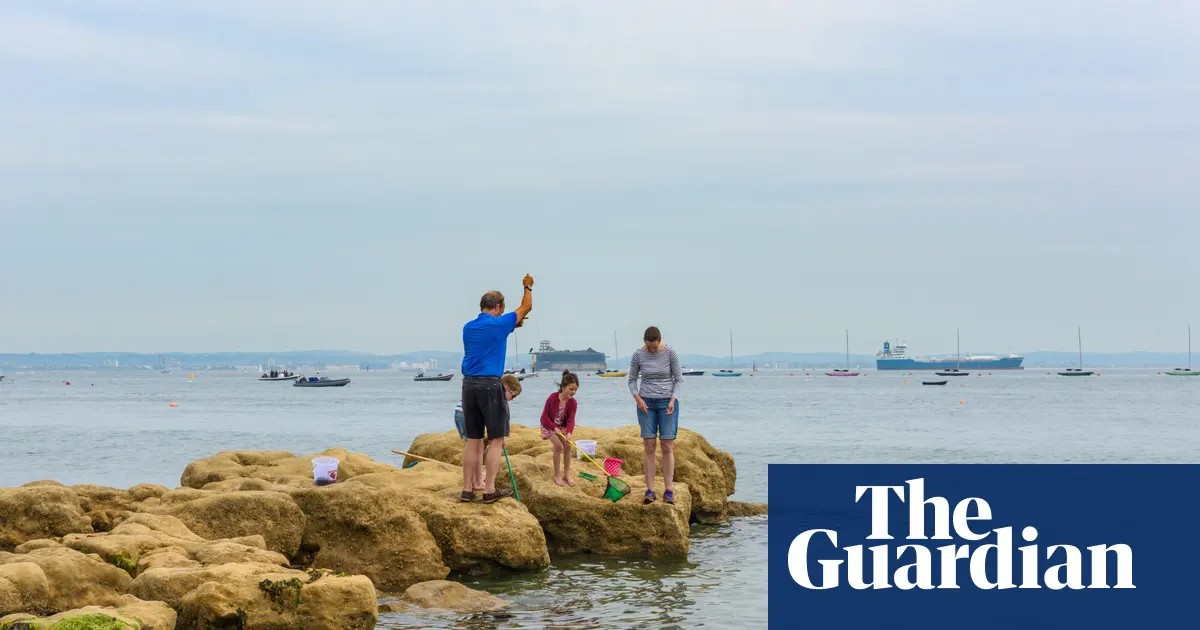
Scientists just found toxic Pfas everywhere in the Solent.
Soil. Water. The whole food chain. It is bad news.
These “forever chemicals” are sitting in protected environmental sites. Off the coast of southern England. Some samples hit levels 13 times higher than the safe threshold for coastal water. Even when individual chemical levels looked okay legally? The combined toxicity still failed.
This is one thing I don’t necessarily pin on the water companies… That’s why they should be banned at source.
The Solent is the stretch of sea between the Isle of Wight and mainland Britain. Part of the English Channel. It should be clean. Instead, it looks like the chemicals are pouring in from wastewater plants, sewage outfalls, old landfills, and nearby military bases.
It feels like a loophole in how we count damage. If oil spilled here, industries would pay for cleanup. They fix the mess. Sewage just… leaks. No one pays. Prof Alex Ford from the University of Portsmouth put it bluntly.
Per- and polyfluoroalkylic substances (Pfas) do not break down. Ever.
We put them in non-stick pans. Food packaging. Waterproof jackets. Because they last forever. Scientists link them to diseases in humans and wildlife alike. But our regulations haven’t caught up with the chemistry.
Researchers checked government data. Utility tests. They even sampled a dozen species of fish. Seaweed. Invertebrates. The poison was coming from treated effluent at wastewater plants run by Southern Water in Portsmouth and Fareham.
There are also 194 sewer overflows mapped. Plus over 500 historic landfills nearby. Just sitting there. Leaking.
Harbour porpoises had Pfas in their livers. Above safe limits. But that’s just the tip of the iceberg. Far more wildlife failed the newer EU test for combined toxicity. It weighs how these chemicals interact.
All but seven surface waters in England fail that combined test. Scotland’s remote lochs aren’t safe either.
“I don’t think our story is unique to the Solent.” Ford thinks the rest of the UK looks just like this.
Southern Water didn’t fight back too hard. They admitted we need legislation. To ban specific chemicals at the source.
“Tackling this is a challenge for society.” They agree keeping it out of the pipes is the only real fix.
Evidence backs this up. Ban it? It goes down.
The EU is pushing for a blanket ban on Pfas. Maybe with small exceptions for medicine. The UK government promises a framework. They say they will consult. They say they will test more when a plan comes out in February.
Wait.
They are planning to have a plan?
Calum Duncan from the Marine Conservation Society, who paid for the study, called it out.
“We need to go further. Faster.”
He said sitting on a plan is not good enough. There is an opening right now with water reform. A once-in-a-generation chance.
They need to act.
But the government is still consulting. And the chemicals are still there.