Look up after sunset. You see Venus. Probably. It’s dazzling right now in the west.
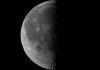
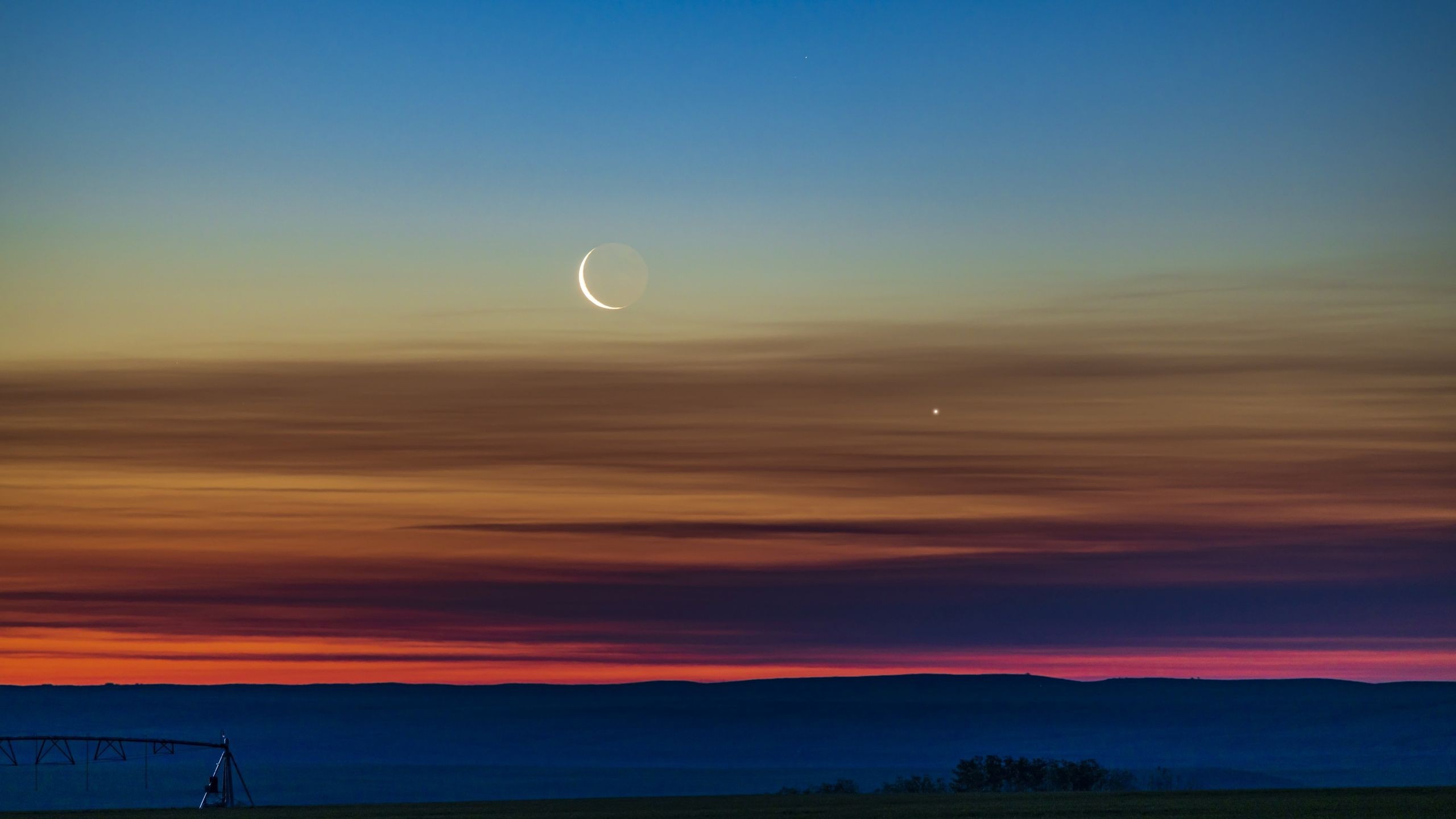
May 18 adds a twist. A slim crescent moon joins the planet. Only two days old. Just 7 percent lit. They’ll hover together in the fading light.
Does it matter how far apart they are? Not really. People look at them whenever they’re near anyway. Even if the distance isn’t tiny.
Hold up your fist at arm’s length. That covers about ten degrees. The moon sits roughly three degrees right of Venus on Monday. About one-third of your fist away.
Which is brighter?
Most guess Venus. It’s a sharp needle of light. Stabbing your retina. Actually, the moon wins. Barely illuminated? Doesn’t matter. It’s magnitude -7.1. Venus is only -4.0. That math means the moon is seventeen times brighter.
Why do we ignore this? Perspective tricks us. The moon’s light spreads over a larger patch of sky. Looks dimmer than the concentrated star-like pinprick of the planet.
Reality check. They aren’t neighbors. Not even close.
The moon sits 224,00 miles away. Venus? A staggering 124 million miles out. They line up only to appear together from our specific viewpoint on Earth. An optical illusion, plain and simple.
“What we see is an illusion of perspective.”
Venus is improving though. Through May its separation from the sun grows from 24 to 36 degrees. From the north, you’ll find it easy to spot. It hangs high enough above the western horizon, 25 degrees up, for clear viewing before twilight fades completely.
Grab a telescope. The glare helps mask it sometimes, but this is prime viewing time. The disk looks gibbous. About seven-eighths lit. Small, yes. But there.
It sets late. Around 10:50 p.m local time. June brings it even higher in visibility, setting closer to 11. Then it fades back toward the sun again. Until next time. 🌙✨