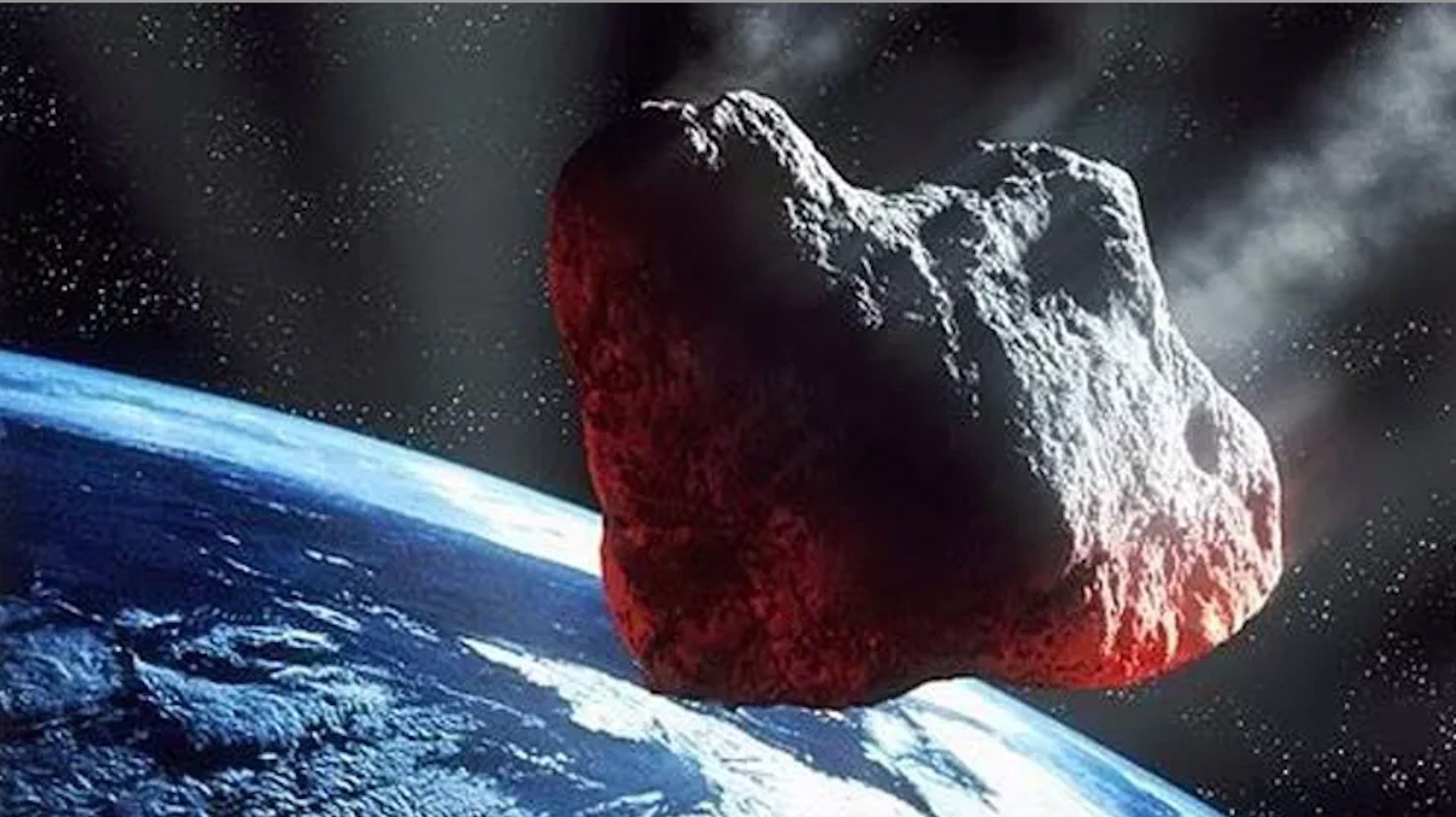
June 30 marked International Asteroid Day.
China didn’t waste it. The China National Space Administration (CNSO) announced a “space-ground” early-warning network. They weren’t specific. Not yet. But recent UN presentations and papers tell the real story. It’s not just talk.
Li Mingtao leads CNSA’s Asteroid Monitoring Center. He told state media they are studying the feasibility of a defense system. The monitoring network is the core.
“No asteroid has been identified that will collide,” Li said via Xinhua. But the fear? Valid.
Most near-Earth objects remain dark to us.
China plans to scatter large optical telescopes across carefully chosen ground sites. Sky surveying requires good angles. They will add a space constellation on top of it. Why space? The atmosphere blurs things. Daylight hides things. Most importantly, the sun blocks our view from Earth.
Remember Chelyabinsk in 2013? A meteor exploded over Russia. It came from the sun’s direction. We only saw it once it was too late. China wants to avoid that surprise.
Here’s the grim math Li shared:
- We have found 40,00+ near-Earth asteroids.
- Over 95% are larger than 1 km (0.6 mi). Those cause global catastrophes. We’ve caught most of those.
- But only 45% of the 140-m (460 ft) class are found. That size can wipe out a small nation.
We’re blind to half the real threats.
The CNSA announcements were vague. Journal papers aren’t. A June 2026 study in the Journal of Deep Space Exploration gives us the blueprint. Wu Weiren, chief of China’s lunar program, co-wrote it.
For space-based sensors, he lists four orbits:
- Sun-Earth Lagrange point 1 (L1).
- An orbit ahead of or behind Earth.
- A Venus-like orbit around the sun.
- A distant retrograde orbit (Earth companion).
Another researcher, Chen Yongcai, pitched this at the UN’s COPUOS in 2025. The “basic model” uses one satellite at L1—about 1.5 million km sunward of Earth—plus ground stations. The “extended model” adds the other orbits.
That Venus-like track mirrors a past idea called CROWN. It uses favorable geometry to scan the blinding sun-side sky.
Timelines? Unclear.
Interest is high. The 15th Five-Year Plan calls for an asteroid defense engineering study. They’re building a kinetic-impact mission too. Think NASA’s DART or ESA’s Hera (launching 2027). It’s not a unique move. It’s a necessary one.
Anne Virkki of the University of Helsinki sees the value. She warns about the gap in our tracking. Radar is weak right now. The Arecibo observatory collapsed in 2020. The U.S. hasn’t replaced it.
“If China launches a similar mission… I hope they share the data,” Virkki said. “Not just for Chinese scientists.”
Virkki notes that sun-side asteroids aren’t physically strange. Just harder to see. That statistical difficulty equals more surprises.
China has talked about radar capabilities already. The “Fuyan” or “Compound Eye” project near Chongqing monitors asteroids. Wu’s paper includes ground-based radar in the plan.
Virkki is cautiously optimistic. She wants telescopes that fill gaps. Not repeats. Open collaboration matters.
We likely have 100,00 asteroids big enough to do significant local damage. We know the paths of fewer than half of them.
The sky is crowded. Our maps are incomplete.