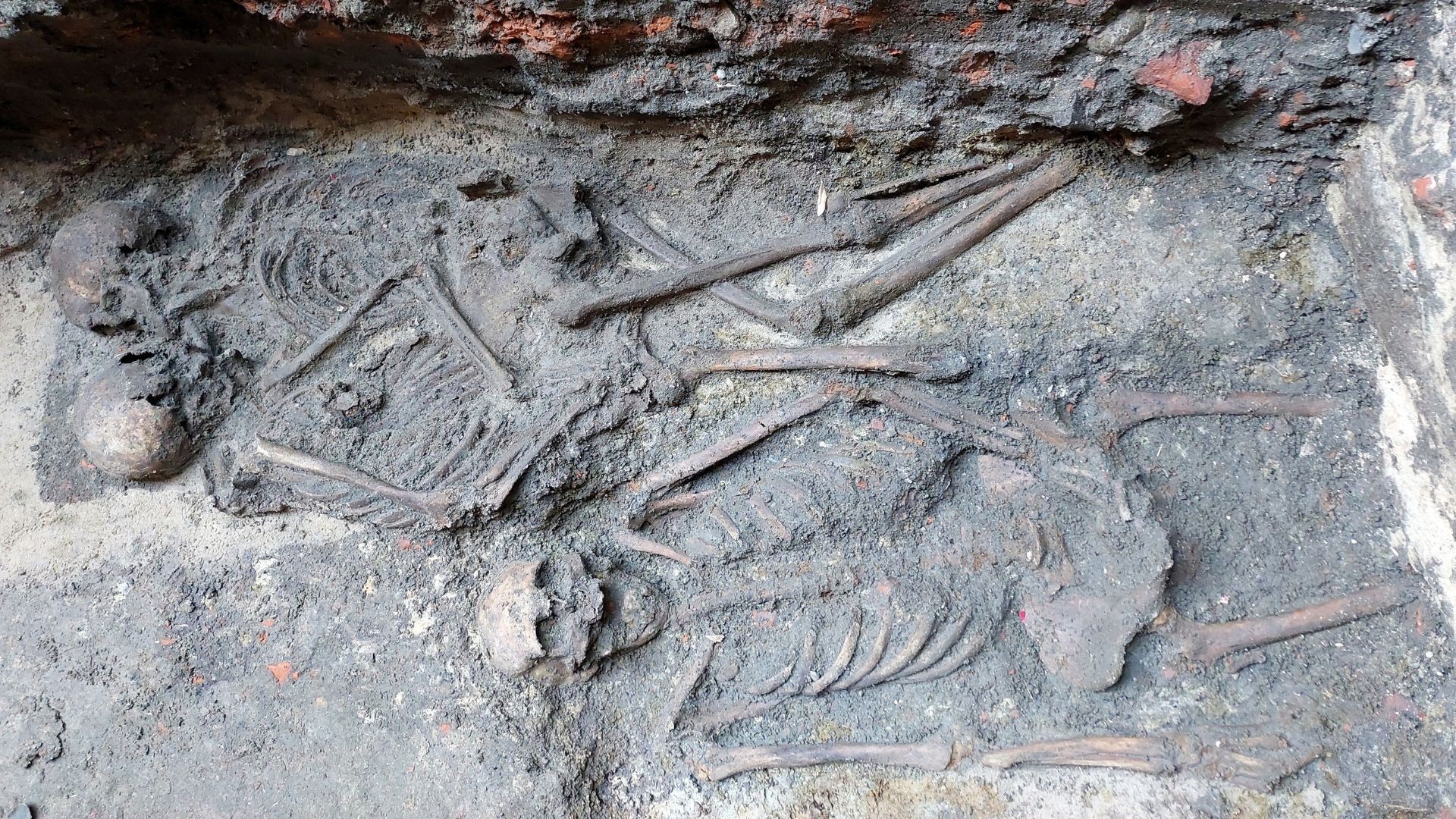
About 800 years. That’s how long ago two people were buried in a tight embrace inside a prominent Polish church.
Now, new DNA testing has finally cracked the code on those “hugging skeletons.” They are both women. They are not related by blood. It is the first known genetically confirmed same-sex double burial in medieval Polish history.
It’s strange, isn’t it? To die alone yet be laid to rest wrapped around someone else.
A Puzzle in the Church Walls
The remains surfaced during digs at the Cathedral of the Exaltation the Holy Cross in Opole. The work happened between 2022 an d 2025, unearthing secrets hidden since the 13th century.
The positioning is everything here.
One person lay flat on their back. Standard Christian rites for the time. Arms along the sides. Restful. Quiet. The other person? They were turned onto their side. One arm reached out. It curved gently underneath the head of the person lying down.
Like an embrace. Like comfort. The researchers believe they were buried at the exact same time.
Usually, when adults share a grave like this, archaeologists assume husband and wife. It’s the easy assumption. The comfortable one. But assumptions can be wrong. Physical estimation is messy. Body positions lie.
Agata Cieślik from the Ludwik Hirszfeld Institut e didn’t trust the guesswork. She wanted proof.
“We needed to understand the nature of their relationship,” she said. “Atypical burial in a unique setting demands questions.”
Shredding the Code
To answer those questions, they needed genetics.
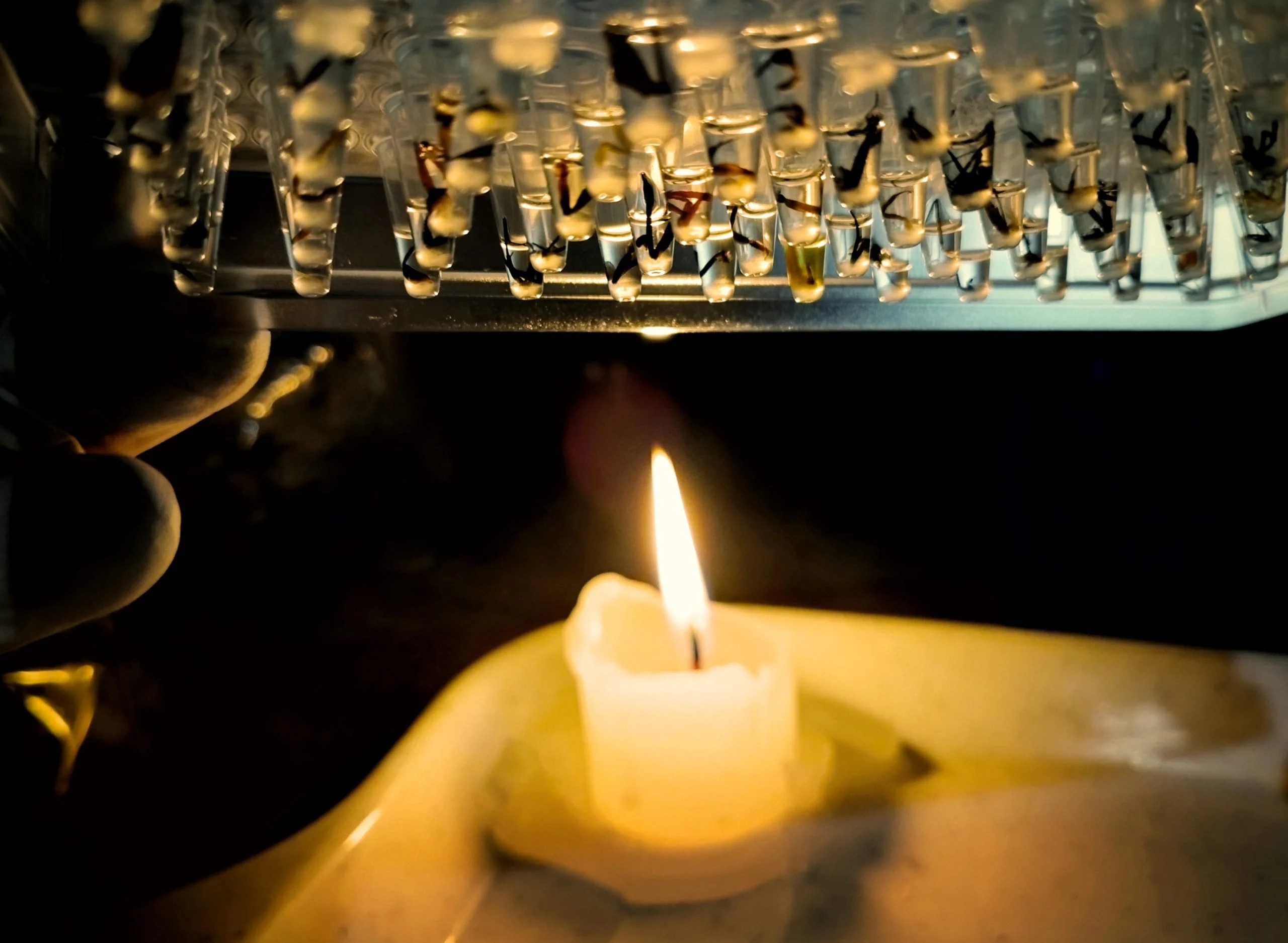
Joanna Romeyer-Dher bey, working with teams from Kiel and Yale, handled the delicate work of extraction. It wasn’t straightforward. The bones had been in the ground for eight centuries. The DNA was broken down into tiny, microscopic shards.
She compares it to shredding a book into countless tiny pieces and trying to read it again.
“We extract the DNA, sequence these fragments, and use computational tools to reconstruct the code. It’s like reconstructing a book from shreds.”
The computation worked.
The genetic map told the story bones couldn’t. Both skeletons were female. There was no close familial link. They were not mother and daughter. Not sisters. Not twins. Just two women who ended up sharing a final space.
Why Buried Together?
This is the part that makes historians pause.
In the medieval mindset, same-sex relationships were heavily condemned. Punishment often meant death. If these women had been caught as lovers, or even suspected, society would have marginalized them.
They would likely have been dumped in unholy ground. In isolation. Maybe weighted down with stones or decapitated to prevent them from becoming “revenants” — undead spirits meant to cause harm.
These women?
They were right next the cathedral wall. That spot was premium real estate. Reserved for kings. Local notables. People with power or high standing. There are no stones weighing them down. No signs of ritualistic punishment. No stigma marked in the earth.
They were afforded honor. Not shame.
So how did two unrelated women earn a grave like that?
Maybe it wasn’t romantic. Or maybe it was something else entirely. The researchers suggest “fictive kinship.” This was a recognized social bond in medieval times. Women could be bound together by religion. Shared households. Economics. Work. These bonds functioned just like family ties, sometimes closer.
Society recognized the bond. Therefore, the grave honored it.
What Comes Next
We might never know exactly what they talked about in their last hours. Or if they knew each other since childhood. The exact connection remains a mystery.
But this isn’t necessarily a one-off oddity. The team hopes future genetic analysis of other medieval sites will reveal if this was a unique accident or a larger trend in social structure.
Opole has given up more than just bones. Coins. Jewelry. Pottery. Animal remains. All still under investigation. Each shard of clay might help reconstruct the daily life of a city we thought we knew.
The women rest in their embrace, hidden beneath centuries of soil, waiting for more of their story to surface.