The world is drowning in plastic. It’s getting heavy. And sticky. We need stuff that’s light. Strong. Goes away when you don’t need it.
Everyone looks at spiders first. Spider silk is legendary. But there’s another source right under our noses.
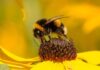
Bees.
No, not just honey. Any bees.
“Silk production is far more widely distributed in nature than most people realize.”
That’s Oran Wasserman, molecular biologist. He got his doctorate in Justin Jones’ lab at Utah State University. He says insects invented silk at least twenty-three times over. Ants, bees, wasps—they all have their own recipes.
Wasserman and his crew did something new. They made a film of bee silk. In a lab. From scratch.
Here’s what most folks don’t know: roughly three-quarters of all bee species make silk. Honey bees use it to line the baby rooms. Solitary bees use it to build cocoons.
Think of a cocoon as a fortified bunker.
It’s not just wrapping paper. It has to breathe. It has to keep bugs out. It has to stop parasites.
Parasitoid wasps are nasty. They sniff out the cocoons. Then they drill in. Pop. Lay eggs inside. The baby bee gets eaten. Or turned into food for the wasp. Disgusting, but nature is cold like that.
So the bee needs armor. The blue orchard bee (Osmia lignaria ) makes it. These cocoons look small. Brown. Elongated. They have a little nipple-shaped cap.
Looks harmless. Is not.
Silkworms spin one long thread. Simple. Boring, really. Blue orchard bee larvae are architects. They anchor the thread to the wall. Pull. Stick. Move. Anchor. Pull. Stick.
Layer after layer.
It balances oxygen flow. Moisture. Structural integrity.
But getting this material outside the bee? That was the headache.
Pulling fibers from a finished cocoon is tedious. They snap. They break.
So the team changed the play. They built 3D-printer nest cavities. Raised larvae inside them. Watched them closely.
When the larva started spinning? When those first threads were still loose? Bam.
They took the silk directly from the larva’s mouth.
Does it hurt the bee? Apparently not. The larva keeps working. It finishes its cocoon anyway. The method is non-invasive. Minimal disruption.
“One of the most promising aspects is that the larvae continue to form cocoons.”
With those fibers secured, the genetic code became clear.
The team put the bee genes into microbes. Microbes are factories. They pump out proteins. The researchers call them fibroins.
Then came the magic. They purified the proteins. Cast them into clear films. Freestanding sheets.
First time this has ever happened.
Can you use it right now? Not really. The material itself is just a proof of concept. A prototype.
But the technique works. And it’s open-ended.
Honey bee silk stretches more. Maybe they’ll make that next. Maybe they’ll mix things.
Which is exactly what they are doing.
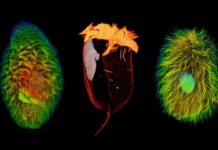
Bees are weird enough. Now they are combining bee silk with hagfish slime.
Hagfish? Yeah, those jawless ancient bottom-dwellers. When they get scared, they release slime. Thick. Viscous. Clogs the gills of anything eating them.
The slime contains protein threads. When stretched and dried, those threads are almost as strong as spider silk.
Wasserman’s lab treats hagfish slime and bee silk almost the same. Similar protein structures.
So why not blend them?
Combine the puncture resistance of the bee. The stretch of the slime. You get a new kind of textile. Useful for surgical sutures. Tissue scaffolds. High-tech gear.
Why haven’t we seen this before?
Probably because we only ever looked at spiders. And silkworms. We ignored the rest of the insect world.
“Most of that attention has gone to a handheld handful of species… Across insects more broadly, silk is strikinly diverse.”
Wasserman expects the field to grow. There are a lot of cocoons left to study.
The paper is in PLOS One. Also in SynBio.
We are just beginning. What else is hiding in the nest?