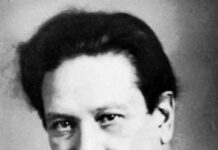
Jean-Philippe Rameau was not initially a well-known name in the opera house. In fact, he was almost fifty before he wrote his first major stage play. Rameau was born in Dijon in 1683 and baptized on September 25 of the same year. He came from a musical family. His father was an organist, and Rameau followed in those footsteps for decades. He worked as an organist all over France, playing the keyboard and developing theories that eventually shook the entire world of classical music.
Then in 1722 he dropped a treatise on Harmony.
This was not just another academic paper. It made Rameau a fundamental figure in music theory and answered the “how” behind sound. He argued that harmony, not melody, was the true foundation of music. Before Rameau, chords were mostly thought of as collections of intervals stacked on top of a bass note. He flipped the script. He suggested viewing chords as inverses of more fundamental harmonic units. It was a radical change of perspective that gave composers new toolkit.
In 1733, Rameau decided to test these theories on stage. He wrote Hippolyte et Aricie, an opera that marked his rise to a major force in French music. It was very successful. He followed this with The Gallant Indies in 1735, cementing his position as the most important French opera composer since Jean-Baptiste Lully. Lully dominated the French baroque stage for years. Rameau didn’t just match him; he developed the style further.
His reputation became a lightning rod during the querelles des bouffons (war of the buffoons) of 1752-1753, a heated artistic dispute between French and Italian opera. Where was Rameau in this discussion? His music embodied the French style. It was complex, structured and deeply theoretical – the opposite of the simpler, more melodic Italianate approach that was becoming increasingly popular.
In addition to the stage and theory books, Rameau is also known for his keyboard pieces. Most of them are composed for harpsichord. They demonstrate his technical skill, which he had honed over 30 years as an organist. When Rameau died in Paris on September 12, 1764, he left a legacy that formed a bridge between rigid theory and vibrant performance.
The question remains whether his theoretical dominance helped or hindered the natural flow of his operas. Critics have debated this for centuries. For some, his structures are too rigid. Others hear sound architecture in its purest form. Either way, his influence on our understanding of harmony remains. His traces in modern music theory can still be heard today.