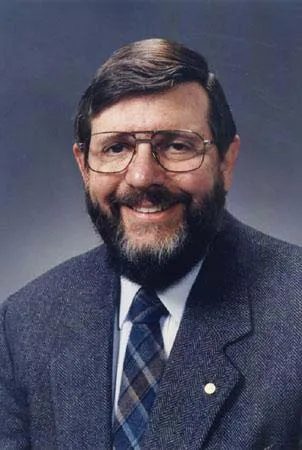
William D. Phillips changed how we measure cold. The American physicist, born in Wilkes-Barre, Pennsylvania, in 1948, didn’t just study atoms. He froze them. His work using laser light to cool and trap atoms earned him the 1997 Nobel Prize for Physics. He shared the honor with Steven Chu and Claude Cohen-Tannoudji, who also developed methods of laser cooling and atom trapping.
Phillips received his doctorate in physics in 1976. He did postdoctoral research at MIT. Then, in 1978, he joined the National Bureau of Standards in Gaithersburg, Maryland. That place is now the National Institute of Standards and Technology. It was there that he conducted the award-winning research.
He built on Chu’s earlier work. Phillips developed new methods for measuring the temperature of laser-cooled atoms. In 1988, something surprising happened. He discovered that the atoms reached a temperature six times lower than the predicted theoretical limit. This broke the rules as they were known then.
Claude Cohen-Tannoudji refined the theory to explain these new results. He and Phillips then investigated methods of trapping atoms cooled to even lower temperatures. Their work on laser cooling techniques did more than just cool things down. It opened a door to a new state of matter.
The Bose-Einstein Condensate
That door led to the first observation of the Bose-Einstein condensate in 1995. Scientists had predicted this state 70 years earlier, back when Albert Einstein and Satyendra Nath Bose were theorizing about it.
“In this state atoms are so chilled and so slow that they, in effect, merge and behave as one single quantum entity.”
Think about that. Atoms usually bounce around. They are distinct. Individual. In a condensate, they are so cold they merge. They behave as one single quantum entity. It is much larger than any individual atom.
This wasn’t just a lab trick. It proved that quantum mechanics, usually reserved for the tiny and the fast, could be observed in a slow, cold, almost macroscopic state. The techniques Phillips and his colleagues refined made it possible to slow atoms down to a crawl.
Why does this matter today? Because controlling temperature at the atomic level allows for incredible precision. It leads to better atomic clocks. It enables more accurate sensors. It helps us understand the fundamental building blocks of reality.
Phillips’ journey from a small town in Pennsylvania to the top of the physics world started with a simple question: how cold can you get? And the answer, it turned out, was colder than anyone thought possible. The laser didn’t just stop the atoms. It changed what we thought atoms could do.