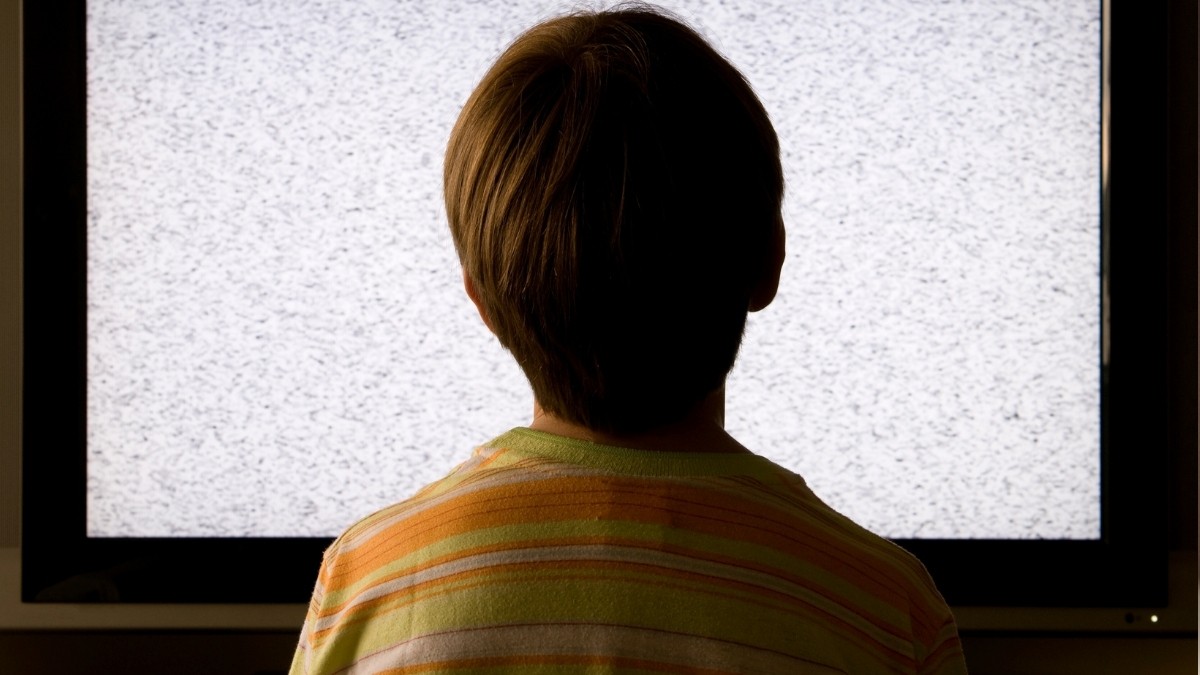
Gramma was right. That “idiot box” isn’t just killing your posture. It might actually be rotting your brain.
We all know sitting too long is bad. It hikes up Alzheimer’s risk. It’s terrible for longevity. But a new study flips the script on why sitting is dangerous. It’s not just the inactivity. It’s what you’re doing while you sit.
Specifically, sedentary screen time for men appears to harm brain health in ways that working at a desk does not.
The findings come from a massive longitudinal study published in Alzheimer’s and Dementia: Journal of the Alzheimer’s Association. Researchers tracked over 1,700 adults starting in their 50s. They followed these people for nearly 24 years. Then, when they hit their mid-70s, they got MRIs.
The results were stark. And they were weird.
Men who watched a lot of TV in midlife showed smaller brain volumes. These shrinkages happened in areas vulnerable to Alzheimer’s. They also had more white matter hyperintensities—basically, tiny spots of damage linked to dementia and cognitive decline.
Women? The link was weaker or nonexistent.
Meanwhile, people who sat all day for work—answering emails, solving problems, planning—tended to have healthier-looking brains. Bigger frontal cortex. Better white matter integrity.
So, sedentary screen time for men isn’t just lazy. It’s structurally different from sedentary work.
Does TV Actually Cause Brain Shrinkage?
Here is the twist: Exercise didn’t save them.
When the researchers accounted for physical activity levels, the TV-brain link remained. You can’t just run five miles to undo the damage of eight hours of Netflix. The context matters. More than the calories.
Biological scientist Natan Feter from USC noted the sex difference was surprising.
“We found that the links between TV watching and brainstructure were much stronger in men than in women.”
Why the split?
It’s unclear. Maybe women interrupt their sitting more often. They stand up. They fetch water. They check on kids. Men, on the other hand, might binge sports or movies in long, uninterrupted blocks.
Hormones could play a role. Lifestyle factors might differ. Or perhaps male and female brains just age differently under sedentary pressure.
But the mechanism seems to be cognitive engagement.
TV is passive. You watch. You don’t plan. You don’t solve. Your gray matter rests.
Office work? Even if you’re sitting? It’s active. You’re making decisions. You’re reading complex text. You’re typing responses. This builds “cognitive reserve.” Think of it like a shield. A thicker shell against age-related decay.
What Counts as “Bad” Sitting?
If you’re asking yourself does sitting at work harm the brain, the answer is complicated. It depends.
Sitting at a desk is cognitively taxing. Sitting on the couch is not.
The study used data from the Atherosclerosis Risk in Communities (ARIC ) study. Volunteers self-reported their habits back in the late 80s.
- They said how often they watched TV.
- They said how much they sat for work.
Self-reporting is messy. People lie. Or forget. Or estimate poorly. That’s a limitation. We can’t prove causation. Maybe TV watchers also snuck more chips. Maybe they drank more. Maybe they napped.
Still, the MRI data is hard to ignore.
Those who reported sitting “always” at work had fewer white matter lesions than those who watched TV “very often.” The difference was in the frontal, parietal, and occipital cortex.
This suggests the brain cares about input. Not just output.
“For years we’ve focused on how much people seat. Our findings suggest we should also pay attention to what they’re doing while they’re sitting.” — David Raichlen, University of Southern California
How To Protect Your Brain While Sitting
So, what’s a person to do?
Stop watching TV? Probably not. Life needs entertainment. But maybe you need to break the passivity.
The study implies that active sitting is better than passive sitting.
Try these shifts:
- Read books. Research shows readers live nearly two years longer than non-readers.
- Do puzzles. Crosswords. Sudoku.
- Learn a craft. Knitting. Woodworking. Coding.
- Text with intention. Complex conversations. Not just emoji wars.
These activities force your brain to work. While your butt stays planted.
It’s not about standing desks. It’s about mental desks.
The researchers admit we need more studies. They want to see if other passive activities—like listening to podcasts or scrolling social media—have the same effect as TV. Or if they’re closer to reading.
For now, the data points to a simple truth. Your brain is a muscle. It atrophies without resistance.
Sitting on the couch offers no resistance. Sitting at a computer often does.
So tonight, when the credits roll, think about that. Are you resting? Or are you rotting?
The difference might be thinner than you think.