Shropshire might lose its eyes to the stars.
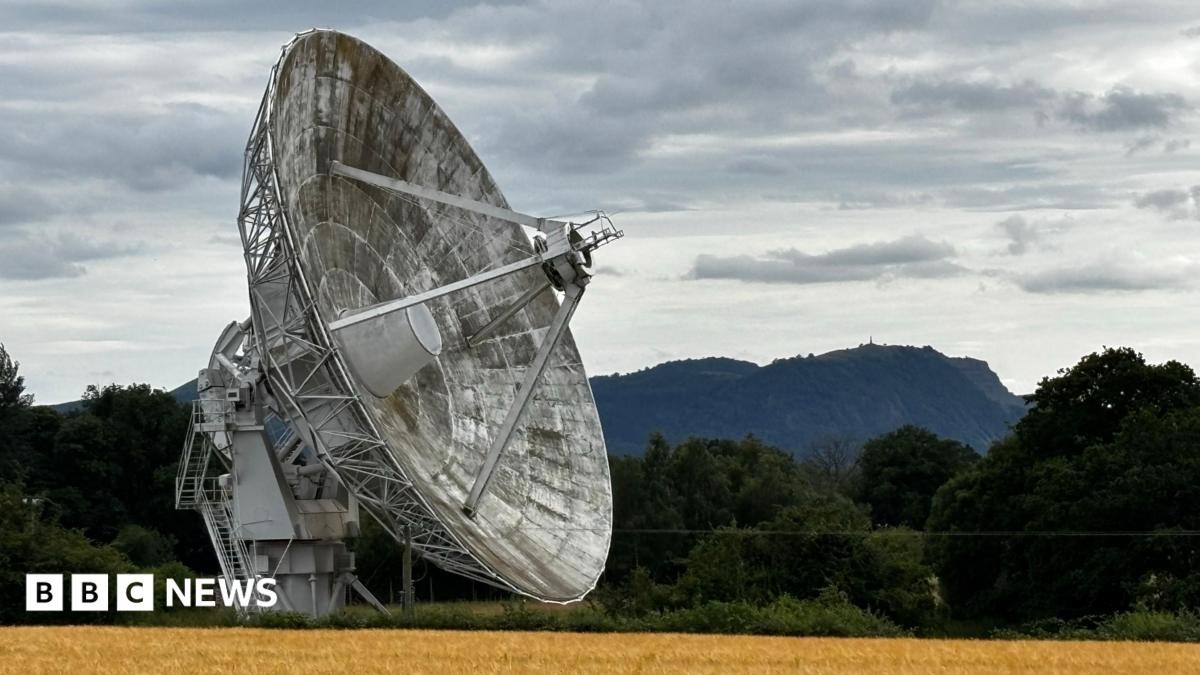
Not literally. But close enough. The 25-meter dish at Knockin—sitting just outside Oswestry—faces a potential shutdown. National science funding is shrinking. And this facility takes the hit.
It’s part of e-MERLIN. That stands for Enhanced Multi-Element Radio Linked Interferimeter Network. Sounds bureaucratic, maybe. It’s not. It’s a globally significant cluster of seven sites across the UK working in concert. Big science. Serious data.
Now the Science and Technology Facilities Council, the STFC, expects costs to blow past their flat budget. The fix? A savings programme designed to balance the books by 2030.
The official line is measured. Calm even.
“After extensive consultation with the research community we are preparing to detail how we will maintain financial sustainability whilst protecting world-leading science.”
Translation. We have to cut. But we promise the important stuff stays.
Politicians are nervous. Helen Morgan, the MP for North Shropshire, met with locals. She spoke with physicists. She talked to Prof Brian Cox. You’ve probably seen him before. He warned the cuts could hit £162 million.
Thirty percent of particle physics, astronomy, and nuclear physics research gone in one go.
That is not a typo.
“There’s a real concern the researchers using these radio telescopes are the ones getting the axe,” Morgan said.
Equipment gathers dust. Talent leaves. World-leading work walks out the door. Britain loses a slice of its intellectual edge. Again.
Who gets the chop?
Maybe it’s just administrative overhead. Maybe it’s not. We don’t know yet. The consultation continues. The math remains tight.
For now the dish keeps turning.
Or maybe it doesn’t.