It starts with a silence. Not the kind you hear. The kind inside your head.
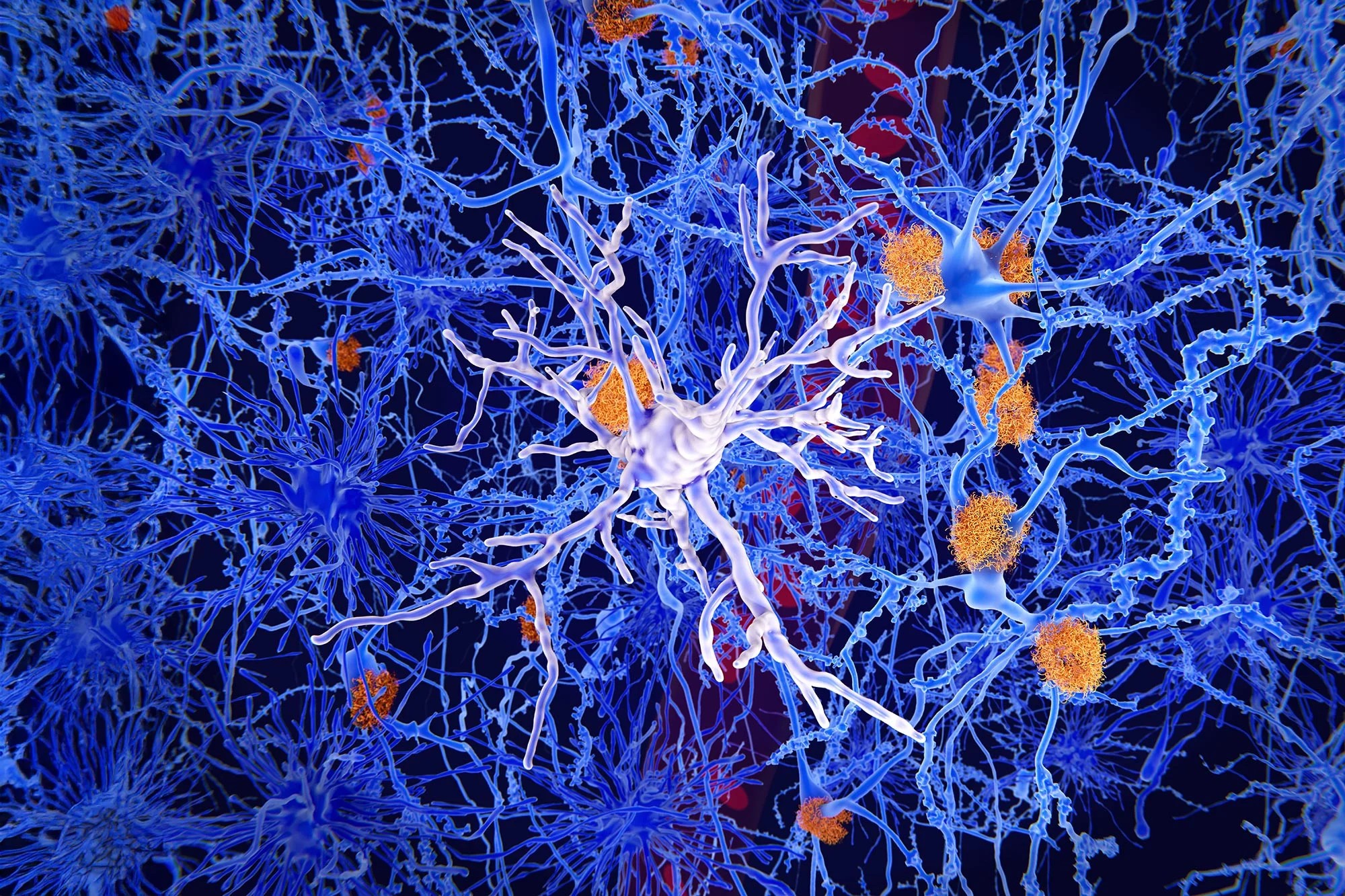
Beta-amyloid plaques build up. Neurons die. Memory fades into fog.
For decades we blamed the protein itself. We thought if we just swept the plaque away we’d cure the disease.
Wrong.
Or at least incomplete.
A new study in Cell Death & Disease flips the script. The problem isn’t just the trash piling up in the brain. It’s the janitors quitting their jobs.
Specialized immune cells called microglia are supposed to clean house. They hunt down toxic proteins. They isolate the bad actors. In Alzheimer’s they stop working. They get tired. They lose their way. The plaques grow. The neurons scream.
José Vicente Sánchez Mut at the Institute for Neurosciences and Johannes Gräff at EPFL didn’t try to sweep the floor differently. They hired more janitors. Well. They woke the sleeping ones up.
A Molecule Named OLE
They found a molecule.
It’s called OLE.
It comes from a gene named PM20D1. When OLE shows up it nudges microglia back to work.
The cells don’t just wake up. They change posture. They migrate toward the beta-amyloid clumps. They surround them.
Imagine a wall going up around a toxic waste site. The waste doesn’t disappear. It gets contained. The neighbors stay safe.
In mice the results were clear. Three months of OLE treatment. The mice remembered things again. The plaques shrank. The damage slowed.
“One of the most significant findings is that this process can be reversed.”
Sánchez Mut put it simply. We thought the cellular decline was permanent. It might not be.
Worms Do Strange Things
You need to start small.
First the team used worms. C. elegans. They genetically modified them to produce beta-amyloid. Normal worms wriggle. These sick ones stiffen. Their nerves degrade.
They gave the worms OLE.
The protein aggregates dropped. The worms moved again.
It’s not exactly human brain function but it’s a start.
Then they moved to mice. The results held up.
The mice didn’t just move better. They remembered where to go. Memory tests showed improvement. Fewer plaques. Less damage.
But why?
To get there you have to look closer. Way closer.
Single Cell Truth
Victoria Pozzi the first author looked at thousands of individual brain cells.
One by one.
The data was loud. Microglia weren’t just reacting. They were leading the response.
OLE triggered pathways in these cells that hadn’t fired in months or years in the diseased model. The cells moved toward the danger. They enclosed it.
It’s not magic. It’s biology being forced to remember what it was supposed to do.
Cell cultures backed it up too. Treat microglia with OLE and they clean faster. Put neurons next to the stress of Alzheimer’s-like conditions and OLE helps the neurons survive.
So it protects the cleaner. And maybe the victim.
Double protection.
Patents and Questions
The team secured two European patents. CSIC owns one.
That’s how science moves toward medicine. Patents protect the path forward. But they don’t mean the cure is on shelves.
Not yet.
It’s still animal models. Worms and mice. Humans are more complicated. Our brains are heavier. Our lives are messy.
Does OLE cross the blood-brain barrier in humans? Will it have side effects we can’t see in a controlled lab?
Nobody knows.
The funding comes from everywhere. Switzerland. Spain. The EU. Korea. A long list of acronyms backing a small hope.
We keep looking for a switch. A button that resets the immune system in the skull.
OLE isn’t a cure.
But it is a sign.
Maybe the janitors don’t need firing. They just need a wake-up call.