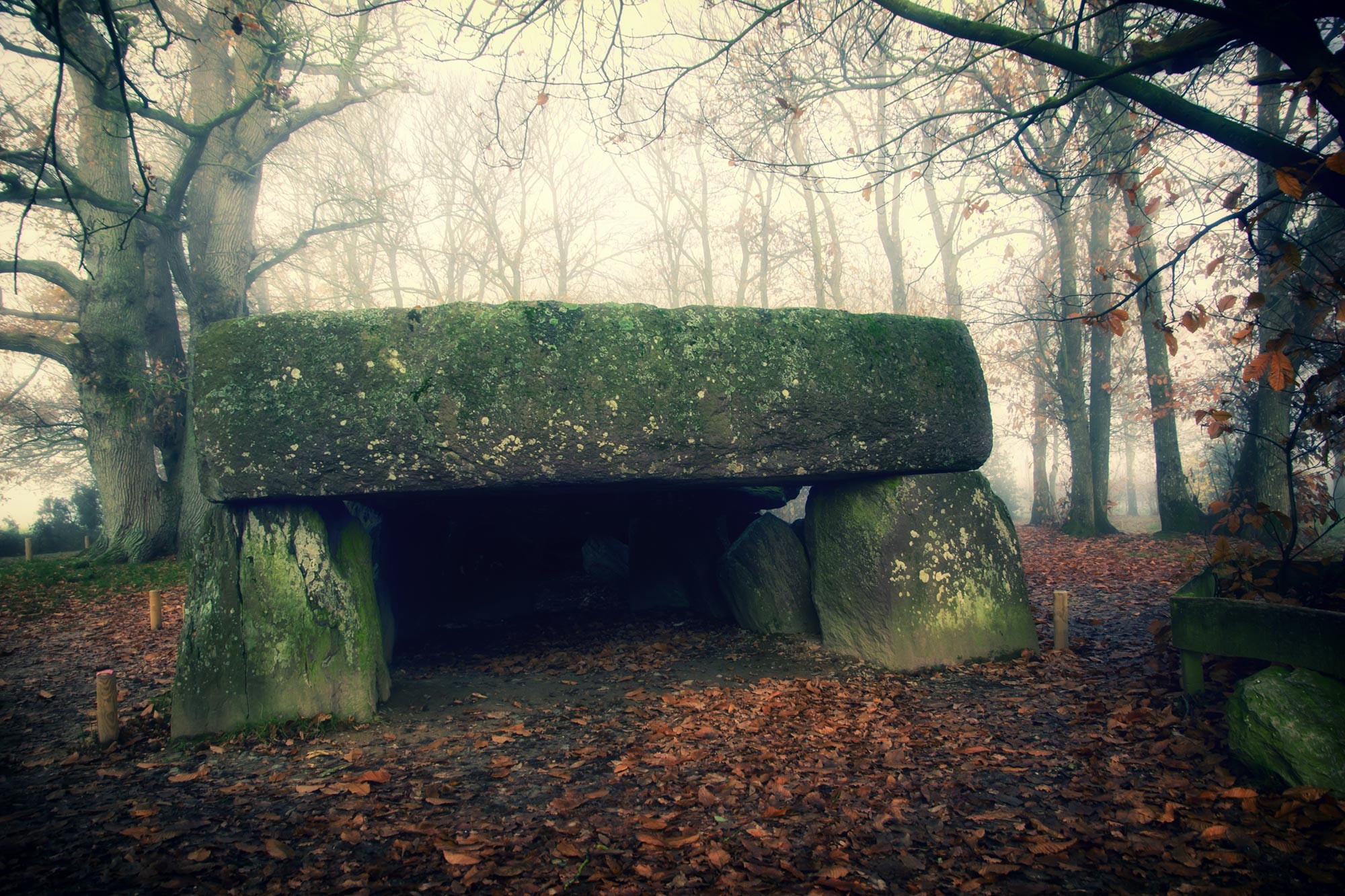
A groundbreaking genetic study of a massive Stone Age burial site near Paris has uncovered evidence of a dramatic demographic collapse in ancient Europe. The findings suggest that the local population did not merely migrate away but was effectively wiped out, only to be replaced centuries later by newcomers from the south. This discovery provides critical context for the “Neolithic decline,” a mysterious period around 3000 BC when human populations across northern Europe plummeted.
A Sharp Genetic Break
The research, led by the University of Copenhagen and published in Nature Ecology & Evolution, analyzed DNA extracted from the bones of 132 individuals interred in a large megalithic tomb near Bury, approximately 50 kilometers (31 miles) north of Paris. The site was utilized during two distinct phases, separated by a significant gap in usage.
The genetic data reveals a stark discontinuity between these two periods. Individuals buried before the decline share close genetic ties with early farming populations from northern France and Germany. In contrast, those buried after the hiatus show strong genetic affinities with groups from southern France and the Iberian Peninsula.
“We see a clear genetic break between the two periods,” said Frederik Valeur Seersholm, assistant professor at the Globe Institute and co-lead author of the study. “The earlier group resembles Stone Age farming populations from northern France and Germany, while the later group shows strong genetic links to southern France and the Iberian Peninsula.”
This lack of kinship between the two groups indicates a near-total replacement of the local population rather than gradual migration or assimilation.
Disease and Demographic Crisis
To understand the causes of this collapse, researchers employed a method that sequences all genetic material preserved in bone, allowing them to detect ancient pathogens. The analysis identified traces of Yersinia pestis (the bacterium responsible for plague) and Borrelia recurrentis (which causes louse-borne relapsing fever).
However, the presence of these diseases does not fully explain the scale of the disaster. Martin Sikora, associate professor at the University of Copenhagen and senior author, noted that while plague was present, it was likely not the sole culprit.
“The decline was likely driven by a combination of disease, environmental stress, and other disruptive events,” Sikora explained.
Skeletal analysis further supported the theory of a severe crisis. The earlier burial phase showed unusually high mortality rates, particularly among children and adolescents. Laure Salanova, research director at France’s National Centre for Scientific Research (CNRS), described this demographic pattern as a strong indicator of societal collapse.
A Shift in Social Structure
The population replacement was accompanied by a fundamental change in social organization. During the initial phase, the tomb contained burials of multiple generations from extended families, suggesting a community built on close-knit, egalitarian family units.
In the later phase, following the arrival of the southern migrants, burial practices changed significantly. The new interments were more selective and dominated by a single male lineage. This shift suggests a move toward a more hierarchical or patrilineal social structure, marking a distinct departure from the previous societal norms.
The End of the Megalithic Era
These findings offer a broader explanation for a phenomenon observed across Europe: the sudden cessation of large-scale stone monument construction. The end of megalithic tomb building coincides with the disappearance of the populations that constructed them.
“We now see that end of these monumental constructions coincides with the disappearance of the population that built them,” Seersholm said.
The study expands the known scope of the Neolithic decline, demonstrating that it was not limited to Scandinavia and northern Germany but affected much of western Europe. By linking demographic collapse, disease, and social restructuring, the research paints a clearer picture of how prehistoric societies responded to—and sometimes failed to survive—catastrophic environmental and biological stresses.
Note on Source Material: The original text contained a reference to a study on melanoma drug resistance by Xu et al. in Nature (2026). This reference is unrelated to the archaeological findings described in the article and appears to be a citation error in the source material. It has been excluded from this rewrite to maintain factual accuracy and relevance.