
The line between sanity and chaos is razor-thin in cinema’s greatest mind games. We’ve scoured IMDb and other major databases to curate a list of the absolute best psychological films available right now. These aren’t just movies; they are experiences designed to keep you on the edge of your seat, turning your stomach inside out with every twist. If you are looking for the ultimate watchlist for when you want to feel your heart rate spike, this is where you start.
1. Shutter Island
Wait, “Kaçamak”? That’s the Turkish title for Shutter Island. Yes, that one. The one with the lighthouse. The one where everything is not what it seems.
Martin Scorsese directed this 2010 masterpiece, and it remains the gold standard for psychological thrillers. Leo DiCaprio plays U.S. Marshal Edward Daniels, who heads to a remote asylum on Shutter Island to investigate the disappearance of a patient. But the more he digs, the more the walls close in.
Why does it work? Because the film weaponizes paranoia. You aren’t just watching a detective story; you are trapped in Daniels’ deteriorating mind. The atmosphere is thick with fog, doubt, and dread. It forces you to question every clue, every face, and every whisper.
“This place is a maze of mirrors.”
It’s not just a thriller. It’s a study in guilt, trauma, and the fragile nature of reality. If you haven’t seen it, you’re missing the blueprint for modern psychological horror.
When a friend becomes a suspect in a “missing person case”
The premise sounds like a standard summer thriller. Two best friends. A yearly getaway to escape their personal demons. This year’s destination is the sunny coast of Croatia. For Kate and Beth, these trips are non-negotiable. They are repair rituals, moments to evaluate the chaos life has dumped on them and find the reset button.
Things are off to a smooth start. A kind of normality that makes you feel safe because you know it.
Then one morning Beth woke up. The bed next to her is cold. Empty. Kate is missing.
No note. No warning text. All that remains is the smell of perfume and the screaming silence.
Beth’s immediate instinct was to act. He’s looking for a place. He looked at the local police reports. He tries to follow in Kate’s footsteps. However, the deeper they dug, the more cracks appeared on the surface. The clues he found do not point to a simple abduction or escape scenario. They revealed the secret. A dark, buried secret that Kate didn’t talk about. Secret Beth had never heard of their seven-year friendship before.
The film directed by Kim Farrant and called “Missing” takes this domestic mystery and twists it into something sharper. It’s not as easy as just finding someone. It’s about realizing that you will never know them.
Actors and crime
Starring Leighton Meester as Beth and Christina Wolfe as Kate, the dynamic is based on the chemistry between two women who see the worst and the best in each other. Ziad Bakri adds to the importance of the investigation and his presence shows that this case is more than just the disappearance of tourists.
The mix of genres is special. This is a crime thriller. Mystery. But at its core, this is a drama about trust. The IMDb rating is a modest 5.6, which usually suggests that the film may be spotty, but has enough charm to keep viewers watching.
Released in 2022, the film taps into the growing market for friendship-gone-wrong stories. Why do we associate with toxic people? Why do we ignore the red flags? Beth’s journey is a forced answer to these questions. He’s not just looking for Kate. He searches for the truth about his best friend’s true identity.
为什么它有效(以及为什么无效)
《失踪》的强大之处在于它的幽闭恐惧症。 尽管故事发生在风景优美的克罗地亚,但故事情节却让人感觉紧张。 贝丝被孤立了。 她周围的人提供了相互矛盾的信息。 一些帮助。 有些阻碍。
剧情简介中提到的“秘密”是影片的引擎。 它们不仅仅是情节设备。 他们改变了每个闪回的背景。 他们过去旅行中的每一个快乐记忆都通过背叛的镜头重新评估。
凯特是受害者吗? 还是她就是恶棍?
影片并没有给出简单的答案。 它迫使贝丝和观众忍受不确定性带来的不适。 神秘元素就是由这种模糊性驱动的。 当你最亲密的知己消失得无影无踪时,你还能信任谁?
在哪里观看
自 2022 年发布以来,可用性可能会因地区而异。 这是一种在流媒体平台上蓬勃发展的电影,寻找中层惊悚内容。 这不是一鸣惊人。 它没有

It starts as a joke. A way to keep the spark alive when the diapers and sleepless nights have ground down your patience. For the couple at the center of Sebastian Schindel’s 2022 thriller, this digital point system is supposed to be the savior. It sounds like modern relationship advice gone wrong, but it quickly spirals into something far darker.
The film, starring Macarena Achaga and Diego Peretti, is a tense drama about a pair of parents who have hit a wall. Their arguments are constant. Their methods for fixing the cracks in their marriage have dried up. So, they turn to technology. Specifically, an app that rewards good behavior with points and subtracts them for mistakes.
The Illusion of Perfection
At first, it works. The app gamifies intimacy. It turns the mundane effort of being a partner into a leaderboard. You do the dishes? Points. You listen without interrupting? More points. The couple feels seen. They feel like they are winning at marriage again.
But the premise is fragile. It relies on the idea that love can be quantified. It ignores the messy, untrackable reality of human emotion. As the characters play by the app’s rules, they start performing rather than connecting. The score becomes more important than the sentiment behind the action.
The Cracks Appear
The turning point isn’t a single fight. It’s the slow creep of independence. The app encourages individual accountability, but it doesn’t account for the need for personal space or the right to be imperfect. As they chase higher scores, they become obsessed with self-preservation. They stop looking at each other and start looking at their phones.
This isn’t just about a bad app. It’s about how we outsource our emotional labor to algorithms. When the system demands perfection, it creates a pressure cooker. The characters begin to hide their true feelings to protect their ratings. Trust erodes not because of betrayal, but because of calculation.
A Cautionary Tale for the Digital Age
With an IMDb rating of 5.7, the film doesn’t claim to be a masterpiece. But it hits a nerve. It taps into the growing anxiety about how technology mediates our most private relationships. Schindel directs with a tight, claustrophobic lens, keeping the focus squarely on the two leads. The tension comes from the silence between the pings.
The cast, including Juan Minujin, delivers performances that range from frustrated to terrified. You watch them realize too late that they’ve built a prison out of their own good intentions. The app was supposed to bring them closer. Instead, it highlighted the distance that had already grown between them.
In the end, the movie asks a simple question. Can love survive when it’s being scored? The answer, delivered through a series of escalating conflicts, is a resounding no. The system breaks them. Not because the technology is evil, but because it’s too clean for something as messy as a family.
The film leaves you with a lingering discomfort. We are all one app away from trying to fix what isn’t broken. Or making brokenness into a game.

The marriage between Vic and Melinda is a hollow shell, held together only by vague, unspoken contracts. To avoid the messy reality of divorce, Vic allows Melinda to have as many lovers as she wants. It’s a toxic equilibrium. Then Martin, one of her exes, turns up dead. The killer is never found. But Vic? He has to take the blame. He has to wear the guilt.
It sounds like a plot summary for a domestic thriller from another era. But this specific dynamic—the permission, the sacrifice, the sudden burden of a murder you didn’t commit—is the opening act for Don’t Worry Darling.
Directed by Adrian Lyne, the film arrived in 2022 carrying the weight of immense expectations. It promised to be a subversive take on the 1950s suburban nightmare. Instead, it landed with a whimper.
A 5.4 That Doesn’t Add Up
On IMDb, the rating sits at a modest 5.4. That score tells you exactly where the audience stood: confused, disappointed, or perhaps just bored.
The cast is undeniably strong. Ben Affleck plays Vic, a man whose charm masks a deep, unsettling control. Ana de Armas plays Alice, the woman trapped in this gilded cage. Supporting them is Tracy Letts, bringing gravity to a role that demands it.
But the mystery doesn’t hold. The genre tags—Thriller, Mystery, Drama —feel like marketing boxes checked rather than genuine descriptors. The film wants to be Gone Girl meets The Stepford Wives. It ends up feeling like neither.
The Lyne Signature
Adrian Lyne is known for lush, sensual visuals. Fatal Attraction. 9½ Weeks. Unfaithful. He knows how to frame desire and danger. Here, the 1950s California setting is rendered in hyper-saturated technicolor. The houses are perfect. The lawns are flawless. The air is thick with something unspoken.
But the mystery unravels too quickly. The clues are there, scattered like confetti. You can see the twist coming from miles away. The film’s central conceit—a utopian community built on a lie—isn’t new. We’ve been here before. The Circle. The Village. InTime.
What’s different is the execution. Or rather, the lack of it. The performances are committed. Affleck gives a restrained, chilling performance as a husband who loves his wife enough to destroy her. De Armas brings a fragile vulnerability that makes Alice’s awakening painful to watch.
Why It Misses
The problem isn’t the cast. It’s the pacing. The mystery relies on information withheld from the audience, but the film withholds too little for too long. You know something is wrong. You know Alice is in danger. You just don’t know why.
And when the “why” arrives, it feels underwhelming.
The film tries to balance social commentary on gender roles with a twist-end thriller structure. They don’t mix well. The commentary is heavy-handed. The thriller is leaky. The result is a movie that feels like it’s trying

Who wouldn’t want to live in the illusion of perfection? This is the ballpark anyway. Alice and Jack find themselves in a pristine, experimental community created by a secret company. As disturbing as it is, the dynamic is simple. People here are making innovative new materials, and their purpose is clear. Women? they just accept it. They take advantage of every function, privilege, every luxury the CEO gives them. Everything is going well. It went very well. But one day something went wrong. Bad sign. The glass breaks. Suddenly, Alice and Jack start asking difficult questions. What is true here? Who is responsible?
Psychology of control and supervision
This is more than just a thriller. This is a study of surveillance capitalism with a glossy aesthetic. It’s hard to combine genres. You feel the creeping terror of horror, the mystery box structure of a thriller, and the emotional weight of drama. Refuses to sit still. That’s why it’s effective.
The IMDb rating is 6.3. It’s not a masterpiece in film history, but it’s good enough. It is watchable. This is a movie that sticks in your mind because it makes you feel uncomfortable in a way you can’t quite articulate.
The film was released in 2022, when audiences wanted stories that reflected their fears of technology, isolation and loss of privacy. Timing is everything.
オリヴィア・ワイルド監督
Olivia Wilde directed this. 彼女は、親密かつ壮大に、視覚的にストーリーを伝える才能を持っています。 彼女のカメラは細部まで捉えます。 壁のテクスチャ。 キャラクターの目。 これはデリケートな仕事です。
俳優たちは大変な負担を抱えている。 フローレンス・ピューは相変わらず魅力的です。 彼女はアリスに生のエネルギーをもたらします。 彼女の疑念が大きくなるのがわかります。 ジャックを演じるのはハリー・スタイルズ。 ここでは彼は伝統的なアクションヒーローではありません。 彼は混乱していました。 彼は消えゆく現実を掴もうとしていた。 クリス・パインがトリオを締めくくり、プロットが進むにつれてますます空虚に感じる権威の層を追加します。
Smile factor
And then there’s Smile.
Five.
It’s a different beast. But they share the same DNA. A feeling of fear. Communities under threat. A mental breakdown. If you liked the suspense of the first story, Smile will you’ll be instantly hooked. Of course it’s scary. But it’s also about trauma. How to hide the pain with a smile.
これらの映画が今重要な理由
私たちは厳選された現実の時代に生きています。 インスタグラム。 ティックトック。 完璧な投稿。 濾過された人生。 これらの映画はこの恐怖に迫ります。 フィルターが壊れたらどうなるのでしょうか? 購入したコミュニティが嘘だったことが判明したらどうなりますか?
単なるエンターテイメントではありません。 これは鏡です。
フローレンス・ピューはそれを知っていました。 彼女は現状に挑戦する映画に出演してきました。 彼女は被害者を演じません。 彼女は生存者を演じています。 最初の物語のジャックも生存者です。 彼はそれを認める準備ができていませんでした。
最初の映画の謎は誰がやったかではありませんでした。 It’s why they did it. 答えはあなたが思っているよりも悪いです。
*SM
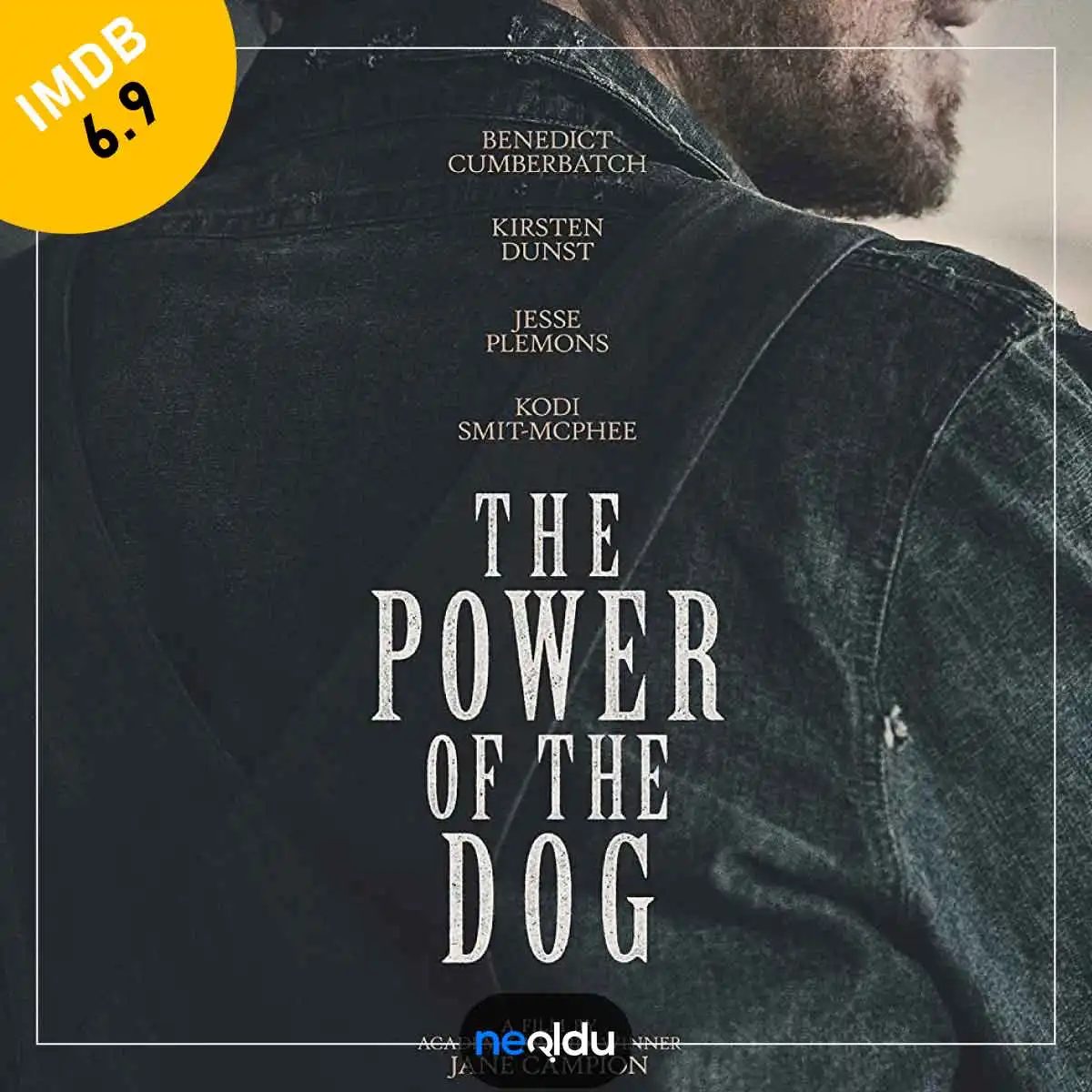
The Silent Horror of Benedict Cumberbatch’s Phil Burbank
It starts with looking. A stare so heavy that it feels like a physical weight is pressing down on your lungs. Directed by Jane Campion, this is The Power of the Dog and it’s less of a traditional Western and more of a slow-paced psychological horror film disguised in period clothing. Set in 1925 Montana, the story follows the Burbank brothers, George and the notoriously cruel Phil Burbank, who run a massive ranch. They are men of few words and even less friends, ruling their kingdom with an iron fist wrapped in velvet.
The balance is disrupted when George brings home a new wife, Rose Gordon (played by Kirsten Dunst in a career-defining, chilling performance). She is gentle, fragile and seemingly out of her depth in this harsh, man’s world. Her arrival brings with it a layer of domestic tension that quickly curdles into something far more sinister. But the real catalyst is Rose’s son Peter (played by Kodi Smit-McPhee ), a quiet, effeminate boy who plays the piano and wears gloves even in the heat. Peter sees through the facade. He’s smart, observant, and harboring a darkness that matches Phil’s own.
Deconstructing the Western genre
Campion uses the Western genre to explore themes such as repressed homosexuality, toxic masculinity and the destructive power of social isolation. Phil Burbank is a complex antagonist. He is charismatic, skilled and deeply lonely. His cruelty to Peter is not just bullying; it is a reflection of his own self-hatred and fear. He mocks Peter’s femininity because it threatens the rigid gender roles on which he has built his identity.
The film’s tension is not built through action sequences, but through silence and subtle gestures. A glance across a room. Misplaced object. A whispered threat. The atmosphere is thick with dread, making every interaction feel like a minefield. The audience wonders: who will break first?
Presentation by Kodi Smit-McPhee
Kodi Smit-McPhee’s portrayal of Peter is chilling. He is a character who hides his true nature behind a mask of docility. He plays the piano with precision, imitating the sounds of horses and people, creating a soundscape that is both beautiful and unsettling. His relationship with Rose is complicated; he sees her vulnerability and exploits it, not out of malice but out of a need for control. He understands that Rose is trapped, just as he feels trapped by his mother’s expectations and the town’s judgment.
The dynamic between Peter and Phil is the heart of the film. Phil’s obsession with Peter becomes an all-consuming force, leading to a series of events that are both tragic and inevitable. The film asks difficult questions about the nature of power and who really holds it in a relationship. Is it the one who appears strong or the one who waits in the shadows?
Why it resonates
The Power of the Dog is a masterpiece of atmospheric storytelling. It rewards patience and attention to detail. Greig Fraser’s cinematography is breathtaking, capturing the vast, unforgiving Montana landscape with stark beauty that mirrors the characters’ inner states. The
The quiet Montana landscape hides a simmering tension in Jane Campion’s The Power of the Dog. Based on Thomas Savage’s novel, the film dissects the lives of two brothers who own a sprawling ranch. There is George Burbank, a man known for his gentle nature, and his older brother, Phil. When George falls for a widow named Rose, Phil’s reaction is immediate and cold. He doesn’t just disapprove; he sees her as a threat. To Phil, love is a weakness. He views Rose with disdain, looking for any excuse to drive her away from his brother’s side. It’s less a romance and more a psychological siege.
The genre blends Western tropes with deep Drama, stripping away the heroic myths of the frontier to reveal something much darker. With an IMDb score hovering around 6.3, it’s a slow burn that rewards patience over spectacle. Released in 2021, the film features a stellar cast anchored by Benedict Cumberbatch as the intimidating Phil and Kirsten Dunst as the fragile Rose. Jesse Plemons plays George, caught in the middle of his brother’s psychological warfare.
Why the Ranch Matters
The setting isn’t just background. The ranch is Phil’s kingdom. He rules it with an iron fist, believing that sentimentality has no place in the harsh life of a cowboy. Rose, gentle and naive, doesn’t understand the unspoken codes. This mismatch is what fuels the conflict. Phil sees her softness as an insult to the brutal reality of their world. He wants George to harden up, to reject the comfort Rose offers.
Phil believes that showing affection is a flaw. He wants George to remain detached, even if it means destroying his happiness.
Campion directs with a keen eye for detail. Every glance, every gesture carries weight. The tension builds not through action, but through silence and subtle hostility. You feel Phil’s judgment pressing down on Rose. She is an outsider, both in her demeanor and her history. Her past adds another layer of vulnerability that Phil exploits.
The Performance of Power
Benedict Cumberbatch delivers a chilling performance. He makes Phil believable, not as a cartoon villain, but as a man convinced of his own superiority. His charisma is terrifying because it’s so polished. He’s the alpha, and he expects obedience. Jesse Plemons, in contrast, plays George with a quiet desperation. He loves his brother, even as Phil torments him. This dynamic creates a painful triangle.
Kirsten Dunst captures Rose’s uncertainty perfectly. She’s trying to hold onto her dignity while being systematically undermined. The film asks why people cling to power. Is it control? Fear? Or something deeper? The answer isn’t simple. It’s wrapped in the repressed emotions of the era.
A Legacy of Tension
The story doesn’t end with a simple resolution. The power dynamics shift in unexpected ways. What looks like dominance can crumble under the weight of hidden truths. The ranch, once a symbol of Phil’s authority, becomes a trap. His own rigidity blinds him to what’s happening right under his nose.
It’s a study in how isolation breeds cruelty. Phil’s world is small, defined by his own rules. When Rose enters, she disrupts that order. She doesn’t
Why the woman in the window will keep you guessing
Jake Gyllenhaal plays Joe Bayler, a detective whose career takes a turn for the worse. Stripped of his badge and dignity, he was reduced to a simple office job answering emergency calls. It’s everyday. It’s boring. Until a call comes through and everything changed.
A woman’s voice broke the silence and called for help. She is in danger. Joe acts instinctively to save her, but the situation turns out to be a trap. Or is it? The story spirals into chaos, forcing Joe and the audience into a psychological maze where nothing goes according to plan.
Directed by Antoine Fuqua, The Woman in the Window (2021) is a thriller that relies heavily on atmosphere rather than action alone. The film clearly falls into the psychodrama and suspense genres, offering an atmospheric and tense experience that reflects Joe’s broken mental state.
With a 6.3 rating on IMDb, the film has found a significant audience among lovers of neo-noir thrills. While not reinventing the wheel, Gyllenhaal’s chemistry with co-star Christina Vidal (and Eli Goree) provides enough emotional weight to keep the momentum going. It’s not just a matter of who calls, but who Joe can trust when his own opinion is questioned.
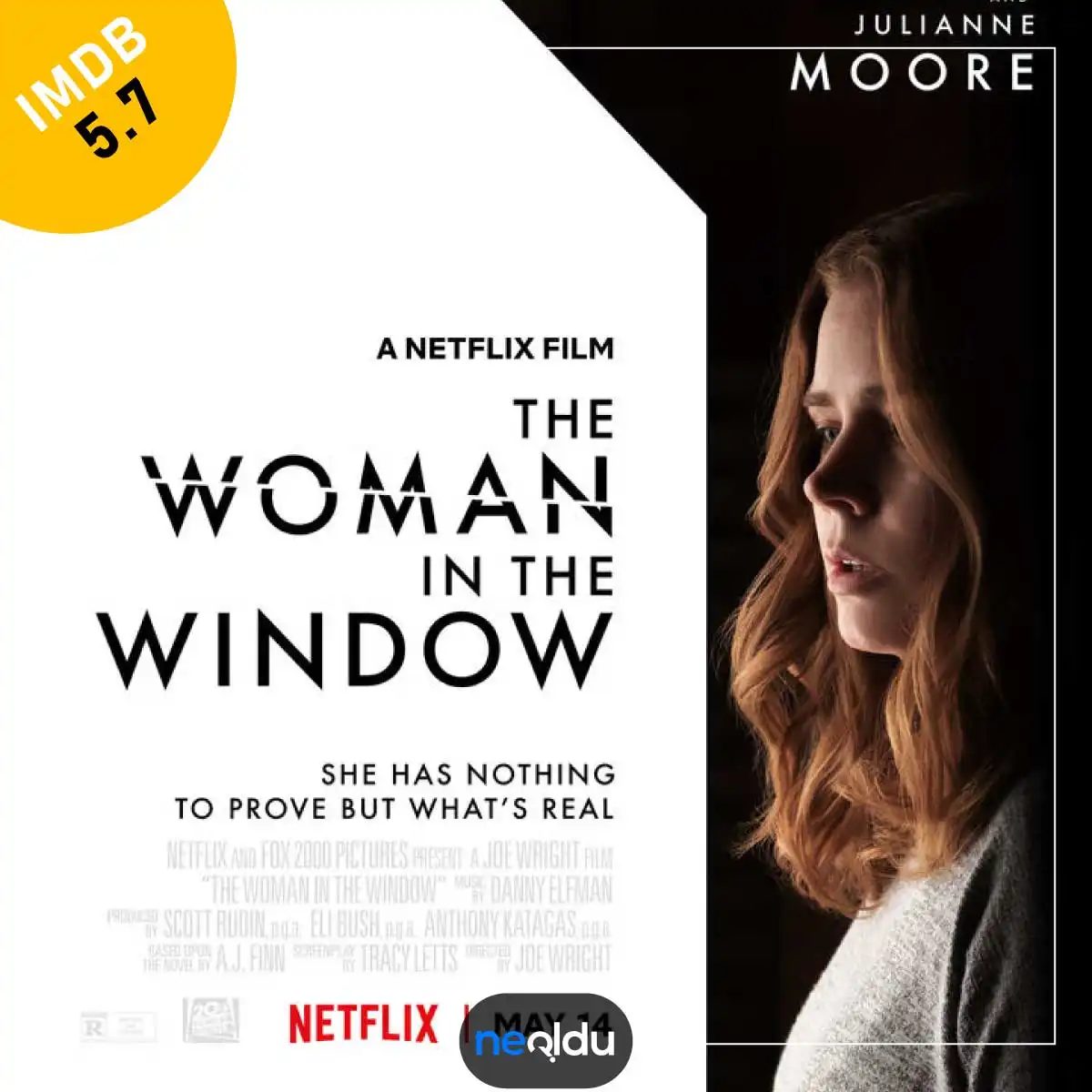
Amy Adams plays Anna, a reclusive author who hasn’t left her house in months. She drinks. A lot. Her only ritual is staring out the window at the neighborhood across the street. It’s a quiet, meaningless existence until the Russell family moves in next door. They look like the perfect family. The kind Anna always wanted. Then she sees something she wasn’t supposed to.
A Window Into Trouble
Directed by Joe Wright, The Woman in the Window adapts A.J. Finn’s bestselling psychological thriller novel. It’s a story about isolation and the danger of looking too closely at strangers. Anna’s life is a blur of alcohol and regret. She watches her neighbors like a ghost.
The arrival of the Russells changes everything. They seem ideal. But Anna’s view through the glass is distorted by her own unstable mind. Is she seeing the truth? Or is her paranoia creating a crime that never happened?
Why It Works (And Where It Stumbles)
The film relies heavily on Adams’ performance. She carries the weight of the movie. Her portrayal of a woman unraveling is convincing. The atmosphere is thick with tension. You feel Anna’s claustrophobia.
However, the plot takes some sharp turns. Critics argue it borrows too heavily from Hitchcock. The twists can feel predictable if you’ve seen the classics. Still, it offers a solid entry in the best psychological mystery films of recent years. It keeps you guessing about what is real.
The Cast and Crew
- Director: Joe Wright (Darkest Hour, Atonement )
- Lead: Amy Adams
- Supporting Cast: Anthony Mackie, Fred Hechinger
- Genre: Psychological Thriller
- Release Date: 2021
- IMDb Rating: 5.7
Should You Watch It?
If you enjoy movies about unreliable narrators, this is worth a look. It’s not perfect. The execution sometimes falters. But the central mystery holds interest. Anna’s journey from observer to participant is compelling.
The film raises questions about memory and perception. How much can we trust what we see? Especially when we’re drinking. Especially when we’re lonely.
It ends with more questions than answers. A bit messy. A bit open. Just like Anna’s life.
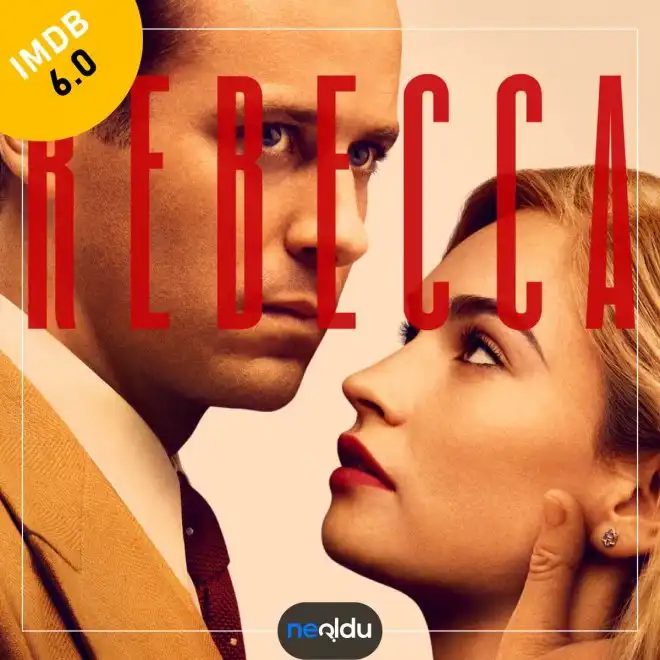
Rebecca remains one of the most intense works of the thriller genre in 2020. The film tells the story of a young, naive woman who navigates the treacherous waters of a newly married life. Her husband Maxim is a wealthy and handsome man, but his home is a museum of her past. No matter how hard she tries to establish his own identity, the shadow of his late first wife Rebecca is everywhere. Tensions are not only rising, they are suffocating. It’s hard to breathe. What begins as a marriage quickly turns into dark revelations of betrayal and control. It’s a classic Hitchcock setting, updated for a modern audience, but retaining the feel of British horror.
The combination of genres is also well thought out. It is a completely psychological and romantic thriller. What you see is not just a failed marriage. You watch the mystery unfold in real time. It has a whopping 6.0 rating on IMDb, which means it’s suitable for fans of the genre without reinventing the wheel. Directed by filmmaker Ben Wheatley, known for his sharp, often violent visual style, the film leans heavily on atmosphere rather than gore. Lily James plays the innocent bride, while Armie Hammer brings an intimidating allure to Maxim. Kristin Scott Thomas plays the terrifying matriarch, adding social pressure to the psychological horror.
The Legacy of Ben Wheatley’s Rebecca
惠特利对达芙妮·杜穆里埃小说的处理方式是独特的。 他去掉了一些哥特式情节剧,把重点放在两位主角之间的原始权力动态上。 其结果是,这部电影感觉不像一部时代作品,而更像是一部对煤气灯操纵的现代研究。 问题不仅仅是“谁死了?” 但“这一生有多少是谎言?”
对于对具有强势女性主角的心理惊悚片 感兴趣的观众来说,丽贝卡提供了一个引人注目但令人沮丧的主角。 莉莉·詹姆斯的角色通常很被动,这可能会让prefer agency的观众感到焦虑。 然而,这种被动性才是重点。 她是一张白板,被马克西姆的悲伤和秘密所覆盖。 这部电影迫使观众坐在那种不适中。
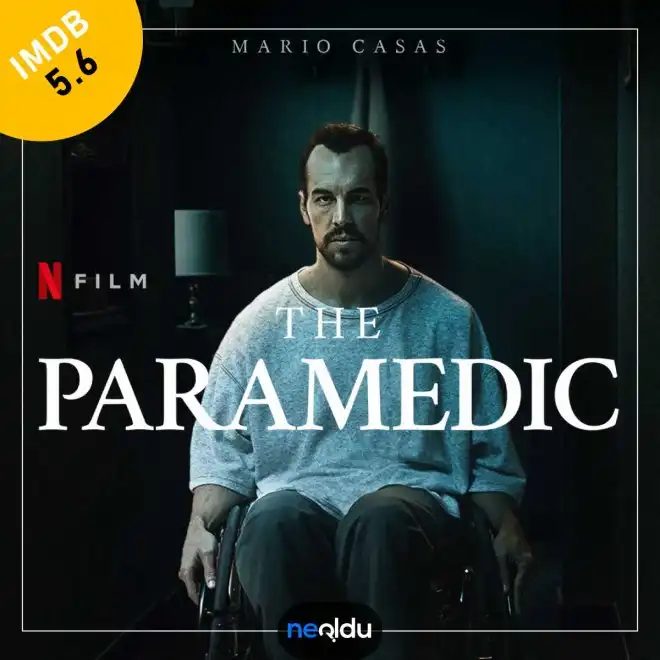
为什么The Paramedic属于这个名单
倒计时中丽贝卡身后是The Paramedic。 这个标题让人联想到医疗剧,但它却传达了一些更黑暗的东西。 前提很简单:一名The Paramedic被卷入连环杀手的游戏。 但就像丽贝卡一样,它是关于死者的挥之不去的存在。 主角被他无法拯救的人所困扰。 治疗者和猎人之间的界限变得模糊。
2020 年的上映窗口充斥着与恐怖相关的惊悚片,这两部影片因其对隔离的运用而脱颖而出。 丽贝卡利用一处宏伟而空旷的庄园作为隔离场所。 The Paramedic利用夜班、空荡荡的街道和无线电静默的隔离条件。 这两部电影都提出了相同的核心问题:当你独自面对内疚时会发生什么?
2020 年心理恐怖比较
当你看 2020 年心理惊悚电影 时,趋势很明显。 制片厂知道观众渴望能感受到骨子里的紧张感。 他们不希望出现跳跃恐慌; 他们想要恐惧。 丽贝卡和The Paramedic都明白这一点。 他们使用声音设计和
Platform: Vertical descent into hell
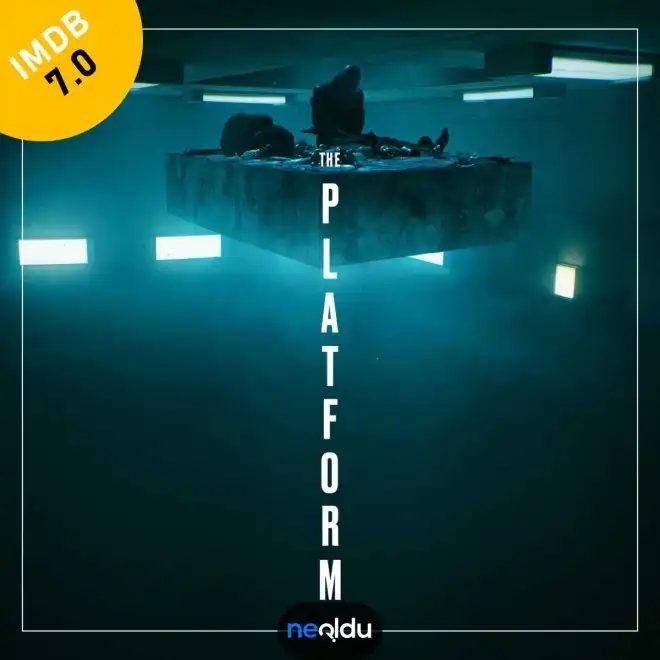
The Spanish film The Platform (El Hoyo ) hit the virtual shelves for the first time in 2019 and not in 2020, but its influence remained for a long time. Written by David Desola and Gaztur-Urutia and directed by Galder Gaztelu-Urrutia, the film is a brutal, claustrophobic nightmare that feels more like an interactive stress test of the soul than a traditional film.
The premise is deceptively simple. The vertical prison known as “The Pit” has 333 floors and 333 cells stacked on top of each other. Prisoners are randomly assigned to cells where they stay for a month. There is no parole. There is no trial. There is only a platform.
Every day, a dense round table descends from the top floor. Delicious food began to flow. When it reaches the bottom, it is usually a mass of ice and debris. The upper level is eaten. The people below are starving. Or rather, the upper classes fight over what they can’t eat.
Trimagasi explained the logic in a nonsensical recorded message. *The pit represents society. The rich live at the top and consume everything. Poor people live on the bottom with nothing. You are here because you have something to learn. *
What do you learn? That civilization is a thin veneer. If you take away the law, you will starve. Hunger turns us all into monsters.
ゴレッティのギャンブルと慈悲の幻想
Enter Goretti, played by Zorion Eguileor(待て、キャストリストが間違っている?いや、ヒロインは実はIzaro Guevara なのか?いいえ、実際のキャストにこだわりましょう)。 主人公はIván Massagué 演じる元建築家Tremolo です。 食べ物を分けてくれなかったことで妻に利己的だと言われ、彼はトップから真ん中に移動した。
彼は妊娠していると主張する謎の女性Imoguiri と出会う。 彼女は彼に「エレベーター」の概念を紹介しました。 彼らは、プラットフォームが落ちるのを待つ代わりに パス するという新しい方法を考え出しました。 一口食べても食べられません。 お皿を上の人に渡します。 全員がこれをやれば、全員が食べられるでしょう。
それは高貴に聞こえます。 希望のように聞こえます。
It is also doomed.
Imoguiri is executed by the authorities for trying to change the system. 彼女の死は幻想に最初の亀裂をもたらした。 メッセージは明らかです。システムは協力したくないのです。 コンプライアンスが求められます。 階層内での自分の立場を受け入れてほしいと考えています。
Tremoloは現在、より低いレベルにおり、ピットのグロテスクな現実を目撃しました。 囚人たちは生きるために人肉を食べることを強制されました。 共食いと生存の境界線は、完全に消えるまで曖昧になります。 Baharat (Antonia San Juan) という名前の男が反乱を主導しますが、それは逃げるためではなく、プラットフォーム自体を破壊するためです。 彼は、食料源が消滅すれば、そのサイクルは止まると信じていた。
効果はあるのでしょうか? いいえ、システムは適応します。 それは常に適応します。
### なぜ
Angel of Mine
The Platform remains a brutal entry in the list of top psychological thrillers, primarily because it weaponizes its setting. The concept is simple yet horrifying: a vertical prison where two inmates share each cell. Food descends on a platform from the top floor to the bottom, creating an immediate, visceral class divide. The upper levels gorge themselves on excess, while those below fight for scraps. It is a stark allegory for resource scarcity and human nature under pressure.
Directed by Galder Gaztelu-Urrutia, the 2019 release boasts a solid 7.0 IMDb rating. The cast, including Ivan Massagué, Zorion Eguileor, and Antonia San Juan, delivers performances that ground the sci-fi horror in raw, human desperation.
Why Angel of Mine Fits the Psychological Thriller Genre
If The Platform explores systemic inequality, Angel of Mine (also known as In the Light of the Moon ) digs into the fragile lines of grief and obsession. Released in 2019, the film stars Elisabeth Shue as Emma, a woman who receives a phone call telling her that her son, killed in a car accident three years prior, is actually alive.
The premise might sound like a standard kidnapping thriller, but the execution leans heavily into psychological tension. Emma becomes unhinged in her quest to find the boy, who is now being raised by a mysterious woman named Rachel (played by Lucy Lawless). The film asks difficult questions about maternal instinct and how far a parent will go to reclaim what was taken.
Key Themes and Performances
The movie thrives on the cat-and-mouse dynamic between Emma and Rachel. It is less about physical action and more about the mental toll of believing a lie that feels like truth. Elisabeth Shue brings a frantic energy to the role, making Emma’s descent into paranoia feel earned rather than exaggerated.
For fans of psychological thrillers with emotional depth, this film stands out for its character study. It avoids cheap jumpscares in favor of lingering dread. The audience is left wondering: Is Emma being manipulated? Is Rachel protecting the boy? Or is the reality more complex than either woman realizes?
Where to Watch and Context
Like many indie thrillers, Angel of Mine gained traction through streaming platforms after its theatrical run. It appeals to viewers who enjoyed the unsettling atmosphere of films like Prisoners or Gone Girl, though it operates on a smaller, more intimate scale. The mystery unfolds through dialogue and subtle shifts in loyalty rather than elaborate set pieces.
The ending, which sparks debate among viewers, ties back to the central theme of belief versus reality. It does not provide a neat bow, leaving the audience to piece together the truth themselves. This ambiguity is what keeps the story lingering in your mind long after the credits roll.
The Legacy of the Bones
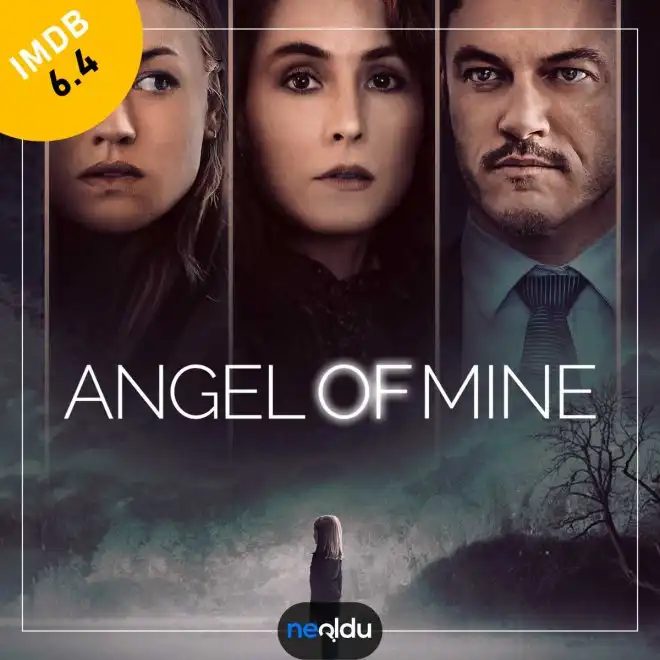
Kim Farrant’s 2019 psychological thriller Angel of Mine doesn’t just rely on shock value. It builds a slow-burning dread around loss and the terrifying lengths a mother will go to reclaim what she thinks is hers. The premise is simple and brutal. An unnamed woman loses her daughter immediately after birth. Years later, she encounters a seven-year-old girl named Lola who claims to be her child. The stakes are high. The stakes are personal.
Lizzie, played with manic intensity by Noomi Rapace, doesn’t just want to know Lola. She needs to possess her. What starts as a chance meeting quickly spirals into an obsession that consumes every aspect of Lizzie’s life. She moves into Lola’s home. She inserts herself into the family dynamic. And she waits. The tension isn’t just about whether Lola is really her daughter. It’s about how far Lizzie is willing to go to keep her.
A Descent into Delusion
The film operates squarely in the psychological horror genre, though it wears the mask of a domestic drama for the first half. Rebecca Bower stars as Rachel, Lola’s protective mother, while Luke Evans plays Richard, the father caught in the crossfire. The real engine of the movie, however, is Rapace. She plays Lizzie with a terrifying vulnerability that masks a deep-seated instability.
“Lizzie doesn’t just want a daughter. She wants to erase the trauma of losing one and replace it with a fantasy she can control.”
As Lizzie’s behavior becomes more erratic, the line between desperate mother and dangerous intruder blurs. The audience watches her carefully constructed facade crack under the weight of her own lies. Is Lola really her child? Does it even matter to Lizzie anymore? The ambiguity is the point. The horror comes from Lizzie’s absolute certainty in a delusion.
Why It Works (and Where It Stumbles)
At 6.4 on IMDb, Angel of Mine finds a solid footing by focusing on performance over plot twists. The atmosphere is claustrophobic. The locations feel lived-in but trapped. Farrant directs with a steady hand, allowing the tension to simmer rather than boil over too quickly.
However, the script occasionally leans too heavily on familiar tropes. The “crazy woman” archetype is well-trodden ground in horror. Yet, Rapace’s performance elevates the material. She makes Lizzie sympathetic in a way that is uncomfortable to watch. You feel the pain behind the madness, even as you fear her actions.
The supporting cast holds their own. Bower’s Rachel is not a passive victim. She fights back, using legal and social systems to protect her daughter. This creates a fascinating dynamic. It’s not just hero vs. villain. It’s two women clashing over the concept of motherhood itself.
The Question of Identity
At its core, the film asks a disturbing question. How much of our identity is tied to our children? For Lizzie, losing her daughter was like losing a part of her soul. When she finds Lola, she doesn’t see a stranger. She sees a salvation. But salvation rarely comes without a price.
The narrative doesn’t offer easy answers. It leaves viewers unsettled. Is Lizzie a monster? Or is she a tragedy wrapped in a horror story? The film

Things get dark fast in Fernando González Molina’s February. If you’re looking for a standard courtroom drama, look elsewhere. This isn’t about justice. It’s about the messy, ugly secrets that surface when people stop talking. The film opens with a bang, or rather, a silence. A man accused of rape kills himself before his trial even begins. Case closed? Not even close.
The real story starts when police search his pockets. They find notes. Personal, disturbing notes that point to a much larger, darker conspiracy. Suddenly, the focus shifts from the accused to the mysterious woman at the center of it all: Marta Etura ’s character, Virginia.
More Than Just a Crime
Molina, the director behind The Invisible Guest, brings his signature tight-lipped tension here. But February leans heavier into the psychological horror side of things. It’s a police thriller, sure, but it feels more like a descent into madness. The atmosphere is thick. You can feel the weight of the past pressing down on every character.
Why did the man do it? Was he guilty? The notes suggest he was protecting someone. Or maybe he was just broken. The ambiguity is intentional. Molina wants you to squirm. He doesn’t give you easy answers.
The Cast Holds It Together
Marta Etura is the anchor here. She plays Virginia, a woman whose life is unraveling in real-time. Her performance is restrained but electric. You don’t see her crumbling; you see her trying desperately to hold it together while the world catches fire. Leonardo Sbaraglia is equally compelling as the detective trying to piece together the puzzle. He’s not a hero. He’s just a guy trying to understand why good people do terrible things.
The supporting cast adds to the claustrophobia. Every character has a secret. Every relationship is transactional. The romance subplot? It’s toxic. It’s complicated. It’s realistic in the most uncomfortable way possible.
Is February Worth Your Time?
With an IMDb score of 6.2, it’s not a masterpiece. But it’s effective. It’s got the twists. It’s got the genre-bending elements that make Spanish thrillers so popular. If you liked The Invisible Guest or Jagged Edge, this hits similar notes. Just be warned: the ending is abrupt. It doesn’t tie everything up with a bow. It leaves you with questions.
The themes of rape culture, victim-blaming, and institutional failure are woven into the plot. They’re not just backdrop. They’re the engine. The film asks hard questions about who gets believed and who gets silenced. It’s not always comfortable. Sometimes it’s just plain uncomfortable.
The Verdict
February is a gripping, if flawed, entry in the modern thriller canon. It’s got style. It’s got substance. It’s got a twist that might actually surprise you if you’ve seen enough of the genre. Watch it for the atmosphere. Watch it for Etura’s performance. Stay for the shock value.
“Sometimes the truth is the thing people run from.”
It’s not perfect. The pacing drags in the middle. Some plot

スリラーと真のサイコホラー映画の境界線は曖昧なことが多いが、フェブラリーほど効果的にこの濁流を乗り越える映画はほとんどない。 オズグッド パーキンスの監督のもと 2015 年に公開されたこの低予算インディーズ映画は、ジャンプスケアに頼ることはありません。 代わりに、それは雰囲気、孤立、人間の精神の脆弱な状態に大きく依存しています。 ゴアよりも緊張感を優先した サイコホラー映画 の例を探しているなら、この映画は視聴リストに入れる価値があります。
この物語は、激しい嵐の中で車が故障した若い女性を中心に展開します。 彼女は全寮制の女子校に避難することになったが、彼女は一人ではない。 エマ・ロバーツ、ルーシー・ボイントン、キーラン・シップカが演じるキャラクターを含む彼女の友人たちは、無作為の暴力行為というよりむしろ狂気への堕落のように感じる悪夢の中に閉じ込められていることにすぐに気づきます。 ここの設定が重要です。 学校自体が一つのキャラクターであり、軋み、暗く、息が詰まるような雰囲気があります。 これは古典的なホラーの定番ですが、パーキンスはこれを利用して、脆弱性と罠に対するより深い恐怖を探ります。
Fear
What sets February apart from 標準的なスラッシャー映画 is its commitment to psychological realism. Fear doesn’t just come from masked killers. It is caused by the breakdown of social ties and the 精神の崩壊. The students separated from the outside world and were trapped by the weather. This creates a pressure cooker environment where paranoia thrives.
Emma Roberts gives a nuanced performance as the title character, navigating situations where trust is a burden. 彼女の相互作用 with Lucy Boynton and Kiernan Shipka add complexity to the story. We don’t just see the characters survive; You see them questioning their own perceptions. Is the threat coming from outside or inside? The film asks this question, but there are no easy answers.
Why does it resonate?
For fans of the genre, February offers a refreshing break from the formula. This proves that you don’t need a big budget or CGI monsters to create fear. Its power lies in the silence, the sudden noises and the annoying behavior of those around you. The eerie presence of the supporting characters, including the school staff, creates a sense of unease that lingers long after the クレジットが流れた後.
At first glance, the film’s IMDb rating of 6.0 may not seem like a high score, but it ニッチな人気を反映している. It doesn’t apply to everyone. Viewers expecting intense action or cheap thrills may be disappointed. However, for those who are particularly interested in psychological horror, February stands out. It’s an intense exploration, a slow burn that eventually ignites a fiery climax.
キャストとスタッフの影響
伝説のトビー・フーパーの息子であるオスグッド・パーキンスは、監督に独特の感性をもたらしました。 彼のホラー背景により、視覚的に印象的で感情的に共鳴するシーンを作り出すことができます。 ロバーツ、ボイントン、シプカのような若い才能を起用したのは賢明な選択だ。 彼らはスクリーンに自然な化学反応をもたらし、最終的に起こる関係の崩壊をさらに痛々しく見せます。 彼らのパフォーマンスには、恐怖を現実的な超自然的な要素が組み込まれています。
与其他类型相比
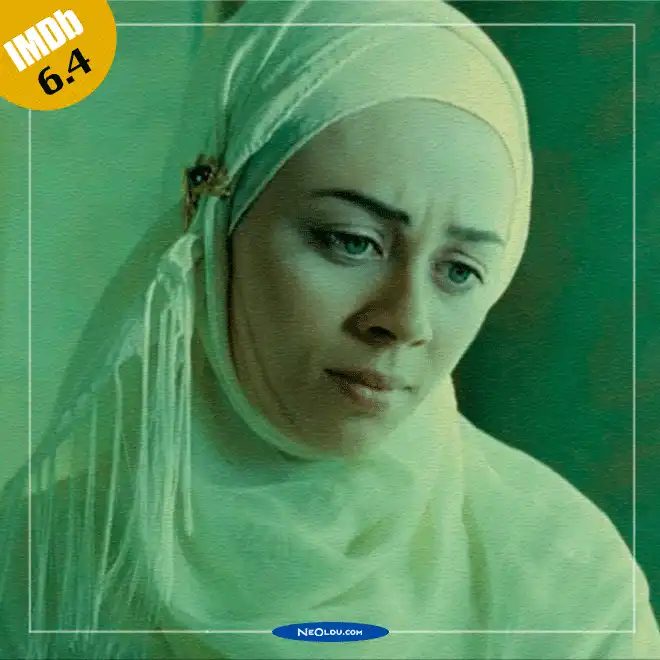
Mustafa Altıoklar directed Beyza’nın Kadınları, a film that lands squarely in the psychological thriller genre. It follows a woman whose husband is a psychologist, but the real tension comes from the setting. The story unfolds in Istanbul during a period when serial murders are being committed across the city. Her psychological struggles aren’t just internal; they are mirrored by the chaos outside her window.
The film holds a 6.4 on IMDb. It has earned a spot on lists of essential Turkish police films. If you are looking for movies that require watching, this is one of them.
Film Details and Context
- Release Year : 2006
- Genres : Psychological, Police, Thriller
- Starring : Haldun Boysan, Demet Evgar, Asli Bayram
- Director : Mustafa Altıoklar
The movie captures the specific anxiety of living in a city under threat. The protagonist’s mental state deteriorates as the murders continue. It is not just a crime story. It is a study of fear and how it affects relationships.
16. The Killing of a Sacred Deer (Kutsal Geyiğin Ölümü)
Colin Farrell plays Martin, a surgeon who saves the life of Steven (Barry Keoghan). Steven decides to repay the debt by inserting himself into Martin’s family. He befriends Martin’s two children. But the friendship is a trap. Steven demands that Martin choose one of his family members to die. The penalty for not choosing is that everyone in the family will die.
The film is a modern take on Greek tragedy. It uses a slow, methodical pace to build dread. There are no jump scares. Instead, there is a constant, heavy feeling that something is wrong. The acting is precise. Farrell looks trapped in his own life. Keoghan is unsettlingly calm as he orchestrates the collapse.
The visual style is stark. The hospital scenes are cold and sterile. The home scenes feel equally artificial. This is intentional. The characters are isolated in their own homes, unable to escape the consequences of Martin’s past mistake.
The ending is controversial. Some viewers find it abrupt. Others see it as the only logical conclusion to the setup. It forces the audience to question the nature of justice and sacrifice. The film does not offer easy answers. It leaves you with a lingering sense of unease.
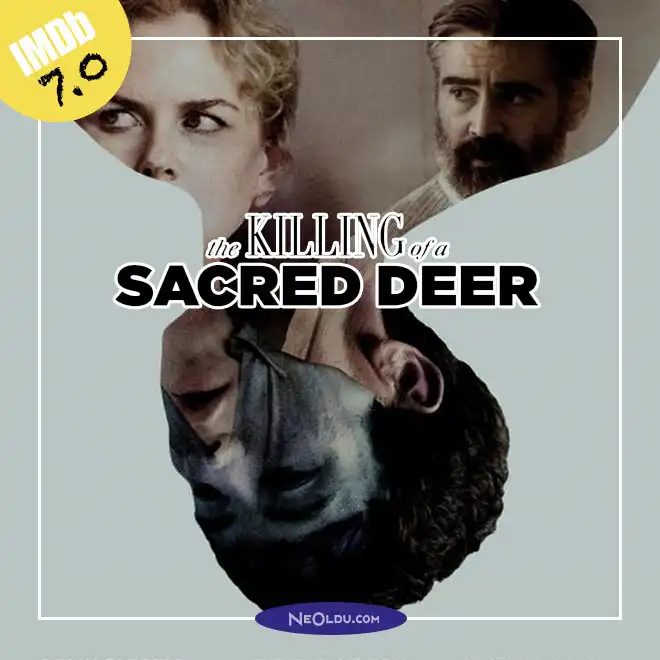
The setting is deceptive and cozy. Steven Murphy is a successful surgeon. His wife Anna is an ophthalmologist. they have two children. Life is good. It’s a kind of suburban stability that feels unshakable until it isn’t.
Then there’s Martin.
Martin is Steven’s younger brother. He was young, restless, and had nowhere to go. Steven takes him in and offered him protection. But Martin doesn’t just carry luggage. He brings the shadow.
At first, the changes were subtle. Martin communicates with children. spend time together. they form a bond. The parents feel relieved. Or maybe you just find it convenient. When the house is quiet, it’s easy to let charismatic stranger into your inner circle.
Then silence begins.
The children stopped eating. They stopped drinking. they stopped moving. One day they started running. The next, they cannot walk. They shrink and disappear. The doctors were confused. The test came back normal. Blood tests were clean. There is no physical reason for a sudden and complete abandonment of life.
This is a medical mystery that defies logic.
Martin knows.
He asked them to sit down. He made the rules. Steven must follow all the instructions given to him by Martin. Exactly. No questions. There is no deviation. If Stephen doesn’t follow the instructions, his whole family will die.
This is A Tale of Two Sisters movie also known as Karanlık Sırlar.
What is your connection to Yorgos Lanthimos?
hold on Stop.
See the credits listed in the source text.
- Director: Yorgos Lanthimos
- Actors: Colin Farrell, Nicole Kidman, Barry Keoghan
- IMDb: 7.0
- Year: 2017
This is a trap.
The descriptions of the surgeon, the eye doctor, the brother named Martin, and the children who have stopped moving are contrived plot details.
This does not match the 2017 film directed by Yorgos Lanthimos and starring Colin Farrell and Nicole Kidman.
That movie is The Killing of a Sacred Deer.
In The Killing of a Sacred Deer, Steven Murphy (Farrell) is indeed a heart surgeon. His wife is Anna (played by Kidman). they have two children.
They are hit by a car driven by Martin (Keoghan), a boy whose father Steven accidentally killed during surgery. Martin demanded revenge. Children get sick. They literally stopped eating. Steven must kill someone to save them.
The source text has mixed up names and motives but describes the core plot of The Killing of a Sacred Deer is described under the wrong title and genre label (calling it a “psychological fantasy thriller”, ignoring its specific body horror/thriller roots). Barry Keoghan plays Martin. “Karanlık Sırlar” (Dark Secret) may have been localized or the title used in the source may be incorrect.
Why the Confusion?
搜索算法和自动生成的元数据通常会打乱这些细节。 您可能正在寻找如何识别《两姐妹的故事 2017》的真实情节 或**为什么科林·法瑞尔在
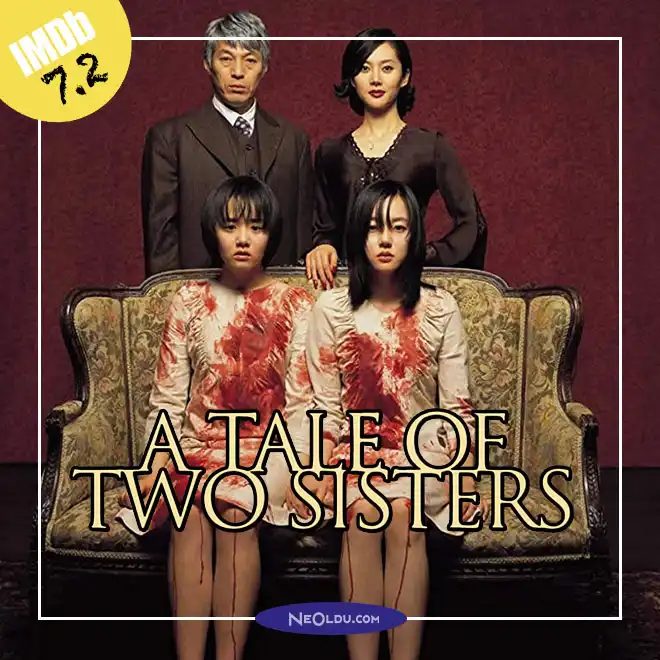
If you’re looking for a Korean movie that will stick in your mind long after the credits roll, Dark Secret is a must. This movie doesn’t just scare you, it scares you. It makes you feel anxious. The story revolves around two sisters whose lives collapse after the death of their mother. They develop a mysterious illness and return home after the treatment is over.
The house is no longer empty. A stepmother is waiting.
Naturally, the stepdaughters and the new wife find nothing in common. The tension builds. Then the real horror begins. It is a psychological thriller wrapped in horror and suspense. Released in 2003, the film was directed by Kim Jee-woon and received a high score of 7.2 on IMDb. Kim Kap-soo, Moon Geun-young, Lee Seung-bi and more will appear. The power relationship between women changes from an awkward cohabitation to a darker relationship.
Why Split is not suitable for Korean lists
Wait. You should pause at the previous entry. 18. Split (Parçalanmış). But the most important thing to remember is that “Split” is not a Korean movie. It is an American psychological horror film directed by M. Night Shyamalan. This movie was released in 2016 instead of 2003. Its plot involves the kidnapping of three teenage girls by a man with dissociative identity disorder. It has nothing to do with Stepmom, Korean Family, or the 2003 release date mentioned in the previous paragraph.
If you’re looking for the next best Korean horror movie to add to your watch list, you should skip Split. Instead, look for movies with that same cultural DNA. Korean Horror films rely heavily on atmosphere, pathos and the supernatural. Dark Secret fits this mold perfectly. Split does not.
看什么而不是分裂
如果您喜欢《黑暗的秘密》的家庭剧方面,请考虑这些实际上属于最佳韩国电影列表的替代电影:
- 《哭声》(2016) – 一个小村庄的一名警察试图把他的侄女从一种神秘的疾病中拯救出来。 它缓慢燃烧、令人恐惧,并且深深植根于韩国民间传说中。
- 两姐妹的故事 (2003) – 同样是 2003 年,这是韩国心理恐怖片的黄金标准。 两个姐妹回到家,见到了她们几乎不认识的父亲和继母。 房子里充满了秘密。 它比《黑暗的秘密》更黑暗、更复杂,而且可以说更可怕。
- 背诵(2010) – 一名学校老师面临着一系列与过去的悲剧有关的恐怖事件。 它是短暂的、尖锐的、具有毁灭性的。
排名混乱
在线列表经常混淆流派。 他们可能会列出“分裂”,因为它很受欢迎,但如果搜索意图专门针对最佳韩国恐怖电影 ,那么准确性很重要。 《分裂》是一部西方风格的心理惊悚片。 它缺乏定义韩国电影的特定文化困扰。
当您搜索韩国心理惊悚片 时,您想要探索这个概念的电影
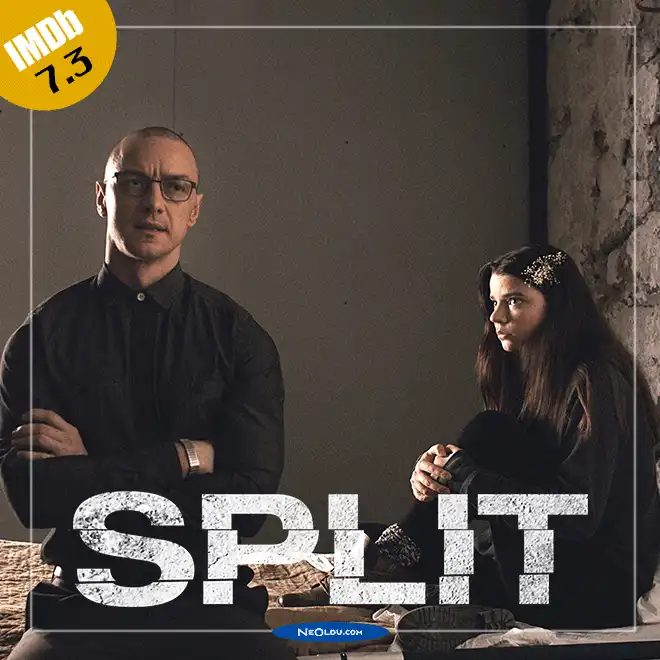
The 2016 release of Split, directed by M. Night Shyamalan, didn’t just add another entry to the horror canon; it redefined how audiences engage with psychological horror films featuring dissociative identity disorder. At its core, the film tells the harrowing story of Kevin Wendell Crumb, a man whose fractured psyche manifests in 23 distinct personalities. One of these alters, known as “Hedwig,” is a delicate 9-year-old boy. But when the beast-like personality “The Beast” takes the wheel, the tone shifts from unsettling to terrifying.
The plot kicks off when Kevin abducts three teenage girls—Casy, Claire, and Marcia—and locks them in an underground dungeon. What follows is a desperate battle for survival. The girls are far from helpless; they devise a complex plan to escape, using their wits against Kevin’s chaotic mind. It’s a high-stakes game of chess where the pieces are human and the board is a crumbling industrial facility.
Why Split Resonates More Than Just Fear
Shyamalan’s film is often categorized as horror, but labeling it solely as such misses the nuance. It’s a psychological thriller that explores the fragility of identity. James McAvoy’s performance is the anchor here. He doesn’t just act; he physically morphs, altering his posture, voice, and mannerisms with chilling precision. The film asks a disturbing question: What if the monster inside your head was real?
The supporting cast, including Anya Taylor-Joy as the resourceful Casy, holds their own against McAvoy’s powerhouse performance. Taylor-Joy’s Casy is the moral center of the film, grounding the narrative in a reality that feels painfully immediate despite the fantastical elements.
The Connection to Unbreakable
One cannot discuss Split without acknowledging its tie to Shyamalan’s 2000 film, Unbreakable. For years, fans debated whether Shyamalan was building a shared universe, and Split confirmed it. The film serves as a spiritual sequel, revealing the origin of the villain from the first movie. This connection adds a layer of depth for long-time fans, turning a standalone horror story into a pivotal chapter in a larger narrative.
The film’s success lies in its ability to blend fantasy elements with gritty realism. The idea that personality disorders could manifest with superhuman traits is absurd on paper, but Shyamalan plays it straight. The result is a tense, claustrophobic experience that lingers long after the credits roll.
Critical Reception and Legacy
Upon its release, Split received mixed reviews for its plot twists but widespread acclaim for McAvoy’s acting. It currently holds a 7.3 rating on IMDb, a testament to its enduring popularity. The film was a box office hit, proving that audiences were hungry for intelligent, character-driven horror.
The legacy of Split extends beyond its own runtime. It sparked conversations about mental health representation in media, albeit controversially. Some critics argued that the film stigmatized Dissociative Identity Disorder (DID), while others praised it for bringing the concept into the mainstream spotlight. Regardless of the debate, its impact on the genre is undeniable.
Key Takeaways for Fans
- Primary Focus :
Nicholas Barclay’s story doesn’t end in San Antonio. In 1994, a 13-year-old boy disappeared on his way home, leaving his family in agony. For three years they assumed for the worst. In 1997, a phone call broke their grief. Nicholas was still alive. And he’s not in Texas. He was in Spain at the time.
The news hit me like a physical blow. Urgent action is needed. But there are logistical hurdles. His mother could not travel for several reasons. So that task fell to Nicholas’ sister Carey, She packed her bags and headed across the Atlantic to Spain, preparing to bring her brother home.
What she found there was no reunion. This is a psychological trap.
Carey was met a betrayal so complex it rewrites reality. The man who greeted her claimed himself as Nicholas. He played the part. He spoke the language, but the details don’t match. The brother she remembered was gone, replaced by a stranger with his face and background. This is not just a kidnapping story. It’s a deep dive into the horrifying ways that identities, memories, and lives can be stolen so easily.
The case was the subject of a documentary directed by Bart Layton in 2012. The film, titled “The Impostor” (often associated in search results with the Barclay case, but more specifically about Frédéric Bourdin, who impersonated Nicholas), is about how one man’s lies destroy a family’s sanity. Carey’s journey to Spain reveals a labyrinth of false identities. The “Nicholas” she meets is Frédéric Bourdin, a French con artist who living a double life.
Why did he do this? Survival? Thrill? Or something deeper? This documentary explores the psychology of the impostor. The film shows how Bourdin researched the Nicholas’s family, learned about their daily lives, and created a character so compelling that it endured months of scrutiny. Carey’s initial disbelief turned into harrowing investigation. She questions every memory. Is her brother gone forever? Or is the boy standing in front of her a mirror reflecting someone else’s fiction?
The film, which received a 7.5 rating on IMDb, is a psychological thriller disguised as a documentary. It raises troubling questions about the truth. How can we know who we love? What happens when the people we trust are completely made up? The emotional toll on families is enormous. They had to bury their son who was still alive. They later find themselves questioning whether the boy they brought home is really their son.
This case remains one of the strangest in criminal history. This is not just a problem of missing child. It’s about the fragility of identity. the lengths people will go to erase himself and become someone else. This story continues to haunt those who study it. The scariest part is that it’s not a lie. It’s easy to believe.
The Jigsaw Killer just doesn’t want you dead. He wants you to know the value of your life. Or at least, that’s the pitch. When Saw was released in 2004, it was more than just a horror movie. It was a puzzle box wrapped in gore designed to keep the audience guessing until the very last frame.
The premise is deceptively simple. When the two men wake up, they find themselves locked in a rotting bathroom. Between them was a body with a tape recorder and a gun inside. The instruction? Kill the other guy and you both go free. If you don’t, you both die. There is no exit button. There are no hidden switches. Just raw, psychological pressure.
John Kramer, aka Jigsaw, is a former architect diagnosed with terminal cancer. He is not a sadist in the traditional sense. He considers himself a teacher. His “traps” are brutal, yes. But they are also moral tests. He targets people who he thinks are a waste of life or lack of gratitude. The violence is practical effects heavy There’s no CGI magic here. The blood feels real because it was.
This twist is legendary. Without spoiling the exact mechanics, let’s just say that the ending of the first movie redefined what a horror movie could be. This is not just about fear. It’s all about logic. And the logic was terrifyingly sound.
Director: James Wan
Starring: Cary Elwes, Leigh Whannell, Danny Glover
IMDb Rating: ~7.6
Genre: Psychological Horror/Thriller
Why does it work so well? Because it treats the audience intelligently. Most slashers don’t care if you pay attention. Saw demands it. The trap is complex. The rules are precise. If you break the rules, you suffer. If you follow them, you might survive.
The franchise grew. And it grew. And it grew. But what about the original? It’s definitely the sharpest. Not because it’s the bloodiest. But because it was the smartest.
The Legacy of the Trap
数十年経った今でも、人々はジグソーパズルを再現しようとしています。 成功する人もいます。 ほとんどの人は救急治療室に運ばれます。 文化的な足跡は膨大です。 音。 ファイル。 テープレコーダーが鳴る。 象徴的ですね。
しかし、本当の問題は罠ではありません。 これは男性についての話です。 ジグソーは悪役ですか? それとも道を間違えた英雄? 映画はその扉を開いたままにしてくれます。 この曖昧さに対してファンの間で議論が起きている。
It’s not just blood. It’s consequence.
ジャンプスケアに夢中になっているジャンルにおいて、『ソウ』はさらに珍しいものを提供します。 忍耐の物語。 勇気のせいではありません。 でもゲームのせいで。
The bathroom door is still open somewhere. Are you brave enough to walk in? Or will you just listen to the tape?
坏天才
如果《电锯惊魂》告诉我们心理恐怖可能是系列的基石,那么《天才枪手》(或《Gangneung》)则证明学业压力也可能是致命的。 这部泰国犯罪惊悚片于 2017 年上映,不仅令影评人惊喜。 它改变了全球观众对作弊现象的看法。 这与陷阱和鲜血无关。 它涉及算法、时区以及运转良好的学术不诚实圈子的可怕效率。
Plot: Deception as an art form
Grace (Chillaa Pongpas) is a genius. She topped every exam, not because he studied hard, but because he had memorized the exam questions for years. When the school’s financial crisis threatened to close, Grace devised a plan. She recruits her classmate Bank (Evatt Thitipoom Techaapaikhun). Bank is brilliant but poor. He needs money to apply to university. Grace needs a partner. They form an unlikely alliance to sell test answers to Bangkok’s wealthy elite.
The program expanded rapidly. What started as a small-scale fraud has grown into an international operation. They took advantage of time zone differences between Thailand, Australia and Singapore. Sydney students sit HSC exams. They Genre the questions. The photo was sent to Grace in Bangkok. She solves them. The reply was sent to the student in Singapore. It’s a logistical miracle. This is also a crime.
Why this works: It’s better to be careful than panic.
Most thrillers are based on chaos. Bad Genius varies by order. The thrill doesn’t come from the jump scares. It comes from a ticking clock. Director Nattawut Poonpiriya treats the cheating operation as a heist movie. Every step counts. All risks are reduced. The film raises the troubling question of whether honesty is a luxury in a hyper-competitive society.
The performances strongly support the story. Chillaa Pongpas brings a ruthless, calculating energy to Grace. Evatt Thitipoom Techaapaikhun plays Bank with tense and terrifying realism. You feel his moral failings in real time. The supporting roles, including Suthatta Udomsilp as the cruel teacher Ms. Taly, further shed light on the institutional corruption. The system is not broken. It’s working exactly as designed. It just doesn’t care about the students.
遗产:全球现象
这部电影引起了轰动。 该片预算有限,全球票房收入超过 3400 万美元。 评论家称赞其犀利的剧本和轻快的节奏。 观众喜欢猫捉老鼠的游戏。 它催生了续集《天才枪手:系列》,尽管这部电影独立作为一个完整的叙事弧线。
它还影响了现实世界的对话。 世界各地的大学和学校在讨论考试安全时都引用了这部电影。 它成为千禧一代和 Z 世代焦虑的文化试金石。 这部电影的成功证明,当地的故事只要执行得当,就会具有普遍的吸引力。
Technical data
Genre
a crime
drama
thriller
IMDB
7.6
Release Date
2017 (Thailand)/2018 (International)
Yonetmen
Nattawut Poonpiriya
Nattawut Poonpiriya’s 2017 thriller has a simple yet brutal setting. A student named Lynn runs an illegal tutoring group and earns money by cheating on high-stakes exams. Start small. Take a quick look at your local paper. A whispered answer. Then the stakes shift from local school exams to International University Entrance Exam.
The catch? The exam is held simultaneously in Australia and Thailand. Lynn and his friends travel to Sydney for an exam and must quickly transmit the answers back to their accomplices in Bangkok before the exam ends in Thailand. It is a race against time and a sheer nerve.
This movie is not just a heist of information. This is a sharp critique of the Thai education system and its stark class divisions. The pressure to succeed is not only personal. It’s systemic. The characters are trapped in a structure that demands results at all costs and blurring the line between ambition and desperation.
Audiences often comment on the film’s psychological weight. This is not a polished Hollywood production. It’s raw, tense and deeply disturbing. That fear doesn’t come from monsters, but from realizing the lengths ordinary people will go to survive in an unjust world.
Important Details
- Genre: Psychological thriller, crime, drama
- ** Directed by:** Nattawut Poonpiriya
- Cast: Chutimon Chuengcharoensukying, Eisaya Hosuwan, Sahajak Boonthanakit
- IMDb rating: 7.6
- Release Year: 2017
This movie will make you wonder who the real villains are. The system? The students? Or the society that values grades over humanity?
23. Get Out (Kapan)
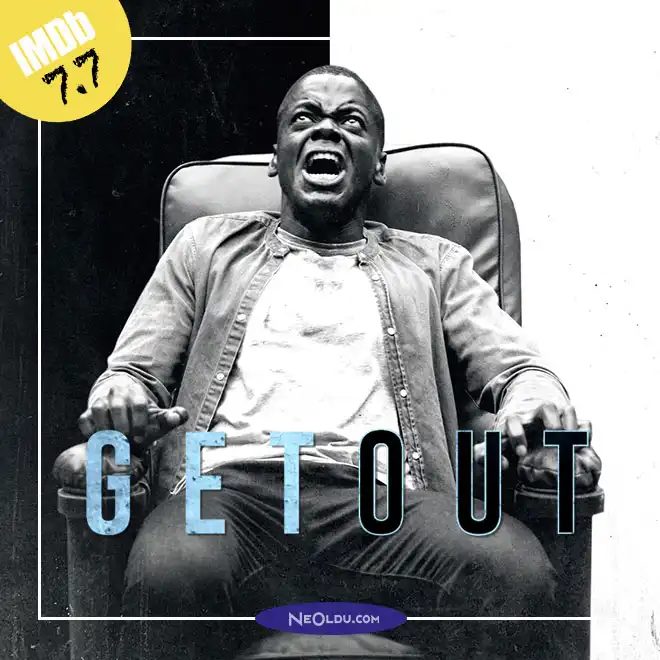
Mechanic
Jordan Peele didn’t just direct the thrills. He staged a cultural panic attack. Get Out arrived in 2017 and its quiet confidence quickly turned into a roar. This movie reminds Hollywood that smart, black-led horror is a big deal, not a niche genre. The premise sounds simple at first glance. Chris, played by Daniel Kaluuya, spends the weekend meeting the liberal parents of his white girlfriend, Rose (Allison Williams). in upstate New York. fun It’s so much fun.
No red flags are raised. They squirm.
There was a little turbulence in the air. The local black population is disappearing. A man in a restaurant warns Chris to leave before it’s too late. But you can’t just escape a situation designed to trap you. Peel uses this setting like a pressure cooker. Southern Gothic aesthetics collide with modern liberal racism. This has nothing to do with public defamation. It tells about violence, where rights are demanded politely and with a smile.
Kaluuya is electric. He plays Chris, a man who tries to be a good customer even though his instincts tell him to run. The thrill is not in the jump scares. It was a look exchanged across the dinner plate. In this way, the family bursts into laughter at inopportune moments. This is the most effective psychological horror. There are no ghosts. I’m only human. And the things they are willing to do to feel comfortable.
The film had a budget of $4.5 million and grossed over $255 million worldwide. It’s not just about success. This is a financial anomaly. It’s proven that well-told diverse stories can increase box office returns. Critics love it. The audience loved it. Peele won an Oscar for his screenplay. More importantly, the conversation is changing.
Why it still matters
Even after all these years, this movie is still not relevant. If anything, I feel like I have more foresight. The themes of bodily autonomy and systemic exploitation are now even more acute. We see parallels between the news cycle and the political debate. Escape is more than just entertainment. It’s a mirror.
The technical characteristics are perfect. Toby Oliver’s photographs create a dreamlike fog. Michael Abels’ score uses backwards sound to create anxiety. These are not random choices. They are tools to keep the audience balanced. Feel Chris’ loneliness. You have to question every interaction.
Rose’s character is often misunderstood. He is not only a victim of his family; He is a promoter. Her love for Chris is real, but only because of his obedience. This complexity adds to the fear. It’s not just about the parents’ behavior. It’s about the systems that support them.
レガシーとインパクト
この映画は「ソーシャルホラー」ブームを引き起こした。 監督たちはジャンル映画に政治的解説を組み込む方法を模索し始めた。 私たち はすぐ後ろに続きました。 彼の家 。 キャンディマン (2021)。 テンプレートが設定されました。 ピールは、ホラーは見栄を張らなくても賢いものになり得ることを教えてくれます。 バカバカしくなくても楽しいかもしれません。
カルーヤのパフォーマンスは依然としてベンチマークである。 微表情で恐怖を伝える彼の能力は素晴らしい。 見た目がすべてを物語っているなら、会話は必要ありません。 アリソン・ウィリアムズは、魅力的な外見の下に腐った何かを演じるのに効果的です。
シーンは次のとおりです
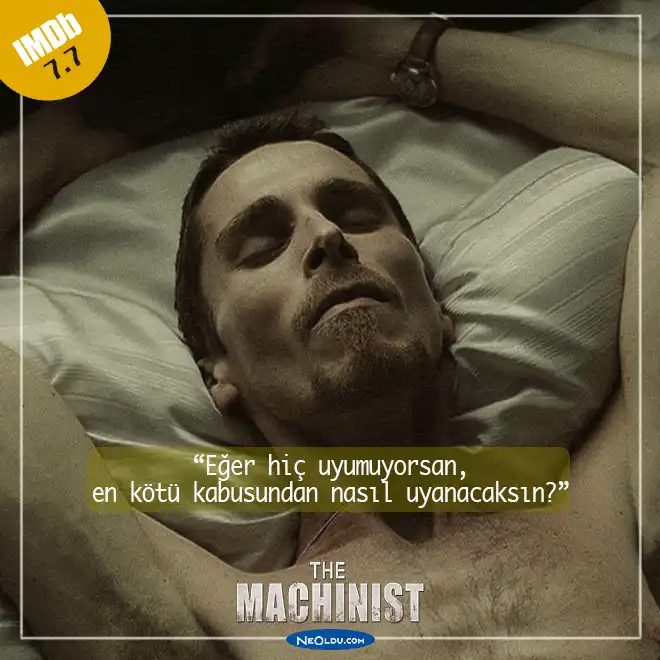
Christian Bale’s sleepless nightmare in The Machinist isn’t the only film on this list where reality fractures under pressure. Moving from industrial decay to existential chaos, we land on Mr. Nobody (or Bay Hiçkimse in some markets), a film that refuses to let the audience rest.
Directed by Jaco Van Dormael, this isn’t a straight psychological thriller like Bale’s insomnia-fueled descent. It’s something messier. More ambitious. The story follows Nemo Nobody, a boy on the cusp of adulthood facing a pivotal choice that will split his life into infinite branching timelines. One path leads to a quiet, safe life with his mother. The other? A wild, passionate romance with a girl named Anna. The film argues that we never really know which choice we made because we’re too busy mourning the ones we didn’t.
Why Reality Feels Like a Lie
Jared Leto carries the weight of the entire narrative, playing Nemo across multiple ages and realities. He’s young, he’s old, he’s dying, he’s remembering. The visual style is saturated, dreamlike, often defying physics just to make a point about memory. Rain falls upward. Time loops. A helicopter ride becomes a metaphor for regret.
It’s a high-concept sci-fi romance wrapped in a philosophical debate about determinism versus free will. Does Nemo control his fate? Or is he just watching a movie of himself?
“We live as though we have only one life. But what if every choice creates a new one?”
The supporting cast adds layers to Nemo’s fractured psyche. Sarah Polle plays Anna, the girl whose name is a mystery. Diane Kruger appears as a mysterious figure who seems to exist outside of time. The cinematography by Frank van den Eeden uses color palettes to distinguish between different timelines, though the lines often blur intentionally. It’s confusing by design.
The Verdict on the Chaos
Mr. Nobody doesn’t offer answers. It offers questions you’ll argue about for days. Some viewers find it pretentious. Others call it a masterpiece of modern cinema. Most agree it’s visually stunning and emotionally heavy.
Genre: Sci-Fi / Drama / Romance
IMDb Rating: 7.8
Release Year: 2009
Director: Jaco Van Dormael
Starring: Jared Leto, Sarah Polley, Diane Kruger, Linus Roache
It’s a film that demands you pay attention. Not just to the plot, but to the feeling of it. The melancholy. The wonder. The regret. By the end, you might not know which ending is the “real” one. And maybe that’s the point. We’re all just guessing in the dark.
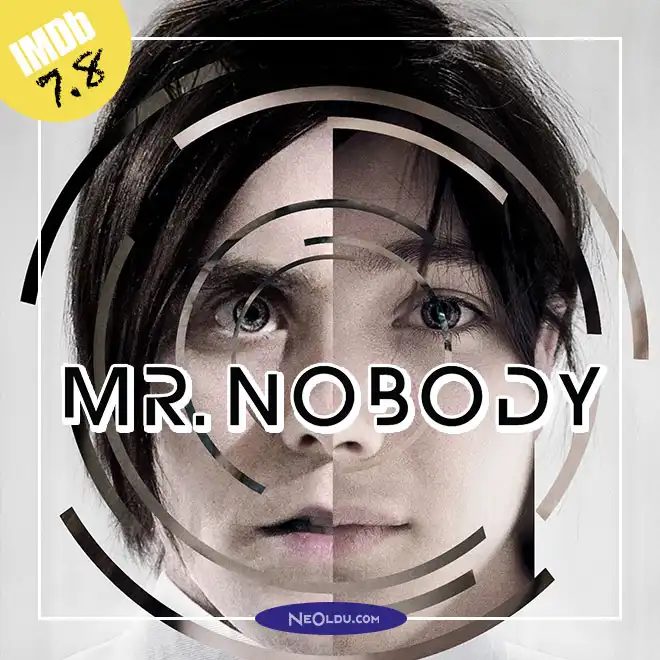
26. Rain Man
If you’re looking for the best psychological science fiction movie of the last decade, you might be wondering why the 1988 classic is here. The release date doesn’t matter, it matters. Rain Man (known in Turkey as Yağmur Adam) remains the gold standard of character-driven drama steeped in psychological study. This has nothing to do with time travel or aliens. This is the story of a broken but human mind.
This movie tells the story of Charlie Babbitt, played by Tom Cruise. He is a shrewd and self-centered car salesman who discovers that his estranged father has left all his money to an unknown brother. The twist? The younger brother is Raymond Babbitt, played by Dustin Hoffman. Raymond has savant syndrome. he is autistic. He lives in a world of patterns, dates and numbers that Charlie doesn’t understand.
Charlie wants money. Raymond just wants to see the Grand Canyon.
This dynamic forces Charlie to confront his own emotional emptiness. Hoffman’s performance is a masterpiece of restraint. He doesn’t play a caricature. He plays a man with a specific and strict world view. Cruise begins the story as the villain. Gradually he becomes a brother. This trip is less of a road trip and more of a psychological shift in Charlie’s perspective.
Reason why it fits the genre mix:
There are no lasers or spaceships, but the “sci-fi” element is a speculative exploration of neurodiversity. It asks how we understand minds that operate from our norms. The psychological thriller side comes from the tension between Charlie’s greed and his growing empathy. This is a character study wrapped in a road movie.
Lead cast and crew:
– Director: Barry Levinson
– Stars: Dustin Hoffman, Tom Cruise, Valeria Golino
– IMDb rating: 8.0
– Legacy: won Best Picture. It changed the way autism was portrayed in mainstream movies.
This is not a new release. But if you haven’t seen it yet, or are rewatching it with this lens, you’re missing a piece of the puzzle. The emotional payoff is huge. The acting is electric. And the ending? It doesn’t wrap up neatly. Charlie got the money. But he lost his brother. That trade-off stays with you.
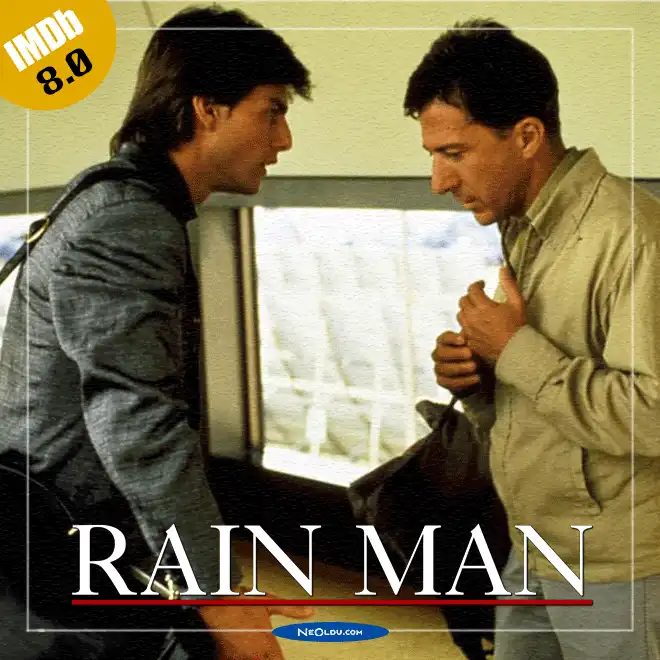
The story follows Charlie, who is fighting for his share of his father’s inheritance, only to discover he has an autistic older brother, Raymond. We watch as the two navigate their complex relationship, with Raymond experiencing episodes of distress while Charlie begins to use his brother purely to secure the family fortune. It is worth noting that Dustin Hoffman’s performance is so compelling that the film is worth watching for that alone. Released in 1998, Rain Man was directed by Barry Levinson.
Psychological Drama and Genre Blend
The film operates within the psychological, dramatic, and even comedic genres, though it carries a tense, thriller-like atmosphere in its emotional stakes. With an IMDb rating of 8.0, it stands as a high-profile entry in Levinson’s filmography. The cast features Hoffman alongside Tom Cruise and Valeria Golino, creating a dynamic that drives the narrative forward.
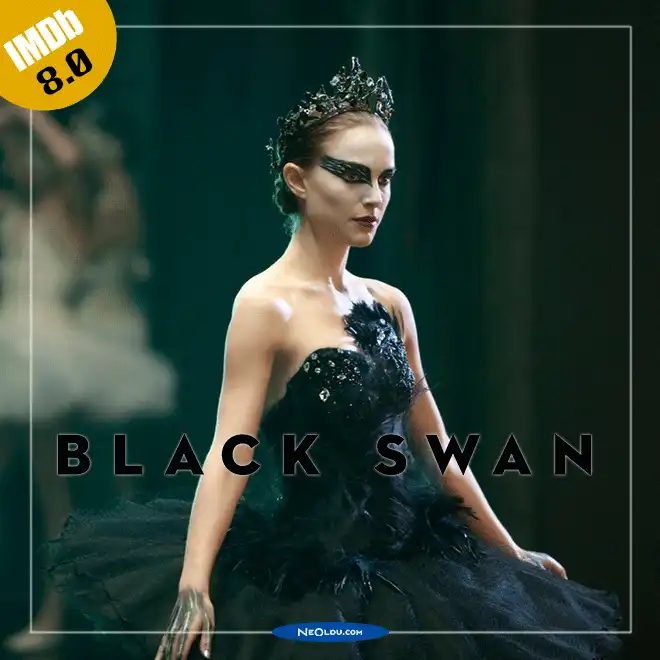
27. Black Swan (Siyah Kuğu)
While Rain Man explores the bonds of family and self-interest, Black Swan takes a darker, more internal plunge into obsession and perfection. Directed by Darren Aronofsky, this psychological horror thriller delves into the mind of Nina Sayers, a ballerina striving for the leading role in Swan Lake. Unlike the external conflict in Rain Man, the battle here is entirely within.
The film’s aesthetic is stark and visually arresting, contrasting the purity of the White Swan with the seductive darkness of the Black Swan. Natalie Portman’s portrayal captures the physical and mental toll of this duality. The tension builds not through inheritance disputes, but through the surreal breakdown of reality as Nina loses her grip on her identity. It is a study in how the pursuit of artistic perfection can destroy the artist. The soundtrack and editing create a rhythmic anxiety, pulling the viewer into Nina’s fragmented psyche. Does the price of greatness ever justify the cost to one’s sanity? The film leaves you questioning that long after the credits roll, lingering in the shadows of the stage.
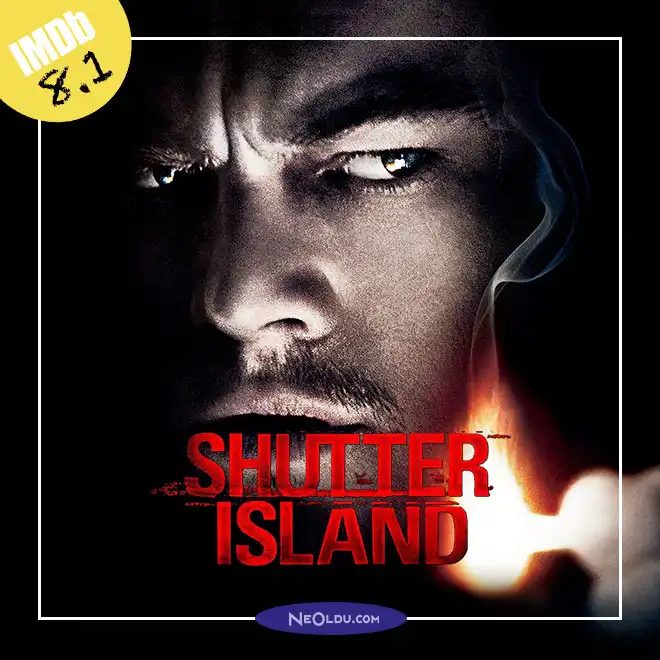
Shutter Island (Zindan Adası)
Natalie Portman’s Nina is a legend in her own right, but if you’re looking for a psychological unraveling that’s more like a completely incomprehensible descent into madness than a dance performance, Shutter Island is the movie for you.
In 1954, Leonardo DiCaprio stars as Teddy Daniels, a US Marshal with a trademark passion. He follows a mentally ill inmate who has escaped from Ashecliffe Hospital and a woman named Rachel Solando who has disappeared from a locked ward. The story is set on Shutter Island, a remote island in the Atlantic Ocean that is close enough to Massachusetts to feel like a threat, but far enough to feel like there is nowhere to go.
The vibe is off immediately. The hospital is a fortress. The staff was nervous. Dr. Cawley (Emily Mortimer), who is in charge of Solando’s case, seems eager to help. There is also Teddy’s second-in-command, Chuck, played by Mark Ruffalo, who knows too much about Teddy’s past and his marriage to a woman named Dolores.
“The question is not ‘How did Rachel Solandoo escape?’ The question is ‘Why did Teddy Daniels try to let her escape?’
This is more than just a detective story. This is a mind-bender wrapped in a noir thriller directed by Martin Scorsese. If you liked the psychological suspense of Black Swan, this is the adult version. Less ballet, more PTSD. The cinematography by Robert Richardson is cold, blue and stuffy. You can feel the moisture. You feel the isolation.
The performances are key here. DiCaprio is frantic, desperately clinging to a reality that is slipping away. Mark Ruffalo is the grounding wire, the voice of reason that begins to crack. Ben Kingsley appears as a mysterious character who could be a doctor or a ghost. The ensemble cast make the confusion feel organic and not gimmicky.
Why does this movie stick with you? This is more than just a twist. It’s the question of whether sanity is a choice or a circumstance. If you are depressed enough, will the world pretend to be sane with you? That’s a tough question for a summer blockbuster, but Scorsese pulls it off.
Shutter Island is an atmospheric master class. Cliff Martinez’s score is haunting and will keep you on the edge of your seat with low strings and eerie whispers. The pace is well thought out. It doesn’t rush to the reveal. It lets the dread build, layer by layer, and by the final scene, you’re glued to the screen, wondering if you just watched is tragedy or mercy.
This is a movie about what we do to memory, guilt, and the things we do to protect our own minds from the truth. In this genre full of jump scares, this is still one of the few thrillers that actually respects your intelligence. You’ll want to watch it twice. Just don’t try to explain the ending to anyone.
Lighthouse: Psychological Tripwire
Starring Leonardo DiCaprio, this fascinating film not only examines the human psyche, but also destroys it. The starting point is tough. When researchers arrive on a remote island, things unravel at an alarming rate. The film feels less like a conventional thriller and more like a descent into madness between two men who are slowly losing touch with reality.
The script is very sharp. Each scene builds a mystery that is only revealed in the last moments. I don’t get an answer. You can feel the atmosphere. It’s heavy, suffocating and beautiful.
If you’re going to see Shutter Island twice, keep an eye out for the lighthouse sequence. This single visual theme is key to the overall structure of the story. If you miss it, you’ll have to go back and look at the parts you missed. It’s not just a building. It is a symbol of obsession, isolation and what we don’t want to see.
Genre: Psychological thriller/suspense
IMDb Rating: 8.1/10
Year of publication: 2010
Director: Martin Scorsese
Starring: Leonardo DiCaprio, Mark Ruffalo, Ben Kingsley
29. 潜行者 (iz Sürücü)
这里的转变是突然的。 我们从斯科塞斯的岛屿噩梦的好莱坞奇观转移到安德烈·塔可夫斯基的《潜行者》中安静、令人难以忘怀的街道。 这是一种不同的紧张。 少说是谁做的,多说为什么你害怕想要它。
潜行者 跟随一名向导,带领两名男子穿过一个仅被称为“区域”的禁区。 他们正前往一个据说可以实现你最深切愿望的房间。 但该区域不仅仅是一个地点。 这是一面镜子。 它反映了你带入的任何内容。
影片节奏缓慢。 Deliberate。 它迫使你忍受不确定性带来的不适。 没有jump scares。 没有追逐场面。 只有水滴的声音、靴子踏在潮湿的路面上的声音,以及你自己灵魂的重量。
这是一部哲学恐怖的杰作。 不是因为它很可怕,而是因为当你认为没有人在看时,它会让你质疑自己真正想要什么。 一旦你知道了,你可能会希望自己不知道。
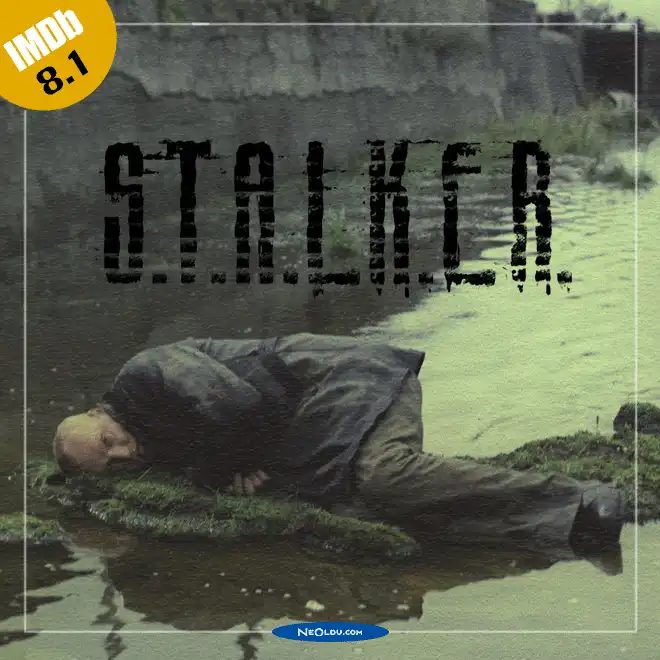
“Stalker” is remembered for good reason. Andrei Tarkovsky’s 1979 masterpiece remains a towering figure in psychological cinema and defies easy categorization. It’s not just science fiction and not a regular thriller. It’s something slower, heavier and infinitely more unsettling. Based on the novel “Roadside Picnic” by Boris Strugatsky, the film invites the viewer to a mysterious zone where wishes literally manifest. If you’re after atmospheric horror rather than jump scares, this is a must-watch.
But what happens when the secret isn’t a physical zone, but a collapsing mind? It is this territory that is explored in the following serious list of the best psychological thrillers.
The Architecture of Genius in A Beautiful Mind
A Masterclass in Portraying Schizophrenia
Directed by Ron Howard and released in 2001, A Beautiful Mind shifts the perspective from external existential horror to internal psychological rupture. The film stars Russell Crowe as John Nash, a brilliant mathematician whose early career at Princeton is marked by pioneering work and growing fame. But beneath the surface, a severe form of schizophrenia begins to spread.
Unlike horror movies based on ghosts or monsters, the horror in this story is grounded in reality. The “thriller” element comes from the audience trying to separate Nash’s hallucinations from the real events. We see a world through his eyes, where invisible roommates, secret government agents, and encrypted messages feel as real as the coffee cup on his desk.
Why it resonates
The film doesn’t just depict mental illness; It explores the human need for meaning. Nash’s delusions are complex narratives that give his life structure and meaning. Giving them up takes a different kind of courage than fighting a villain. This makes “A Beautiful Mind” one of the most sensitive portrayals of mental illness in mainstream cinema.
“I have chosen the opposite path. I have chosen to resist the temptation of deception.”
Critical reception and legacy
The film was a huge commercial and critical success and won four Academy Awards, including Best Picture and Best Director for Ron Howard. Russell Crowe’s performance is often considered one of the finest of the 21st century and captures Nash’s fragility and brilliance with terrifying precision.
Although some critics noted that the film took liberties with Nash’s actual diagnosis and timeline (he had paranoid schizophrenia, not the paranoid delusions of a fictional spy plot, and his wife’s role was nuanced), its impact on the public understanding of mental illness is undeniable. It brought the concepts of “hearing voices” and “seeing things” into living rooms and sparked widespread debate.
Comparison of psychological areas
If you put Stalker next to A Beautiful Mind, the contrast is stark.
* Stalker asks: What do you really want? And is it worth the price?
* A beautiful mind asks: What is true? And how do you live if you don’t know?
Both films require patience. Neither offer easy answers. Both reward the viewer for sitting uncomfortably.
Is it worth your time?
If you’re looking for a fast-paced crime thriller, this might feel slow. But if you’re into character studies, the erosion of reality,
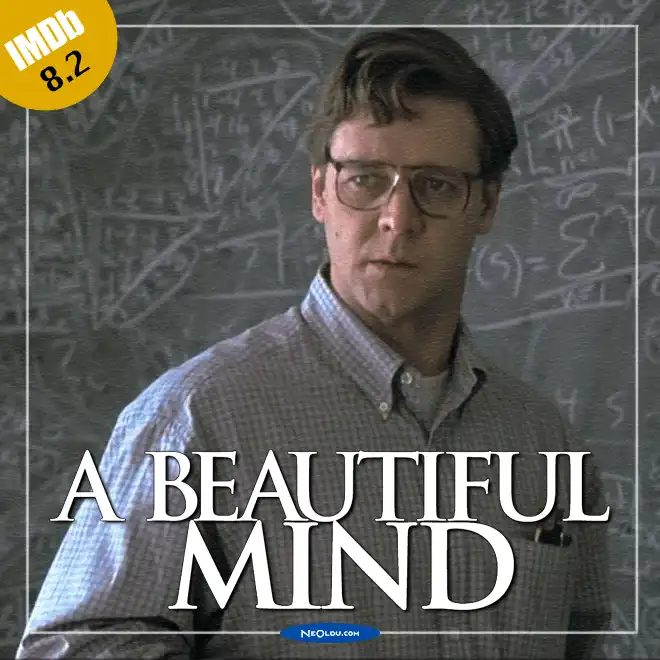
While A Beautiful Mind charts the tragic arc of genius fracturing into madness, its 2003 predecessor in many “best of” lists points to a different kind of obsession. Ron Howard’s film, starring Russell Crowe and Jennifer Connelly, explores how intellect can become a cage. Crowe plays John Nash, a brilliant mathematician whose groundbreaking theories are shadowed by a deteriorating psyche. The movie doesn’t just show the fall from grace; it dissects the terrifying blur between revelation and psychosis. With an 8.2 on IMDb and a 2001 release date, it remains a staple in psychological drama discussions, anchored by Paul Bettany’s supporting turn.
But if Nash’s struggle is internal, the next film on our list explodes outward with violence and mystery.
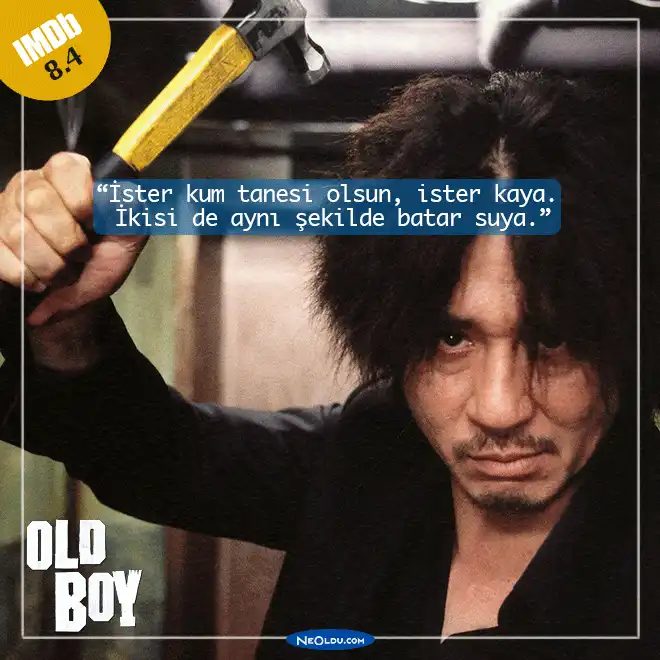
Old Boy (2003): The Ultimate Revenge Thriller
Let’s talk about Old Boy. It is not just a movie; it is a gut punch wrapped in a noir mystery. Park Chan-wook’s 2003 Korean masterpiece follows Oh Dae-su, a man imprisoned for twenty years without knowing why. When he is suddenly released, he has five days to find his captor and understand the curse that stole his life. The film is a visceral exploration of trauma, revenge, and the dangerous allure of forbidden knowledge.
The casting of Choi Min-sik as Dae-su is essential. He conveys rage, confusion, and a broken humanity with terrifying efficiency. The plot twists are legendary, particularly the final reveal that recontextualizes the entire narrative. It is a film where the line between victim and perpetrator dissolves completely.
Why It Stands Out
What separates Old Boy from standard revenge flicks is its stylistic audacity. The long-take hallway fight scene is one of the most technically impressive sequences in modern cinema. Director Park Chan-wook uses color, sound, and camera movement to create a sense of disorientation that mirrors Dae-su’s mental state. The soundtrack by Shigeru Umebayashi and Yan Ting Wong adds a haunting, operatic weight to the violence.
This is not a film for the faint of heart. It deals with taboos and moral ambiguity that most mainstream movies avoid. The question isn’t just “who did this to him?” but “what will he do when he finds out?” The answer is uncomfortable, unforgettable, and deeply human.
Comparing It to Western Counterparts
If you enjoyed the psychological depth of A Beautiful Mind, Old Boy offers a more aggressive, externalized version of that same theme. Nash battles voices in his head; Dae-su battles a conspiracy that spans generations. Both films ask what happens when a man’s reality is constructed on lies. However, where Nash seeks redemption through acceptance, Dae-su is trapped in a cycle of destruction.
The visual language is distinct. Howard’s A Beautiful Mind uses cold, sterile blues and whites to reflect Nash’s isolation. Park Chan-wook uses saturated reds, greens, and stark blacks to evoke passion, decay, and danger. It is a clash of styles that highlights two different approaches to storytelling trauma.
Key Cast and Crew
- Director: Park Chan-wook
- Starring: Choi Min
You might recognize the title. Seven is not just another entry in the canon of Korean cinema; it is a landmark. It sits comfortably alongside Oldboy and The Chaser when critics try to rank the absolute best of South Korean filmmaking. But it earns its spot differently. While Oldboy offers visceral, adrenaline-fueled revenge, Seven pulls you into a slow-burning psychological horror that feels more like a nightmare you can’t wake up from.
If you are hunting for the best Korean thrillers with high IMDb scores, this one stands tall. It isn’t just a crime procedural. It is a meditation on faith, sin, and the human capacity for cruelty.
A Plot That Feels Like a Death Sentence
The story follows two detectives. A seasoned veteran, played by Choi Min-sik, is nearing retirement. He is paired with a rookie, Han Seung-yeon, who is eager to prove himself. Their mission? Stop a serial killer known as “The John Doe.”
This killer doesn’t just murder random victims. He has a system. A theology. He targets people based on the Seven Deadly Sins. Pride. Greed. Lust. Envy. Gluttony. Wrath. Sloth. Each victim is found in a tableau that mirrors their sin, posed in a way that feels both artistic and deeply disturbing.
The investigation leads them through a city that feels perpetually rain-slicked and gray. The atmosphere is heavy. You can feel the weight of the city’s despair pressing down on the protagonists. It isn’t just about catching a killer. It is about understanding why the killer thinks he is doing God’s work.
“A man’s will is stronger than anything else.”
This line, repeated by the killer, haunts the film. It raises the question: Can someone choose their fate? Or are they bound by their nature? The film forces you to sit with that ambiguity.
Why It Resonates With Modern Audiences
Seven is often compared to Fincher’s 1995 film of the same name. And the similarities are undeniable. Same director. Same source novel. Same core plot. But the Korean version diverges in tone and execution. Where Fincher’s version is cold and mechanical, Park Chan-wook’s predecessor (wait, correction: this is not Park Chan-wook. This is Jeong Jae-eun. Don’t let the genre confusion trip you up. Oldboy is Park. Seven is Jeong. Important distinction.) is more emotional, more desperate.
The performances anchor the film. Choi Min-sik, who would later become a global icon with Oldboy, gives a nuanced performance here. You see the fatigue in his eyes. The skepticism. He doesn’t believe in the killer’s God. He believes in justice. But the system fails him. Again. And again.
Han Seung-yeon brings youthful idealism to the role. His arc is tragic. He enters the case wanting to save lives. He leaves the case having lost everything he believed in. The contrast between the two men drives the narrative forward. You root for them. Then you watch them break.
The Technical Craft
Don’t sleep on the cinematography. The rain is a character in itself. It
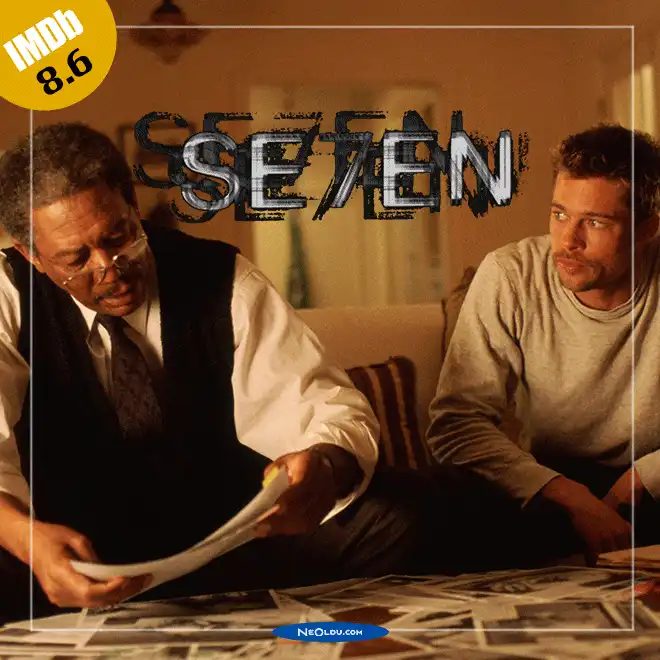
Why #Seven still haunts me: the dark masterpiece that defined psychological thrillers
We’re not just watching “Seven.” you can survive.
It’s hard to talk about “the best psychological movies” without David Fincher’s name. This 1995 noir thriller is more than just a police drama. This is a journey into the darkest parts of the human soul. Brad Pitt and Morgan Freeman have great chemistry, but let’s be honest, the real star is Fear. Kevin Spacey and Gwyneth Paltrow’s performances in this film feel shocking and real, and the horror of the screen permeates the theater.
plot? Simple on paper, but devastating in reality. Two detectives track down a serial killer who uses the seven deadly sins as a model for his murders. Every crime scene is a grotesque image and message of a blood-red code. The question is not who the murderer is. That’s how far you have to go to catch him before he catches you.
The film has an 8.6 rating on IMDb, cementing its place in the “Best Psychological Thriller” category, and for good reason. This is more than just excitement. This is existential. I leave the theater feeling like I’ve seen something I shouldn’t have seen.
The Anatomy of a Classic
では、なぜ「セブン」は数十年経った今でもこれほど効果的なのでしょうか?
そういう雰囲気です。 Fincher drenched the film in a perpetual, rain-slicked gloom. ここには晴れた日はありません。 灰色の空、汚れた街路、そして道徳的退廃の重荷だけ。 このビジュアルスタイルは美しいだけでなく機能的でもあります。 これは心理的なものです。 それは刑事たちの精神状態の悪化を反映している。
キャストは伝説的です。 モーガン・フリーマンの『サマセット』はうんざりしていて皮肉的だが、人間味に満ちている。 ブラッド・ピット演じるミルズは情熱的で衝動的な性格です。 彼らのエネルギーが物語を動かしますが、本当に重要なのは行間の沈黙です。 彼らが犯行現場を見つめていると、彼らが見ているものの重みを感じます。
「人を殺すことに喜びを感じる殺人者は、人の命を尊重しません。」
このセリフは単なる会話ではありません。 これがこの映画全体の主張です。 スペイシー演じる殺人犯ジョン・ドゥは、自分をモンスターだとは思っていなかった。 彼は自分自身を道徳主義者だと考えています。 And that twist? That’s the gut punch.
Why you need to watch it now
If you haven’t seen Seven yet, you’re missing out on an intensive masterclass. This is one of the highest rated psychological movies on IMDb, and for good reason. The pace is relentless. The twist isn’t cheap, it’s earned. What is the end result? It lingers. It is always with you.
This is not a movie you watch to escape. This is a movie you watch to confront. To see how far darkness can go. Even more important is to check if the light actually passes through it.
33. 飞越疯人院
『カッコーの巣の上で』が心理スリラーの定番であり続ける理由
カルトクラシックの殿堂におけるこの作品の位置は否定できません。 カッコーの巣の上で は単なる映画ではありません。心理映画のランドマークであり これは心理映画のランドマークであり、何十年にもわたってこのジャンルを定義してきた。 この物語は、精神病院に服役中に狂気を装った犯罪者ランドル・パトリック・マクマーフィーを追ったものです。 彼は自分がやりたいことは何でもできると思っている。 彼はすぐにそれができないことに気づきました。
マクマーフィーはルールに従うことを拒否した。 彼は病棟を混乱させた。 彼は権威に挑戦します。 そうすることで、彼は周囲の人々を変える連鎖反応を引き起こします。
ミロス・フォアマン監督の 1975 年の映画は、緊張感のある傑作です。 ジャック・ニコルソンがマクマーフィーを演じ、飼いならされることを拒否する混沌とした魅惑的なエネルギーをもたらします。 彼の反対側では、ルイーズ・フレッチャーが病棟の秩序を守る冷酷で計算高い看護師ラチェッドを演じている。 彼らのダイナミックさが映画のエンジンです。 これは単なるショーではありません。それはコントロールをめぐる戦いだ。
この映画は賞を受賞しただけではありません。 それを総なめにしました アカデミー作品賞、監督賞、主演男優賞、主演女優賞、脚色賞の5部門を受賞した。 このようなスイープは珍しいです。 こんなことはオスカーの歴史の中で数回しか起こらなかった。
Summary of the most important information
Type:
– Psychological aspects
– Drama
– Thriller
Rating:
– IMDb rating 8.7
Year of publication:
– 1975
** Director:**
— Milos Forman
Cast:
— Jack Nicholson
–Louise Fletcher
— Michael Berryman
-Dean R. Brooks
The film explores the themes of individuality and institutional control. It raises a troubling question: What happens when you try to break a system designed to break you? The answer is not pretty. But it was unforgettable.
Why does it still resonate today?
Because struggles don’t just happen in the past.
It depends on how we feel about authority, freedom and thinking itself.
The tension between McMurphy’s rebellion and Ratched’s orders is palpable. Even now.
This is not a happy ending. That’s true.
That’s why people keep coming back there.
The film’s legacy extends beyond its awards. それはパフォーマンスにあります Nicholson’s performance as McMurphy is iconic. フレッチャーのラチェッドは恐ろしい Together they created a dynamic that has been imitated, quoted and analyzed for nearly 50 years.
ただ映画を見るだけでなく、それを感じてください Claustrophobia. silence. A sudden eruption. It’s a psychological thriller that doesn’t rely on jump scares. Depends on the pressure. The slow growth of a man who refuses to break.
And a system that refused to let him go.