You are not alone if Latvia slips your mind when planning a European trip. The country remains a genuine niche, a place where the low population density means you can walk through forests and stare at lakes without seeing another human for miles. That isolation is the whole point. It is not a destination for crowded beaches or neon-lit city centers.
The appeal is structural. Latvia is a small republic where nature and deep tradition have coexisted for centuries without one consuming the other. The landscape is raw, vast, and quiet. For travelers tired of the “Instagrammable” tourist traps, this feels like a reset button.
Why the Timing Matters: The Jāņi Connection
The magic peaks in summer, specifically around the midsummer period known locally as Jāņi. This is not just a holiday; it is a cultural anchor. The air thickens with the smell of grass and smoke. Bonfires burn. People sing.
This festival transforms the quiet country into something electric yet intimate. You are not watching a spectacle from a distance; you are standing in the middle of a living tradition. The dates usually hover around June 23 to 24, marking the longest day of the year in the Northern Hemisphere.
What Makes Latvia Different from Its Neighbors
Lithuania and Estonia get more attention. They have more infrastructure, more digital polish, and more recognizable brands. Latvia sits in the middle, often overlooked.
- Density: The population is sparse. You get space.
- Landscape: It is a mix of forests, lakes, and coastal cliffs, not just flat fields.
- Culture: Folk traditions are not just for tourists; they are daily life for many residents.
The comparison is simple. If you want high-tech convenience, go elsewhere. If you want to feel the weight of history in the soil and the sound of wind in the trees, Latvia is the better bet.
“It is an oasis for those who want to experience a land where nature and tradition have existed side by side for a long time.”
This quote from the source captures the essence. It is not a curated experience. It is an organic one. The country has not optimized itself for mass tourism, which is precisely why it still feels authentic.
The Practical Reality of a “Secret” Trip
“Secret” is a marketing word, but here it has utility. It means lower prices for accommodation and fewer crowds at historic sites. It means you can rent a car and drive for hours without seeing a traffic jam. The roads are empty. The villages are small.
You need to be willing to be quiet. This is not a place for constant action. It is a place for sitting by a fire, listening to the water, and letting the days stretch out. The midsummer period is the best time to visit, but the shoulder seasons offer similar solitude with less heat.
The question is whether you want to be impressed or whether you want to be present. Latvia offers the latter. It asks you to slow down. It does not hand you a map of ten must-see spots. It gives you a landscape and lets you find your own rhythm.
Baltic Coast: Why Latvia’s Beaches Still Feel Untouched
Riga pulls the crowd, sure. About a third of Latvia’s 2.2 million people live there. But the real magnet is the sea.
The Latvian coastline stretches roughly 500 km. It runs from the Gulf of Riga in the northwest down to the coast of Liepaja in the southwest. White sand beaches dominate. Cliffs, dunes, and salt marshes frame them. Mass tourism hasn’t touched most of it yet. That’s why the area remains a low-key destination for travelers seeking quiet coastal escapes.
Latvia is small. Slightly smaller than the German state of Bavaria. But it’s dense with nature. Forests cover nearly half the country. You’ll find more than 2,000 lakes and extensive peat bogs. Large swathes remain uninhabited.
Where to Hike: National Parks and Wildlife
If you want to see what lives in the wild, go to a national park. This is non-negotiable for hikers.
Threatened species thrive here. Elks. Wolves. Lynx. The European brown bear.
The Gauja National Park is the oldest and largest in the country. It shows the full range of Latvian landscapes. Gentle hills give way to steep cliffs. There are mysterious caves too.
The Kemeri National Park sits on the Riga Bay. It’s different. You explore heathlands and bogs first. Then you cool off in the white sand beaches nearby.
Nature conservation in Latvia isn’t new. The first laws and rules regarding forest management date back to the 16th and 17th centuries. That’s why the forests are still so dense and healthy.
Why Riga Matters: The Art Nouveau Capital
Riga is the metropolis. But it’s not just a hub for business. It’s a showcase for Art Nouveau. The city’s architecture tells a story of early 20th-century design. The facades are ornate. The streets are walkable. It’s a sharp contrast to the wild, empty forests just hours away.
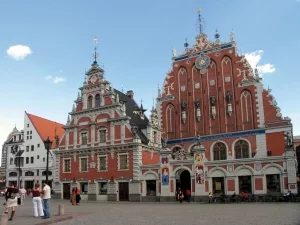
Riga’s UNESCO Old Town and the legacy of the Hanseatic League
Riga is where the cultural pulse of the Baltic region beats fastest. The capital earns its nickname as the “Metropolis of Art Nouveau,” but its roots run much deeper. The Old Town, a UNESCO World Heritage site, is packed with medieval merchant houses and sacred buildings that feel like time capsules. Walk the narrow streets and you can almost smell the history. The Riga Cathedral, built in the 13th century, stands next to the Peter Church, a brick Gothic masterpiece with a tower rising 140 meters into the sky.
You cannot miss the Hanseatic era here either. The Great and Small Guild houses, along with the rebuilt Blackheads’ House, remind visitors that Riga was once a major port and a key player in the Hanseatic League. In 2014, the city took on the title of European Capital of Culture. The programming focused heavily on European connections and networks, specifically highlighting Riga’s position along the Amber Road.
Castles and manors: Staying in historic palaces
The cultural scene extends well beyond the capital. Latvia preserves around 300 manor houses, each telling a story of aristocratic wealth and architectural endurance. Garden lovers find particular joy here. Schloss Dikli, located on the Idumeja plateau, is a neobaroque estate built about 200 years ago. Inside, you’ll find ornate old stoves and fireplaces. Today, it operates as a hotel.
Similar experiences await at Schloss Mezotne near Bauska. It is one of the most beautiful neoclassical buildings in the country. The story behind it is royal: Catherine the Great commissioned the construction as a gift to Charlotte von Lieven, the governess of her grandchildren. The expansive English garden surrounding the castle invites guests to wander through greenery that feels untouched by time.
Navigating Latvia’s multilingual and political identity
Latvia is genuinely multicultured, but that reality comes with complexity. Just over half the population is ethnically Latvian. Russians and Ukrainians form significant communities, creating vibrant distinct worlds in city centers with their own restaurants and shops. This diversity, however, has fueled ongoing internal political debates.
The government’s approach to minority policy has been contentious. After regaining independence from the Soviet Union in 1991, many non-Latvians were excluded from citizenship and voting rights. The 1994 Citizenship Act set specific hurdles for naturalization, including age, language proficiency, and employment status. The goal was to preserve Latvian identity and language, but the result was a divided political landscape that persists to this day.
Midsummer magic: The most important night of the year
The summer solstice is not just a calendar date in the Baltic states; it is the most significant festival of the year. This tradition is thousands of years old. Bonfires blaze across the countryside, a folkloristic celebration that carries the weight of the nation’s heritage.
If you want to experience traditional Latvian rites, this is the time to visit. Old myths are told around the fires. Flower wreaths hang everywhere. The streets fill with dancers. Latvia boasts nearly two million folk songs, and they are sung in the streets. The magic of this night captures everyone, whether they are young or old, tourists or locals. It is a moment where the boundary between history and the present dissolves completely.