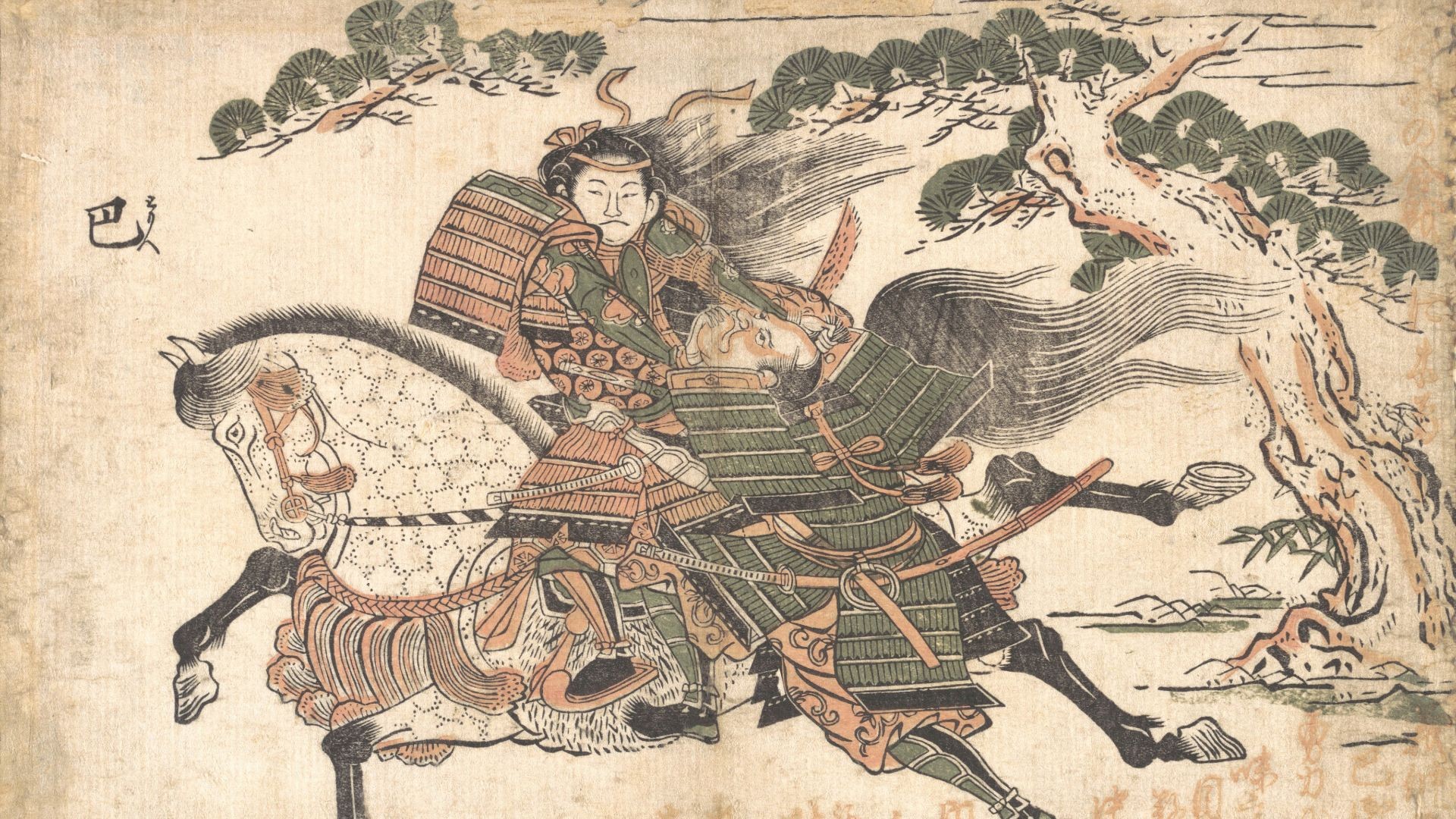
When people picture a samurai, they typically envision a male warrior clad in lacquered armor, wielding a katana. This cultural image is so dominant that it often obscures a more complex historical reality: women were indeed part of the samurai class, and some of them fought in battle.
However, separating historical fact from romanticized legend requires a nuanced look at Japanese social structures, archaeological evidence, and military taboos. While female warriors—known as onna-musha —existed, their role was likely far rarer and less militarily significant than popular culture suggests.
Defining the Samurai Class
To understand the presence of women in this sphere, one must first clarify what “samurai” meant. It was not merely a job description for a fighter; it was a social class (often called bushi ).
“Any woman born in the samurai status group was a ‘female samurai’ even if she never picked up a weapon,” explains Sean O’Reilly, a professor of Japan studies at Akita International University.
In this context, being a samurai was a matter of birthright, not necessarily combat experience. Just as a male samurai might be untrained or unfit for war, a female samurai held the title by virtue of her lineage. Therefore, while all onna-musha were samurai, not all female samurai were warriors.
Evidence from the Boshin War
The most concrete historical evidence for women fighting in organized units comes from the late 19th century, during the Boshin War (1868–1869). This civil conflict pitted supporters of the traditional Tokugawa Shogunate against imperial forces seeking to restore power to the Emperor.
As the shogunate’s power waned, the Aizu domain in northern Japan formed a unique military unit composed entirely of women, known as the Joshigun (Women’s Army).
* Composition: The unit consisted of approximately 20 to 30 women, though only ten names are recorded in history.
* Leadership: The unofficial leader was Nakano Takeko, a 22-year-old noblewoman.
* The Battle: At the Battle of Yanagi Bridge, the Joshigun faced imperial troops armed with modern rifles. Armed only with swords and naginata (polearms with curved blades), they engaged in fierce combat. Records indicate Takeko killed five or six enemy soldiers before being shot.
This instance is significant because it occurred during the Edo period, when samurai women were routinely trained in martial arts—particularly the naginata —to defend their homes and families. In domains like Aizu, this training was rigorous, suggesting that women were prepared for combat if necessary.
Archaeological Clues and Skepticism
Beyond written records, archaeologists point to a mound in Numazu, central Japan, as potential evidence of female combatants from the 16th century.
* The Find: The site contains the remains of about 105 young adults, roughly one-third of whom were women.
* The Theory: Scholars like Thomas Conlan of Princeton University suggest these are the victims of the Battle of Senbonhama (c. 1563), indicating that women of fighting age died in combat.
However, not all historians agree on this interpretation. Karl Friday, a history professor at the University of Georgia, urges caution. He notes that it is impossible to confirm whether these women were combatants or non-combatants killed during the chaos of war. Without definitive proof of their active participation in fighting, the remains serve as ambiguous evidence rather than conclusive proof of widespread female military service.
Legends vs. Reality: The Power of Myth
Japanese history is rich with stories of legendary female warriors, the most famous being Tomoe Gozen. A retainer of Minamoto no Yoshinaka during the Genpei War (1180–1185), she is depicted in The Tale of the Heike as a fighter capable of matching “a thousand ordinary men.” Another notable figure is Ōhōri Tsuruhime, who defended Ōmishima Island at age 16 against invading forces, allegedly aided by divine spirits.
While these stories are compelling, historians like Friday argue they are largely semi-legendary.
* Mythologizing: The glorification of female warriors intensified during the Kamakura and Edo periods, fueled by woodblock prints and literature.
* The Paradox of Fame: Friday suggests that the very fame of these women indicates how uncommon their actions were. If female warriors were a common phenomenon, their stories would not have been treated as extraordinary exceptions.
Cultural Taboos and Modern Legacy
The rarity of female combatants can be attributed to strict cultural and religious taboos surrounding women and warfare. Military primers from the Hōjō family, for example, forbade warriors from:
* Sharing quarters with women before battle.
* Allowing pregnant or postpartum women to touch weapons.
* Letting women see the backs of officers departing for campaign (considered bad luck).
These restrictions suggest that female presence on the battlefield was viewed as inauspicious or disruptive to military discipline, further limiting their participation.
Despite the abolition of the samurai class in the 1870s, the martial traditions of female samurai endure. Modern practitioners of the Yoshin School of martial arts still train in naginata while wearing kimonos. This practice reflects the historical reality that women might need to defend themselves suddenly, without time to change into specialized gear—a testament to the practical, if rare, preparedness of samurai women.
Conclusion
Female samurai were real, but they were the exception rather than the rule. While women held the status of samurai by birth and received martial training for defense, active participation in battle was hindered by social taboos and cultural norms. The legends of warriors like Tomoe Gozen and the historical record of the Joshigun highlight moments where these norms were broken, leaving a legacy that is both historically significant and culturally enduring.