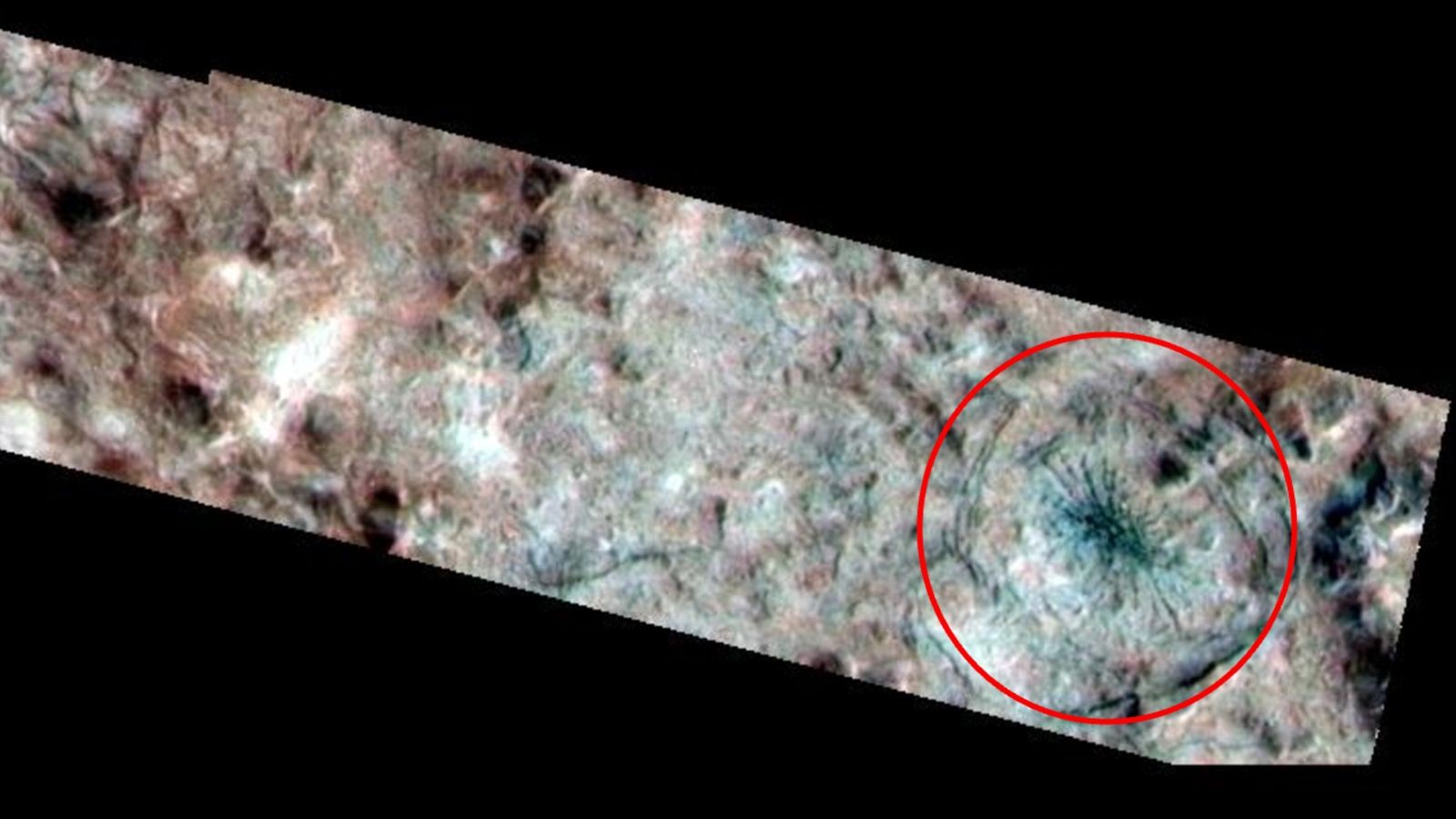
For nearly three decades, a bizarre arachnid-like pattern on Jupiter’s moon Europa has baffled scientists. Now, new research published in The Planetary Science Journal suggests the mysterious structure, dubbed Damhán Alla (“spider” or “wall demon” in Irish), formed not through alien activity, but a surprisingly terrestrial process: an asteroid impact exposing subsurface water.
The Long-Standing Mystery
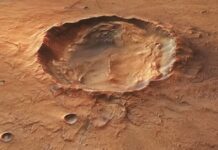
In 1998, NASA’s Galileo spacecraft first spotted the strange shape within Manannán Crater, a 13.7-mile-wide impact site on Europa’s icy shell. Initial theories proposed Jupiter’s immense gravity or hydrothermal vents were responsible. However, neither explanation fully accounted for the intricate dendritic pattern. The lack of a solid answer has lingered because Europa is considered one of the most promising locations in the solar system for extraterrestrial life, meaning any unusual geological feature warrants deep scrutiny.
Earthly Analogies Provide Clues
Researchers drew parallels to “lake stars”—dark, spider-like patterns that appear on frozen lakes on Earth when snow falls and water seeps through cracks in the ice. By recreating similar conditions in the lab, they demonstrated that Europa’s “spider” likely formed when an asteroid impact fractured the moon’s icy shell, allowing salty water to rise and freeze in a distinctive pattern. This process is analogous to how Martian “spiders” form through sublimating carbon dioxide ice, highlighting how similar fluid dynamics can shape features across different worlds.
Implications for Future Exploration
The discovery has significant implications for NASA’s upcoming Europa Clipper mission, set to arrive at Jupiter in 2030. The presence of subsurface water access points—like those that created Damhán Alla—could indicate localized brine pools beneath the ice. These pools would be prime locations to search for signs of life.
“Surface features like these can tell us a lot about what’s happening beneath the ice,” says study lead-author Laura Mc Keown. “If we see more of them with Europa Clipper, they could point to local brine pools below the surface.”
This research suggests that similar spider-like formations might exist on other icy moons, such as Saturn’s Enceladus and Ganymede, or even on the dwarf planet Ceres. By studying these features, scientists hope to unlock further insights into the hidden oceans and potential habitability of these distant worlds.
The revelation that Europa’s spider-like feature is a natural process, rather than an extraterrestrial anomaly, doesn’t diminish the moon’s potential for life—it simply refines our understanding of how to search for it. The key takeaway is that even seemingly alien landscapes can be shaped by familiar geological forces, offering tangible pathways for future exploration.