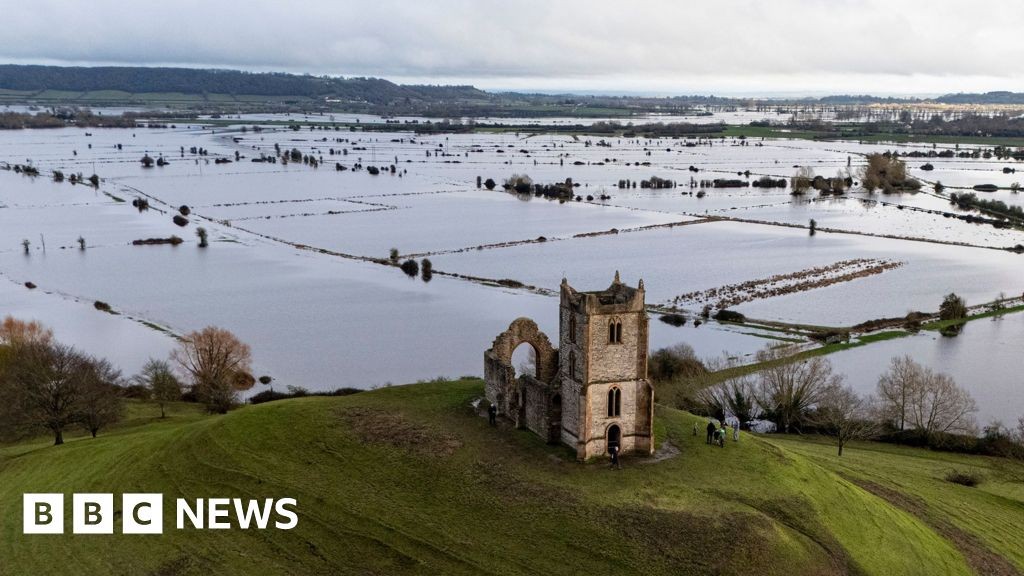
The United Kingdom is experiencing a clear trend toward wetter winters and more frequent, severe flooding events. Recent heavy rainfall across the country, from Cornwall to County Down, has resulted in the wettest January on record, followed by continued deluges in February. This pattern isn’t an isolated incident – it’s part of a larger shift driven by climate change, with significant implications for infrastructure, food supply, and the economy.
The Science Behind the Shift
The current weather pattern is due to a blocking high-pressure system over Scandinavia, trapping wet conditions over the UK. However, the underlying cause is global warming. For every 1°C increase in temperature, the atmosphere holds roughly 7% more moisture, leading to heavier rainfall. The Met Office estimates that winters like 2023/24, once considered 80-year events, are now occurring every 20 years, and this frequency will only increase with further warming.
Sea level rise, accelerated by warmer oceans and melting glaciers, exacerbates the problem. Since 1901, UK sea levels have risen by 20cm, compounding the effects of extreme storms and tidal surges.
Impacts Across Sectors
The consequences are already visible:
- Homes & Infrastructure: Over 300 homes have been flooded, with more than 100 locations under flood warnings as of Tuesday. The Environment Agency (EA) projects that one in four properties will be at risk by 2050, a figure that rises if construction continues on floodplains. The government’s plans to build 1.5 million homes this Parliament include projects in flood-prone zones.
- Transportation: A third of the UK’s railways are currently at risk of flooding, a figure expected to exceed 50% within 25 years. This leads to cancellations and infrastructure damage.
- Agriculture: The farming sector is facing severe losses. The wet winter of 2024 alone caused an estimated £1 billion in crop damage. Farmers like James Winslade in Somerset report unprecedented levels of flooding, with crops rotting in submerged fields and limited financial support.
The State of Flood Defenses
The UK has an extensive network of flood defenses, but maintenance is uneven. The Environment Agency maintains roughly half of these, and 9% are currently below their target condition. Private and charitable defenses are even more likely to be neglected, with a 45% higher chance of falling short of required standards.
Future Outlook
If global temperatures rise above 2°C, the UK could see an increase in heavy rainfall days from seven to nine per year. Even with current emission reduction policies, the UN projects a minimum 2.5°C increase by the end of the century.
“That is really important, because that can lead to successive rainfall events, [which] can lead to very saturated soils, and as we’re seeing currently in the UK, that can lead to exacerbated flooding as well,” says Prof Lizzie Kendon, head of climate projections at the Met Office.
The UK is on a trajectory toward increasingly frequent and severe winter flooding. Without aggressive mitigation and adaptation measures, the economic and social costs will continue to escalate.