Artificial intelligence is rapidly integrating into photography, going beyond basic autofocus to offer assistance in every stage of the process. We tested this by using AI as a full-time assistant for a week, from pre-shoot planning to post-processing, to see how well it performs alongside human creativity.
The results are mixed: AI excels at technical optimization and logistics but struggles with nuance, unpredictability, and artistic intent. It’s a powerful tool for efficiency, but not a replacement for a photographer’s eye.
AI-Driven Pre-Shoot Planning: Fast, But Not Foolproof
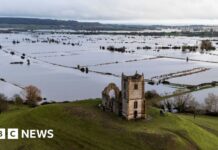
We tasked the AI with planning a landscape shoot at a nearby location. While it initially misidentified the area, it quickly corrected with guidance, then generated suggested viewpoints, optimal shooting times based on sunrise/sunset, and logistical reminders.
The key benefit was speed: AI condensed information from multiple sources into a single response. It’s not a replacement for specialized apps, but acts as a fast first pass to assess shoot viability. The AI’s accuracy was reassuring, but it highlights the need for human verification.
For complex scenarios like astrophotography, AI can quickly summarize variables (sky position, angles) that would otherwise take manual calculation. However, it’s not infallible and requires cross-checking.
Camera Settings: Technically Sound, But Lacking Artistic Vision
AI provided sensible starting points for ISO, aperture, and shutter speed based on camera model, lens, subject, and time of day. Importantly, it explained its reasoning, even identifying landscape-specific features like limestone rooftops.
Its recommendations prioritized usability over creativity; conservative settings produced immediately usable images. This could boost confidence for beginners, but AI cannot account for artistic intent—whether to accept noise for a decisive moment or sacrifice sharpness for atmosphere. These decisions remain firmly in the photographer’s domain.
Weather and Atmospheric Data: A Useful Checklist, Not a Replacement
AI proved most promising in interpreting weather data, explaining why certain conditions matter. For example, it translated technical metrics into plain language, making it easier to decide whether marginal forecasts were worth pursuing.
This is where AI truly shines: condensing complex information into a digestible checklist. It summarized satellite imagery and seeing predictions for night-sky work with surprising accuracy.
However, dedicated astronomy and meteorological tools remain more precise. AI tends to oversimplify uncertainty, presenting confident solutions where ambiguity exists.
Post-Processing: Nuance Still Requires a Human Touch
AI-driven noise reduction and sharpening algorithms are now mature, selectively enhancing detail while preserving texture. But AI can be heavy-handed: over-processing results in synthetic, lifeless images. Subtle tweaks remain the domain of the human eye.
AI helps automate routine tasks, but it cannot replicate the nuanced judgment required for truly artistic post-processing.
The Verdict: Efficiency, Not Replacement
After a week of testing, AI proved most valuable for technical optimization, preparation, and organization. It knew the location, weather, optimal times, and even logistical details like parking.
The critical limitation is emotion and unpredictability. AI cannot understand why a photographer might break the rules or embrace imperfect conditions. It lacks the intuition to capture real-world nuance.
Ultimately, AI is best viewed as a desk-based assistant that refines technical decisions, not a replacement for human creativity. Having a tailored gear checklist based on weather conditions was surprisingly useful.
The real benefit of AI isn’t answering questions, but asking better ones. Its responses sometimes included factors we hadn’t considered, prompting deeper thought. If you engage with its suggestions, it can be a valuable tool. But it won’t replace legwork, experience, or judgment.