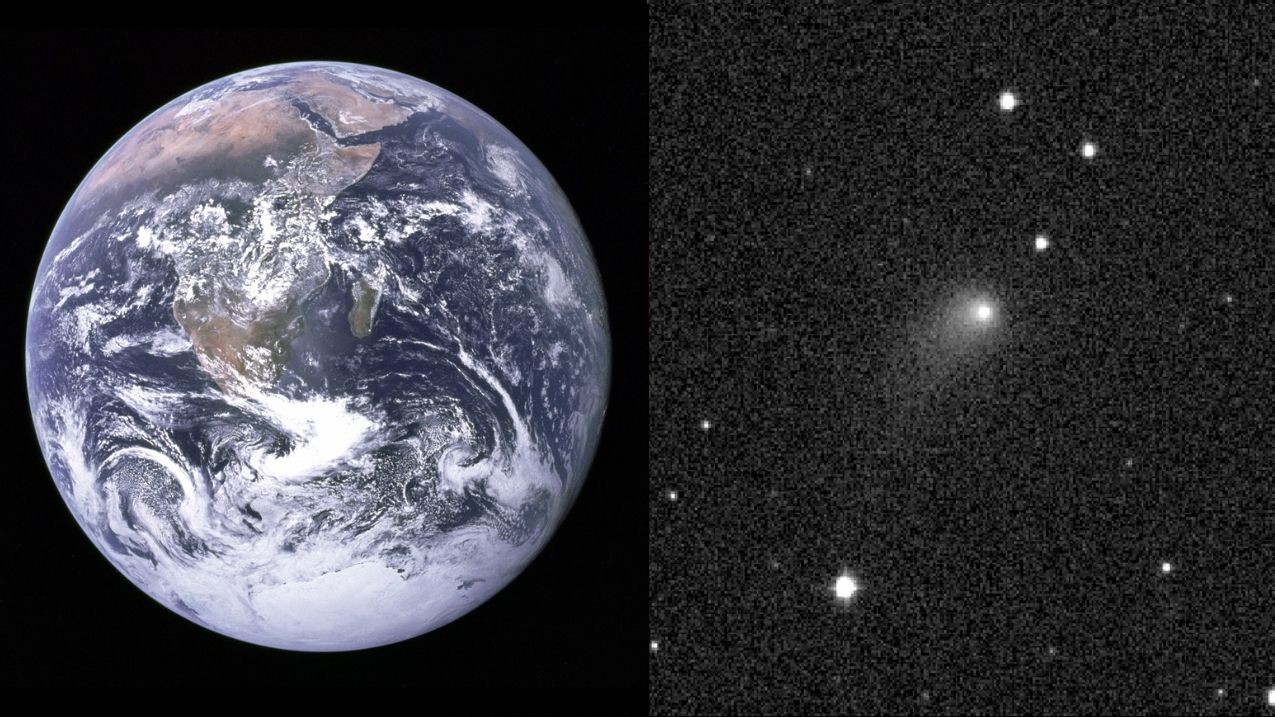
The comet C/2024 E1 (Wierzchos) is making its closest approach to Earth on February 17, offering a rare but challenging viewing opportunity for astronomers. Though the comet poses no threat to our planet, its visibility depends heavily on location and equipment.
Closest Approach Details
The comet will pass within 94 million miles (151 million kilometers) of Earth—roughly the distance between Earth and the sun—at its closest point (perigee). This event occurs less than a month after its closest pass by the sun on January 20. As the comet neared the sun, solar heat vaporized ice and dust, creating a bright coma (the cloud surrounding the comet) and a tail that reflects sunlight.
Can You See It?
Currently, the comet’s brightness is around magnitude +8.2, too faint to see with the naked eye. For comparison, the human eye can typically see objects up to +6.5 magnitude under ideal dark sky conditions. Brighter objects have lower magnitudes, meaning this comet is dim.
Where and When to Look
On February 17, the comet will be located in the southern constellation Grus. For observers in the U.S., it will appear low on the southwestern horizon at sunset, setting quickly afterward. Though binoculars or a small telescope might reveal it as a faint patch of light, conditions are not ideal for easy viewing.
Over the next few weeks, the comet will rise slightly higher each night, moving into the constellation Eridanus by early March. However, as it moves farther from the sun, its brightness will likely diminish, though it should remain visible through telescopes.
The comet is not expected to be a spectacular naked-eye event, but dedicated observers with the right equipment may still catch a glimpse of this ancient wanderer.
This event highlights how comets brighten as they approach the sun, then fade as they move farther away, making timing crucial for observation.