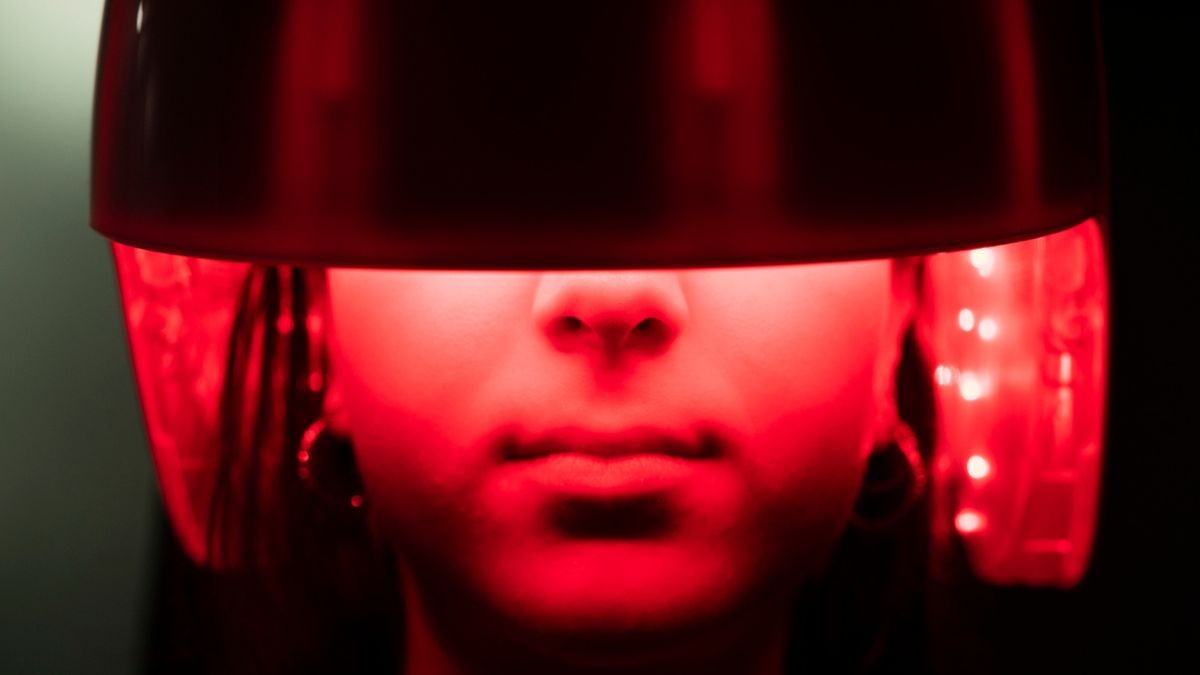
Scientists in South Korea have developed a new light therapy system – a flexible cap embedded with organic light-emitting diodes (OLEDs) – that demonstrates a remarkable 92% suppression of age-associated changes in human hair cells in laboratory settings. This breakthrough suggests a potentially superior approach to treating hair loss, addressing a widespread concern with limited effective solutions.
The Science Behind the Innovation
The technology targets human dermal papilla cells (hDPCs), crucial for hair regeneration. Unlike traditional red light therapy, which relies on less efficient LEDs or lasers, this platform uses precisely tuned near-infrared wavelengths (730–740 nm) delivered by OLEDs.
OLEDs offer two key advantages: they conform more closely to the scalp due to their thin, flexible design, ensuring uniform light stimulation, and they emit a broader, more diffuse light than point-source LEDs. This means the treatment can cover a larger area of the scalp without hot spots or uneven exposure.
Why This Matters: Hair Loss and Current Treatments
Hair loss affects a significant portion of the population. In the U.S. alone, up to 40% experience hereditary patterned hair loss (androgenetic alopecia), the most common form globally. Current treatments have limitations:
- Minoxidil: An over-the-counter topical solution with variable efficacy.
- Finasteride: An oral medication with potentially serious side effects, including sexual dysfunction and depression, and not approved for women.
The demand for better, safer alternatives has driven interest in low-level light therapy, but existing devices often lack the precision and comfort of this new OLED-based approach.
The Biomarker Breakthrough
The team at the Korea Advanced Institute of Science and Technology (KAIST) measured success by tracking β-galactosidase, an enzyme that increases as hair follicles age and decline. The OLED platform reduced this biomarker by 92% in treated cells compared to controls—a substantial improvement over red light therapy.
This is significant because β-galactosidase is a reliable indicator of cellular aging and a standard for evaluating anti-hair-loss treatments, first identified as such in 1995.
Future Steps and Challenges
While initial experiments show promise, the technology is still in the preclinical phase. The team aims to finalize a durable, washable version of the cap and conduct human trials to verify safety and efficacy.
“Going forward, we plan to verify safety and efficacy through preclinical studies and progressively evaluate the potential for real therapeutic applications,” says electrical engineer Kyung Cheol Choi.
If clinical trials confirm these results, this OLED-based light therapy could represent a significant advancement in hair loss treatment, offering a more comfortable, effective, and accessible solution for millions.