As humanity prepares for the next era of space exploration, a sobering geopolitical parallel is emerging. While NASA’s Artemis program focuses on human habitation and lunar discovery, defense experts are warning that the region between the Earth and the Moon—cislunar space —could become a strategic “chokepoint” similar to the Strait of Hormuz.
Just as the narrow waterway in the Middle East serves as a vital artery for global energy, certain corridors in space may soon dictate the stability of the multi-trillion-dollar space economy.
The Geography of Space Warfare
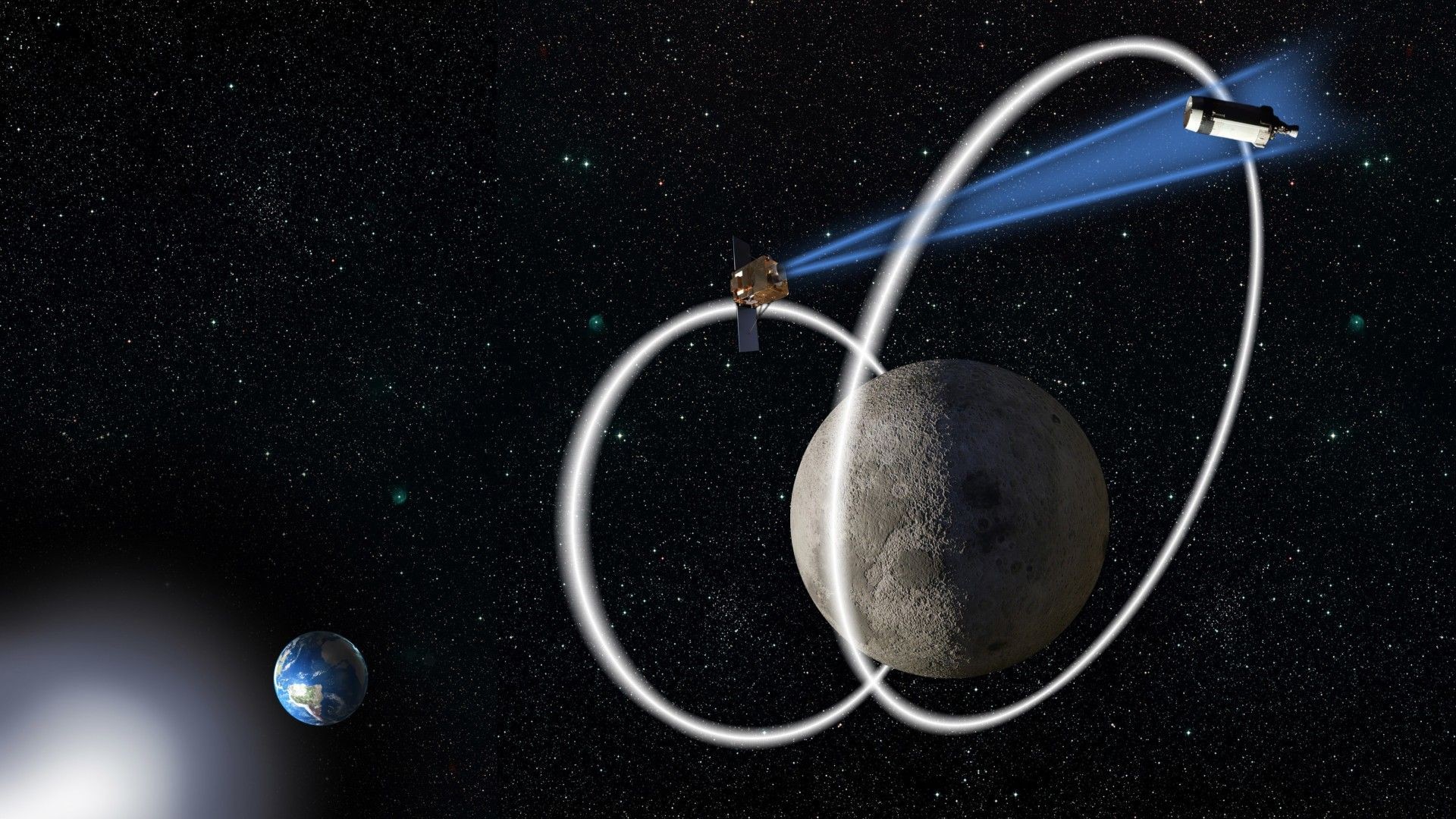
Although cislunar space appears vast, it is not an open playground. Experts suggest that lunar transit will rely on a limited number of specific orbital paths and “Lagrange points”—stable regions in space where gravity allows objects to remain in fixed positions.
According to Marc Feldman and Hugh Taylor of the Center for the Study of Space Crime, Piracy & Governance, these unique transit points function much like narrow maritime straits.
“Just as the Strait of Hormuz is a narrow waterway, cislunar space… contains a few unique and exclusive points of transit through which all lunar travel must pass,” Feldman notes.
If these specific corridors were to be blockaded or seized, the entire lunar supply chain—from NASA missions to private ventures like those led by SpaceX—could be paralyzed.
From “Tiny Value” to “Gargantuan” Potential
The question of whether space is worth defending rests on a distinction between current and future value. Currently, the commercial activity on the Moon is minimal. However, the strategic foresight being applied by the U.S. Space Force suggests that the “Net Present Value” of lunar resources is massive.
Peter Garretson, a senior fellow at the American Foreign Policy Council, highlights that the value is not distributed evenly across the Moon. Instead, it is concentrated in “strategic terrain,” such as:
– The Lunar Poles: Highly sought after for water ice.
– The Equator: Key for certain orbital mechanics.
– Lagrange Points: Critical for communication and navigation.
– Mineral-rich zones: Essential for in-situ resource utilization.
The Economic Backbone: Data and Infrastructure
The potential impact of a space blockade extends far beyond mere exploration; it could eventually threaten the global economy on Earth.
One emerging concept is the use of the Moon as a hub for orbital data centers. Because it is energetically cheaper to launch massive structures, solar arrays, and thermal controls from the Moon than from Earth, the lunar surface could become the manufacturing base for the world’s AI infrastructure.
If the Moon becomes a primary source for:
1. Mass production of orbital stations and factories;
2. Energy generation via orbital power stations;
3. Data processing via lunar-based AI hubs;
…then any disruption to the “logistical resupply” of workers, equipment, or raw materials would have a ripple effect across Earth’s markets, much like a sudden spike in oil prices following a maritime blockade.
Conclusion
As we transition from exploration to exploitation of lunar resources, the strategic importance of cislunar space will only grow. The shift from viewing space as a scientific frontier to a commercial and military domain means that protecting narrow orbital corridors will become a cornerstone of global economic security.