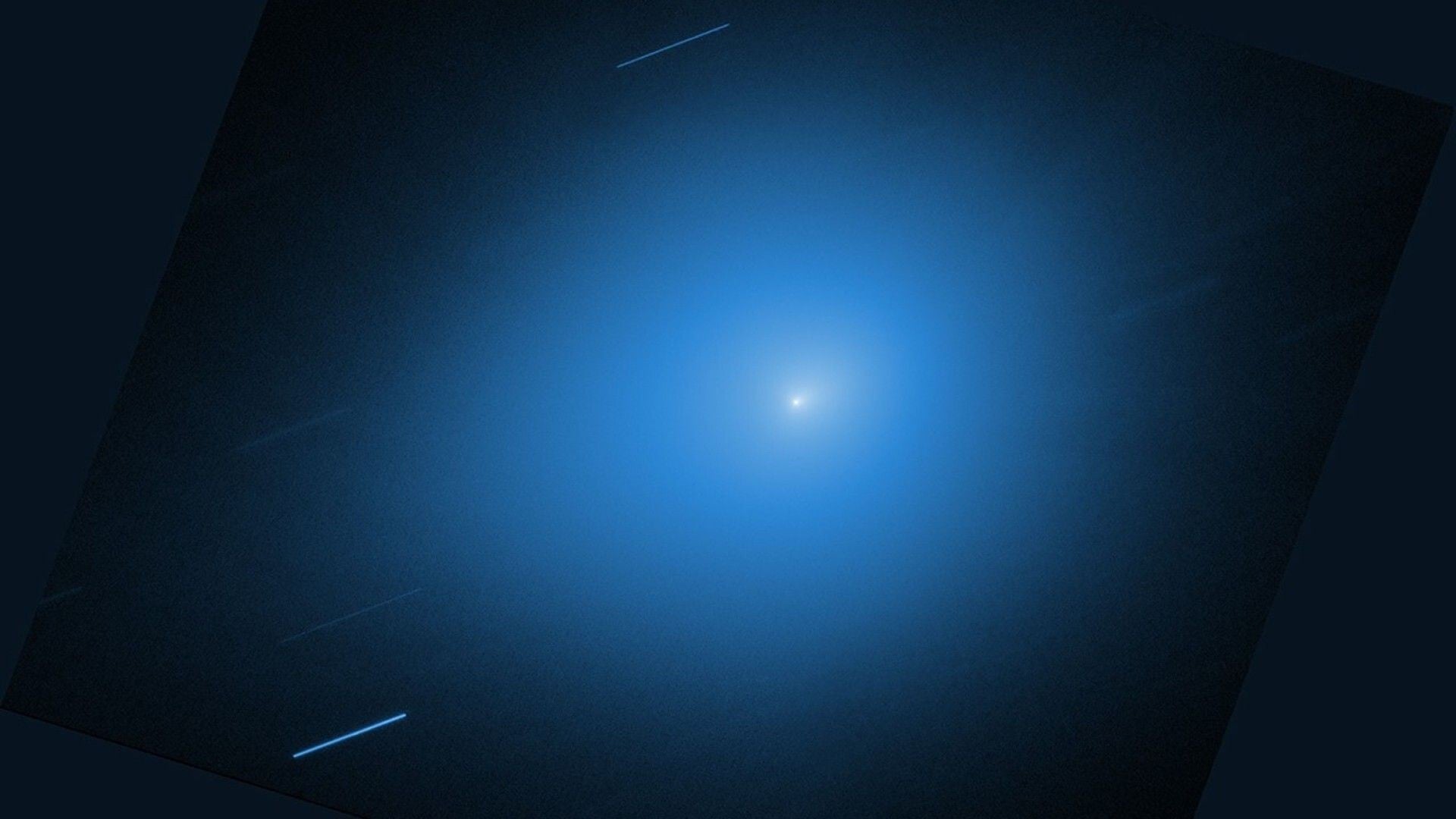
Comet 3I/ATLAS is making its closest approach to Earth today, December 19th, marking the end of its brief but fascinating journey through our solar system. Discovered in July 2023 by the ATLAS telescope in Chile, this interstellar visitor has captivated scientists and space enthusiasts alike. It will pass within roughly 168 million miles (270 million kilometers) before continuing its trajectory out of our solar system for good.
This comet is significant because it’s only the third confirmed interstellar object detected passing through our neighborhood. The first was the asteroid ‘Oumuamua in 2017, followed by comet 2I/Borisov in 2019. Each passing object provides invaluable data on celestial bodies from beyond our solar system, helping astronomers piece together the composition and origins of other star systems.
Why This Matters: A Window into Other Worlds
The study of interstellar comets like 3I/ATLAS is not just about observing a passing rock; it’s about understanding the conditions in other star systems. These objects carry information about their parent star and the environments where they formed billions of years ago. By analyzing their chemical makeup and behavior, scientists can gain insights into the building blocks of planetary systems beyond our own.
Live Viewing and Key Findings
For those eager to witness the event, the Virtual Telescope Project will host a free livestream starting at 11 p.m. EST (0400 GMT) on December 18th, running through the comet’s closest approach at 1 a.m. EST (0600 GMT). The comet is too faint to see with the naked eye, but telescopes with an 8-inch or larger aperture may catch a faint, fuzzy patch of light under dark skies.
Recent observations have revealed intriguing details about 3I/ATLAS. NASA’s Europa Clipper spacecraft, en route to Jupiter, captured an image of the comet using its Ultraviolet Spectrograph (UVS), detecting oxygen, hydrogen, and dust in its composition. This data confirms the comet underwent a period of high outgassing activity after its closest approach to the sun.
Wobbling Jets and X-Ray Signatures
Astronomers also discovered that 3I/ATLAS exhibits a unique wobble in its jets of gas and dust, rotating once every 14-17 hours. This behavior, while unusual, aligns with the activity observed in comets originating from our own solar system. Additionally, XMM-Newton observatory and XRISM detected an X-ray glow extending 250,000 miles from the comet’s nucleus, providing further data on its composition and interaction with the sun’s energy.
Tracking the Comet
For those interested in following 3I/ATLAS’s journey, NASA’s Eyes on the Solar System webpage offers a 3D model based on real-life observations. Other tracking methods include the Comet Observation Database, smartphone astronomy apps like SkySafari, and the Virtual Telescope Project livestream.
As 3I/ATLAS continues its outbound trajectory, its data will continue to inform our understanding of interstellar space. While this comet won’t return, its legacy will remain in the scientific insights it has provided.