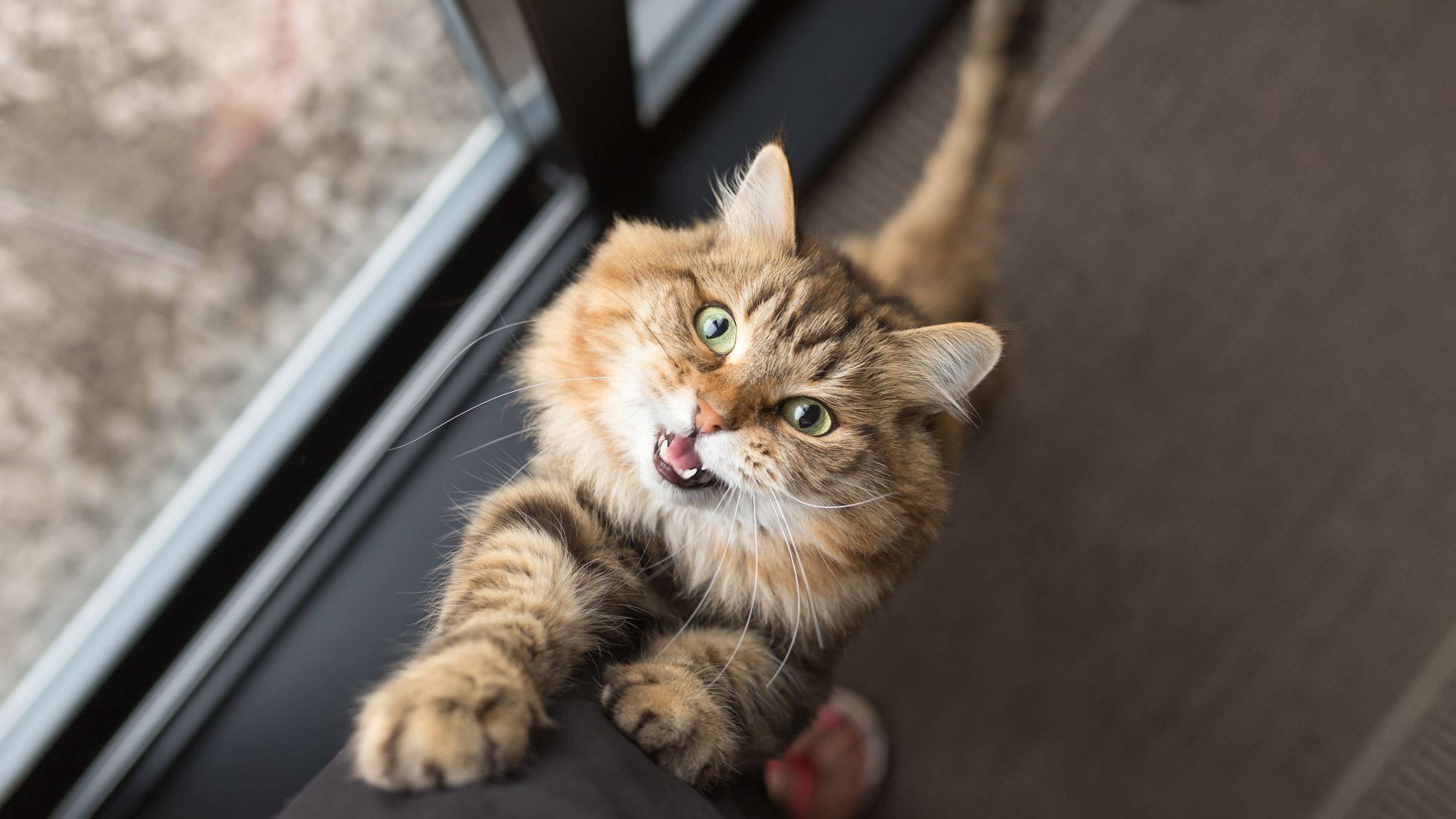
Cats don’t just meow randomly; they strategically adjust their vocal behavior to maximize human attention. A new study conducted in Turkey suggests that domestic cats greet men with significantly more vocalizations than they do women, highlighting their remarkable ability to adapt communication to individual caregivers. This isn’t about preference, but rather a calculated move to ensure they receive the attention they demand.
The Science of Manipulation
Researchers from Bilkent University observed cat-human interactions using wearable cameras, analyzing over 100 seconds of greeting behavior in 31 households. The results were clear: cats vocalized more frequently and for longer durations when men entered the room compared to when women arrived. This vocal pattern remained consistent even after accounting for factors like the cat’s sex, pedigree, and household size.
The study’s lead author, Kaan Kerman, explained that this behavior showcases cats’ cognitive flexibility. “Cats aren’t just responding to food,” he stated, “they actively seek social contact and form bonds. Their vocalizations aren’t random; they’re tailored to the human they’re interacting with.” This means cats recognize different individuals and adjust their communication strategy accordingly.
Why Meow More at Men?
The researchers theorize this difference may stem from variations in how men and women typically interact with cats. Women are often more verbally engaged with cats, intuitively understanding their needs. Men, on the other hand, may require more explicit prompting before providing attention. Cats, being efficient communicators, may simply escalate their vocal efforts to ensure they’re heard.
Cultural factors could also play a role. The study was conducted in Turkey, where social norms might influence how men and women interact with pets. Further research is needed to determine if this pattern holds across different cultures.
Beyond Vocalizations: A Complex Social Bond
The study also found that meowing isn’t tied to a specific emotional state or need. It’s not a cry for food or a sign of distress; it’s a deliberate social tactic. This reinforces the idea that cats are far more socially intelligent than previously assumed.
Limitations and Future Research
The researchers acknowledge the study’s limitations, including a small sample size and regional focus. They emphasize the need for replication in diverse cultural contexts to confirm the generalizability of the findings. However, the current results provide compelling evidence of cats’ adaptive communication skills.
As Dennis Turner, an ethologist not involved in the study, noted, “The authors’ speculation about the reason for this finding is plausible. Men may be less attentive or react differently to vocalizations than women.” This study underscores that cats are masters of behavioral adaptation, capable of manipulating human responses with calculated precision.
In conclusion, cats don’t just live with humans; they study them. By tailoring their vocalizations to individual caregivers, they demonstrate a level of social intelligence that confirms their long-standing role as adaptive and opportunistic companions.