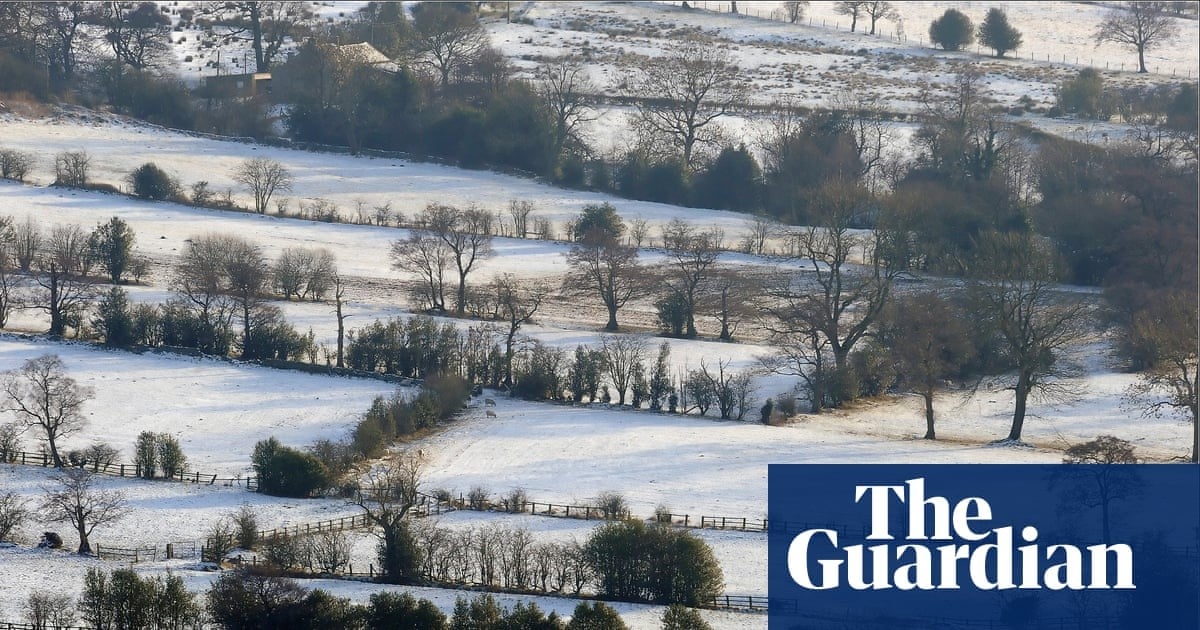
The United Kingdom may see a fleeting, wintry touch this Christmas, though widespread snow is unlikely. The Met Office reports that high-pressure systems are building, meaning drier conditions for many regions alongside the chance of isolated showers. While not expected to be unusually cold, temperatures will dip to highs of 7°C during the day and lows of -3°C to -4°C overnight – enough to make Father Christmas feel at home.
Limited Snowfall Expected
According to Met Office meteorologist Marco Petagna, the south coast of England, particularly Devon and Cornwall, has the highest chance of experiencing a brief “wintry flurry”. However, even a single snowflake qualifies as a “white Christmas” under meteorological terms.
Historically, the UK has seen snow on Christmas Day in 54 out of the last 66 years. The Royal Meteorological Society (RMetS) notes that every year since 2020, except 2024, has technically been considered a white Christmas – though snow hasn’t consistently settled in recent years. The last time significant snow cover was widespread was in 2010, with 83% of stations reporting snow on the ground.
Why Snow is Less Common Now
The increasing rarity of snowy Christmases reflects broader climate trends. The UK has experienced warmer Decembers in recent decades, decreasing the overall probability of snowfall. This is not to say cold snaps can’t still occur due to natural variability, but the odds are stacking against a widespread, snowy holiday.
Historically, winters were harsher. The “little ice age” (16th–19th centuries) brought consistently severe winters, influencing literature like Charles Dickens’ snowy Christmas scenes. Before 1752, when Britain adopted the Gregorian calendar, Christmas fell later in the winter, increasing the likelihood of colder conditions.
The recent trend is clear: significant snow cover on Christmas Day is becoming an exception rather than a rule. The Met Office data shows that most of the UK’s snowfall occurs between January and March, so those hoping for snow days should look forward to the new year.
As Sara Coleridge wrote, “January brings the snow, makes our feet and fingers glow.” This Christmas, however, will likely be less about snowballs and more about warmer cheer.